Best Serums for Teenage Skin: Choose One Clear Goal
A goal-first guide to teen serums for hydration, redness and clogged pores, including which trendy actives are unnecessary.
In this guide

Quick Answer
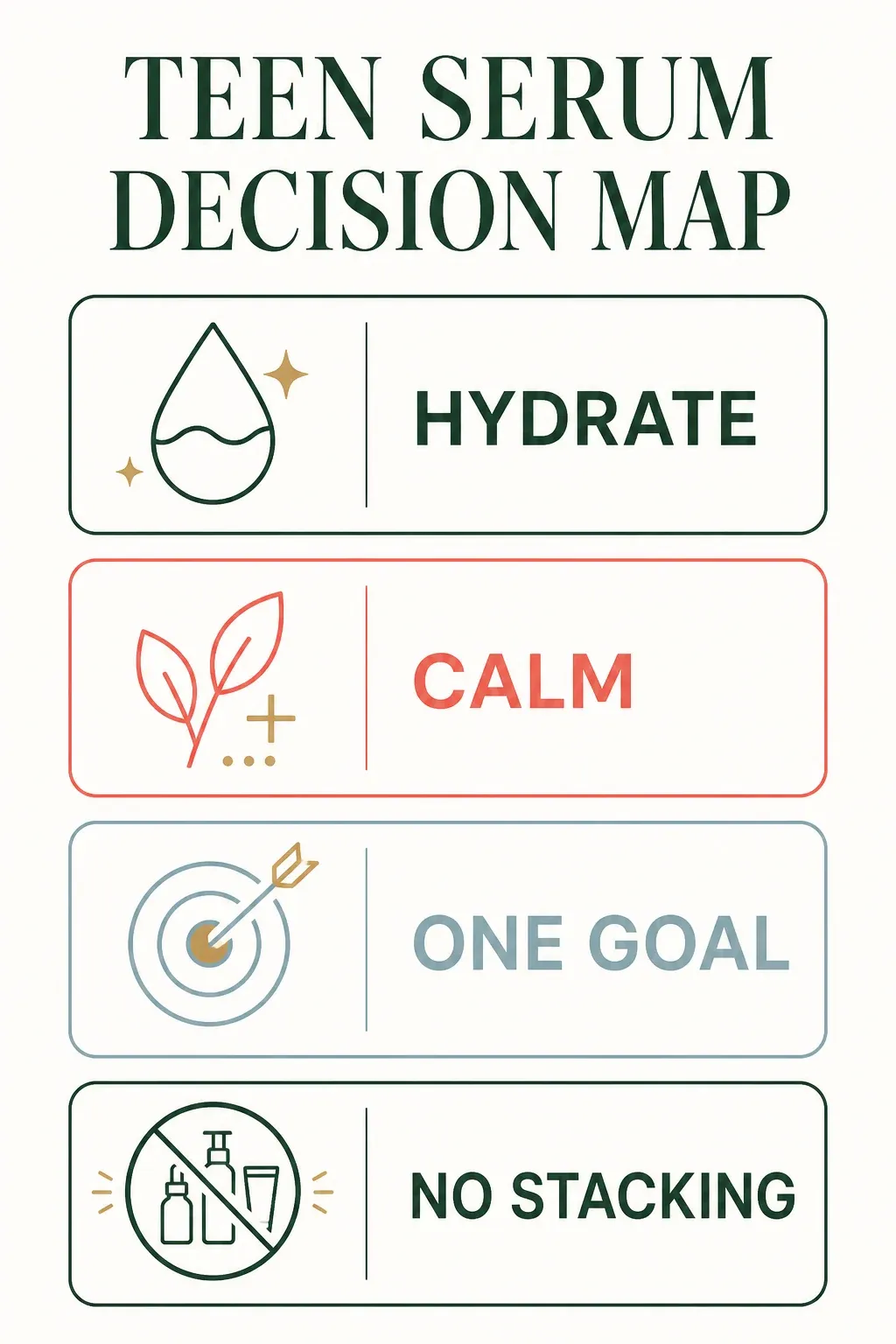
A serum is optional in a teenage routine. Add one only after cleanser, moisturizer and sunscreen are comfortable, then choose a single goal: hydration, calming or a specific acne concern.
Quick Summary
- Hydration: glycerin or hyaluronic-acid serums are optional helpers.
- Redness or oil balance: low-strength niacinamide may fit.
- Clogged pores: a salicylic-acid treatment is an active, not a general serum.
- Skip anti-aging blends and multi-acid stacks without a clear need.
Walk into any skincare aisle and you'll see shelves full of "miracle" serums with promises of glow, smoothness, and clear skin. For teenagers, that can feel overwhelming fast.
Most products are designed for adult skin, packed with high-strength actives your skin barrier isn't ready for. The result?
Redness, breakouts, or a damaged moisture barrier that takes months to repair.
Want the product picks?
Jump to product picksTeen skin is doing its own work right now: oil production is shifting, hormones are fluctuating, and your barrier is still maturing. What you need isn't the strongest serum on the shelf.
You need a small, smart set of ingredients that hydrate, soothe, and support that barrier without overwhelming it. That's exactly what this guide covers.
We talked to pediatric dermatologists, checked the latest 2024 acne guidelines from the American Academy of Dermatology, and reviewed clinical research on hyaluronic acid, niacinamide, and azelaic acid for adolescent skin. Below is a science-backed, teen-tested breakdown of which serums actually work, which to skip, and how to build a routine that protects your skin rather than fights it.
TL;DR Quick Overview
The Best Serums for Teenage Skin: The Optimizer's Edge
If you only have a minute, here's the science-backed shortlist:
- 01Hyaluronic Acid (HA) for hydration, barrier support, and plumping. Safe for all teen skin types.
- 02Niacinamide (Vitamin B3) for oil control, pore appearance, and post-acne marks. Generally 5%-10% is safe for teens.
- 03Salicylic Acid (BHA, 0.5%-2%) for blackheads, whiteheads, and oily T-zone. Avoid higher concentrations without dermatologist guidance.
- 04Azelaic Acid (10%-15%) for redness, post-acne dark spots, and sensitive, reactive skin. One of the gentlest actives available.
Skip for now: high-strength retinol, glycolic acid above 8%, pure vitamin C above 15%, and "anti-aging" formulas - most aren't designed for teenage skin and can damage your barrier.
Understanding the Unique Needs of Teenage Skin
Teenage skin is a moving target. Hormonal shifts drive up sebum production, which is why many teens experience oilier T-zones, more frequent breakouts, and shinier foreheads by mid-afternoon. At the same time, your skin barrier is still maturing, which means harsh products can strip it faster than an adult's barrier would.
Choosing the right serum isn't about grabbing the strongest anti-aging formula on the shelf. It's about supporting the barrier, balancing oil, and hydrating deeply without clogging pores.
You wouldn't give a toddler a steak to digest. The same logic applies to your skin: it needs age-appropriate ingredients that work with its biology, not against it.
A healthy teen skincare routine starts with a gentle, fragrance-free cleanser, a targeted serum, a lightweight moisturizer, and a broad-spectrum SPF 30+ sunscreen every morning. The serum's job is to deliver concentrated actives, not to replace the moisturizer that locks them in.
"Teens with mild acne should start with a gentle cleanser, a non-comedogenic moisturizer, and sunscreen - and always patch test new products."- Dr. Linda Golkar, MD, Pediatric Dermatologist, Loma Linda University Health
Less is often more with teenage skin. The goal is to nurture and protect what's already working, not to throw 12 products at it. A simple three-step routine with the right serum outperforms a 10-step routine with conflicting actives almost every time.
Watch the video for a visual walkthrough of how to build a teen-friendly serum routine:
⛶ Fullscreen
A 2018 review in the Journal of Clinical and Aesthetic Dermatology found that a disrupted skin barrier is one of the leading drivers of adolescent acne. That single insight is why barrier-supporting serums - not aggressive anti-aging ones - are the foundation of any teen routine.
The Power of Hyaluronic Acid for Teenage Skin
If there's one ingredient that every teenager should know about, it's hyaluronic acid. This molecule is naturally found in your skin and acts as a humectant, meaning it pulls water from the environment into the upper layers of your skin. A single gram of hyaluronic acid can hold up to six liters of water, which is why it's so effective for plumping and hydrating.
For teen skin - which is often prone to dryness, tightness after cleansing, and irritation from acne treatments - hyaluronic acid is a quiet powerhouse. It:
- Replenishes moisture without clogging pores
- Helps balance oil production over time
- Soothes skin that's been stripped by harsh cleansers or actives
- Plumps fine dehydration lines (yes, even teens get these from dehydration)
- Plays well with every other ingredient in your routine
When choosing a hyaluronic acid serum, look for formulas that are lightweight, fragrance-free, and contain multiple molecular weights of HA. Low-molecular-weight HA penetrates deeper, while high-molecular-weight HA sits on the surface and gives that immediate "plump" feeling. The best formulas combine both.
"Hydrated skin is healthy skin. A basic routine of gentle cleanser, moisturizer, and SPF is the foundation - serums are an extra layer of support, not a replacement."- American Academy of Pediatrics / HealthyChildren.org
Remember, hyaluronic acid is your safest entry point if you're new to serums. It rarely causes irritation, works for every skin type, and pairs with everything from niacinamide to sunscreen.
Top Hydrating Serums for Teenage Skin
Not all hydrating serums are created equal. For teenage skin, prioritize formulas that are fragrance-free, non-comedogenic, and free of harsh alcohols that can dry out the barrier. Here are two well-regarded options that meet those standards and are widely available at budget-friendly prices.
Below: a visual comparison of how these hydrating serums stack up for teen skin types.
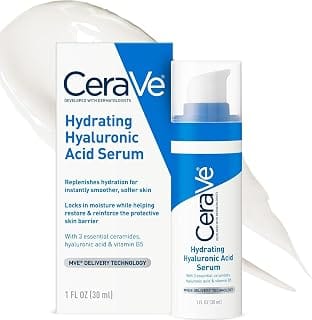
The CeraVe Hydrating Hyaluronic Acid Serum is a strong pick because it pairs hyaluronic acid with three essential ceramides and vitamin B5. Ceramides are the lipids that hold your skin cells together, and a teenage barrier benefits from extra ceramide support, especially if you're using acne treatments that can be drying. It's budget-friendly, fragrance-free, and widely available at most drugstores.
The The Ordinary Hyaluronic Acid 2% + B5 is another dependable, budget-friendly pick. It uses three molecular weights of hyaluronic acid for multi-depth hydration and includes vitamin B5 (panthenol) to soothe and support the barrier. It's lightweight, layers well under moisturizer and sunscreen, and is one of the most affordable multi-weight HA serums on the market.
Both are safe for all teen skin types, including sensitive and acne-prone. Avoid formulas that list fragrance, denatured alcohol, or essential oils high on the ingredient list, as these are common irritants for young skin.
Niacinamide: The Teen Skin All-Rounder
(Renamed from "Fine Lines and Wrinkles" - anti-aging is rarely a real concern for teens, but niacinamide is)
Anti-aging is rarely a real concern for teenagers. What IS a real concern: oily T-zones, visible pores, post-acne dark spots, and a barrier that's still finding its footing. The single best ingredient to address all four is niacinamide, also called vitamin B3.
Niacinamide is well-studied for adolescent skin. A 2006 clinical study published in the Journal of Cosmetic Dermatology found that a 2% niacinamide moisturizer significantly improved oil production, pore appearance, and post-acne marks in participants over eight weeks. Higher concentrations (5%-10%) have shown similar results in subsequent studies.
What niacinamide does for teen skin:
- Regulates sebum (oil) production, especially in the T-zone
- Reduces the appearance of enlarged pores over time
- Fades post-inflammatory hyperpigmentation (the dark marks left after a pimple heals)
- Strengthens the skin barrier by supporting ceramide production
- Calms redness and minor irritation
It pairs well with hyaluronic acid, salicylic acid, and most moisturizers. The key is to start at a lower concentration (around 5%) and work up if your skin tolerates it. Niacinamide is well-tolerated by most skin types, but in rare cases can cause flushing in very sensitive individuals, so a patch test is always smart.
"A gentle cleanser, niacinamide serum, lightweight moisturizer, and SPF 30 is the safest, most evidence-backed routine for acne-prone teen skin."- Dr. Jaimie Glick, MD, Dermatologist, New York Dermatology Group
If you're looking for a teen-friendly serum that handles oil, pores, and post-acne marks in one bottle, niacinamide is the ingredient to start with.
Clinical Evidence: The Science Behind Effective Serums
When it comes to skincare, the products with the strongest clinical evidence are the ones worth reaching for. Here's what the research says about the key ingredients for teen skin:
- Hyaluronic acid: Multiple clinical studies confirm its ability to improve skin hydration within hours of application. A 2014 review in the Journal of Drugs in Dermatology found that low-molecular-weight HA improved deep skin hydration by up to 20% in two weeks.
- Niacinamide: As mentioned above, well-documented to reduce oil production, improve pore appearance, and fade post-acne marks.
- Salicylic acid (BHA): Oil-soluble, so it penetrates pores to dissolve the buildup that causes blackheads. Concentrations of 0.5%-2% are effective for teen acne without excessive irritation. Higher percentages can damage the barrier and are typically reserved for dermatologist-supervised use.
- Azelaic acid: Peer-reviewed research supports its use for both inflammatory acne and post-acne dark spots, especially in skin of color where hyperpigmentation is more persistent. It also calms redness, making it ideal for sensitive teen skin.
Notice what's NOT on this list: high-strength retinol, glycolic acid above 8%, and pure vitamin C above 15%. These actives are designed for mature skin concerns like deep wrinkles, sun damage, and collagen loss. For teens, they can cause unnecessary dryness, peeling, and barrier damage without any meaningful benefit.
The American Academy of Dermatology's 2024 acne treatment guidelines continue to recommend gentle, evidence-backed ingredients as the first-line approach for mild to moderate adolescent acne, with prescription options reserved for more severe or persistent cases.
How to Properly Use Serums for Teenage Skin
Even the best serum won't deliver results if it's used incorrectly. For teenage skin, the application process is just as important as the product itself.
Visual guide to layering a serum into your teen skincare routine:
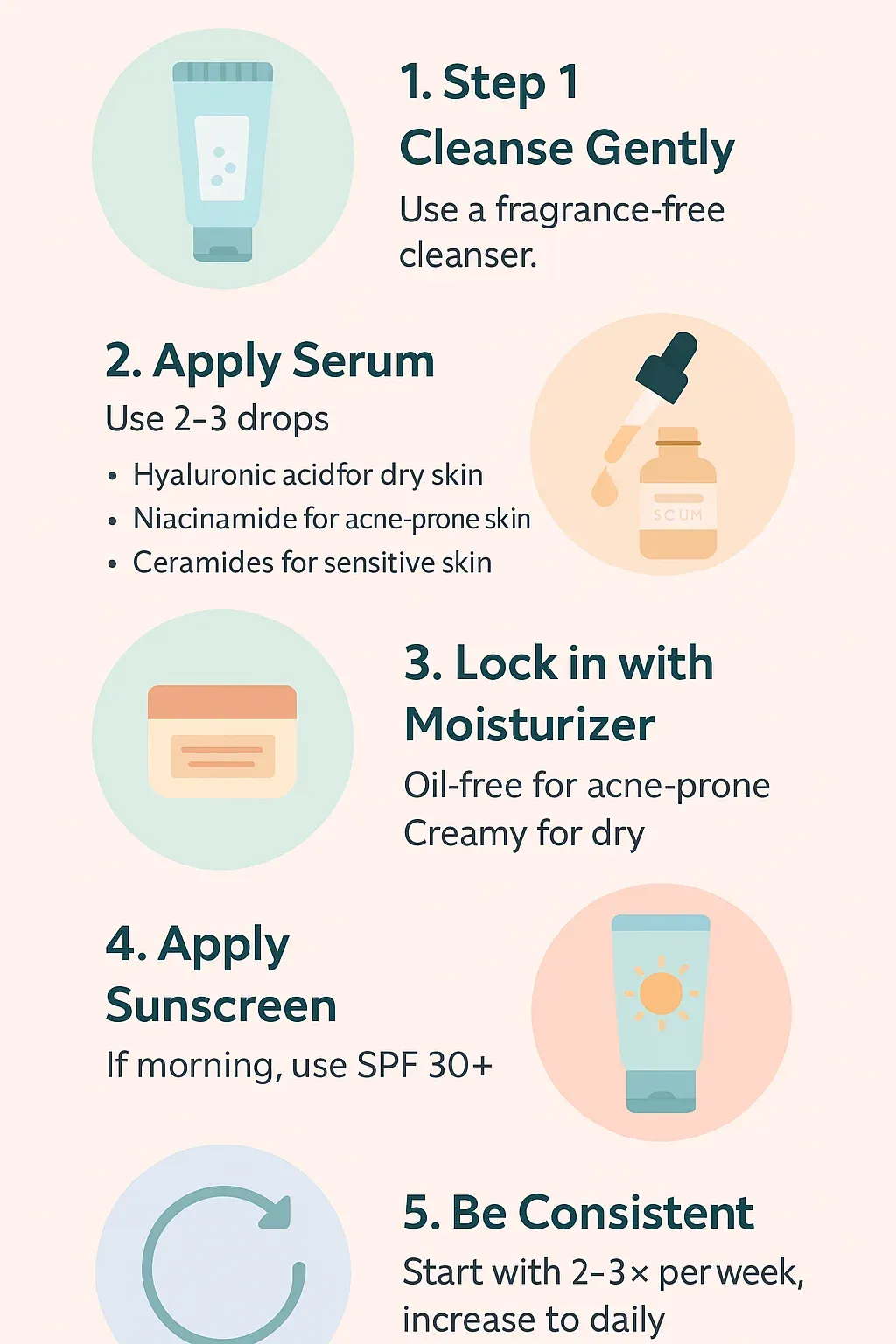
The golden rule: apply your serum to slightly damp skin. This allows the humectant ingredients to pull water into your skin rather than evaporate into the air. After cleansing and gently patting your face with a clean towel, apply 2-3 drops of serum while your skin is still slightly moist, then pat (don't rub) it in.
Once the serum absorbs, follow up with a moisturizer to lock in hydration. Many teens skip this step, assuming the serum is enough, but the moisturizer creates a protective seal that prevents the active ingredients from evaporating and supports the barrier.
Consistency matters more than quantity. Using one well-chosen serum twice daily for two to three months will deliver better results than layering six products sporadically. If you're also using an acne treatment like a salicylic acid spot treatment, apply it after your hydrating serum and before your moisturizer to avoid over-stripping.
Navigating Common Teenage Skin Concerns with Serums
Teenage skin comes with a predictable set of challenges. Here's how to match the right serum to the concern you're dealing with:
Acne and Breakouts
Look for serums with salicylic acid (0.5%-2%) or niacinamide (5%-10%) . Salicylic acid penetrates pores to dissolve the oil-and-dead-skin mix that causes breakouts.
Niacinamide regulates the oil production that drives those breakouts in the first place. For more persistent or cystic acne, a hormonal acne approach with dermatologist support is usually the better path.
You can also explore our full teenage acne treatment guide for a broader breakdown of evidence-based options.
Oily Skin and Enlarged Pores
Niacinamide is the most evidence-backed ingredient for oil control and pore appearance. Apply it to your T-zone after cleansing and before moisturizing. The AAD's overview of oily skin confirms that consistent niacinamide use reduces sebum excretion rates over 4-8 weeks.
Dryness and Dehydration
Hyaluronic acid pulls water into the skin, while ceramides (often paired with HA in the same serum) reinforce the barrier so that water doesn't escape. Layer HA under a ceramide-rich moisturizer for best results.
Post-Acne Dark Spots
This is one of the most common concerns for teens with melanin-rich skin, where post-inflammatory hyperpigmentation can linger for months. Some ingredients worsen this issue, while others (niacinamide, azelaic acid, and a low-strength vitamin C serum) help fade the marks safely. A broad-spectrum sunscreen is non-negotiable here: UV exposure deepens every dark spot and undoes the work of your serum.
Sensitive or Reactive Skin
Stick to azelaic acid (10%-15%) and centella asiatica-based serums. Avoid high-strength actives, fragrance, and denatured alcohol. The AAD's sensitive skin care guide recommends a "less is more" approach: fewer ingredients, lower concentrations, and slower introduction of new products.
Visual Guide
Teen Serum Decision Guide: Pick by Goal
Four ingredients, four goals. Match your concern to the right serum.
01Hyaluronic AcidHYDRATIONPotencyGentleThe safest entry-point serum. Pulls water into skin, plumps dehydration lines, supports the barrier.
Pairs with everything.02Niacinamide (5%-10%)OIL & PORESPotencyGentleThe all-rounder. Regulates oil, refines pore appearance, fades post-acne marks, strengthens the barrier.
Best second serum to add.03Salicylic Acid (BHA)BREAKOUTSPotencyGentleOil-soluble exfoliant. Penetrates pores to clear the buildup behind blackheads and whiteheads.
Stick to 0.5%-2% for teen skin.04Azelaic Acid (10%-15%)REDNESS & SPOTSPotencyGentleCalms redness, fades post-acne dark spots (especially for skin of color), and is one of the gentlest acne actives available. Great for sensitive teen skin.Quick Match: Concern → SolutionConcern Dehydration / Tightness → Hyaluronic AcidConcern Oily T-Zone → NiacinamideConcern Blackheads / Whiteheads → Salicylic Acid (BHA)Concern Post-Acne Dark Spots → Niacinamide + Azelaic AcidConcern Redness / Sensitivity → Azelaic Acid (10%)
Educational skincare guide. Not medical advice. For persistent, painful, or worsening skin concerns, consult a board-certified dermatologist.
The Importance of a Complete Skincare Routine
Serums are a valuable addition, but they're just one piece of the puzzle. For teenage skin to truly thrive, you need a complete and consistent routine that supports the barrier, balances oil, and protects against UV damage. That routine looks like this:
- Cleanse with a gentle, fragrance-free cleanser (twice a day, no more).
- Tone (optional) with a pH-balancing, alcohol-free toner.
- Apply serum to slightly damp skin and pat in.
- Moisturize with a lightweight, non-comedogenic moisturizer to lock in hydration.
- Protect with a broad-spectrum SPF 30+ sunscreen every single morning - even on cloudy days, even indoors near windows.
I cannot stress the sunscreen step enough. Sun damage is cumulative, it accelerates visible aging, and it deepens every post-acne dark spot. A good mineral or hybrid sunscreen takes 30 seconds to apply and prevents the kind of damage no serum can undo.
Consistency beats intensity. A simple, consistent routine is far more effective than using a multitude of products sporadically. Two to three months of daily use is the minimum window to see meaningful results from any new serum.
Choosing a Safe Serum: The Skincare Insider Widget
Not all serums are appropriate for teenage skin. The four ingredients below are evidence-backed and well-tolerated by most teens. If you see anything else on the ingredient list, especially fragrance, denatured alcohol, or high-strength retinol, leave it on the shelf.
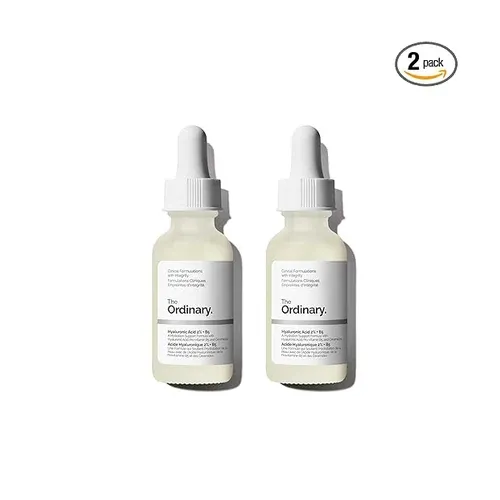
Product pick
The Ordinary Hyaluronic Acid 2% + B5
Why it fits: A multi-molecular-weight hyaluronic acid serum with panthenol (vitamin B5) for barrier support. The most affordable, well-formulated HA serum on the market, and an ideal first serum for any teen. Layers under moisturizer and sunscreen without pilling.
Watch-out: Check the ingredient list and introduce it slowly if your skin is reactive.
Check Availability on Amazon →As an Amazon Associate, we earn from qualifying purchases.
As an Amazon Associate, we earn from qualifying purchases.
Product pick
CeraVe Hydrating Hyaluronic Acid Serum
Why it fits: Three ceramides + hyaluronic acid + vitamin B5 in a fragrance-free, non-comedogenic formula. Developed with dermatologists and a top pick for teens using acne treatments that can be drying on the barrier. Widely available at drugstores.
Watch-out: Check the ingredient list and introduce it slowly if your skin is reactive.
Check Availability on Amazon →As an Amazon Associate, we earn from qualifying purchases.
As an Amazon Associate, we earn from qualifying purchases.
Expert Tips for Choosing the Right Serum
Choosing the right serum for teenage skin can feel overwhelming. A few expert rules of thumb will make the decision much easier.
Tip 1: Match your serum to your skin type. Oily skin benefits from niacinamide and lightweight, water-based formulas.
Dry skin does better with hyaluronic acid and ceramide-rich serums. Combination skin usually needs a hydrating HA across the full face with niacinamide concentrated on the T-zone.
Sensitive skin should stick to azelaic acid and centella asiatica-based formulas.
Tip 2: Read the ingredient list. Avoid products with fragrance, denatured alcohol, essential oils high on the list, and "proprietary blends" that don't disclose individual ingredient percentages. These are common irritants for young, sensitive skin.
Tip 3: Patch test before applying to your face. Apply a small drop behind your ear or on your inner arm.
Wait 24 hours. If you see redness, itching, or burning, that product isn't for you.
This is especially important with active ingredients like niacinamide at higher concentrations, salicylic acid, or any new formula.
Tip 4: Don't overdo it. Two serums is plenty.
Three at most, and only if they target completely different concerns (for example: HA for hydration + niacinamide for oil + azelaic acid for spots). Layering too many actives creates irritation, not improvement.
Tip 5: Be patient. Skincare takes time.
You won't see results overnight. The American Academy of Pediatrics notes that most skincare products need at least 6-8 weeks of consistent daily use to show meaningful changes.
Tip 6: Skip the trend-chasing. TikTok routines with 10 steps and trendy actives are designed for engagement, not for your skin. Stick to the four ingredients covered in this guide and you will be ahead of 90% of skincare advice online.
Product pick
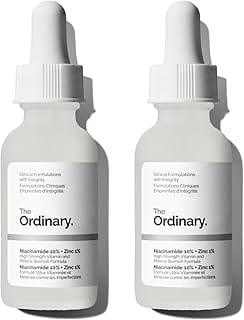
The Ordinary Niacinamide 10% + Zinc 1%
Why it fits: A high-strength, water-based niacinamide serum that regulates oil production, refines pore appearance, and fades post-acne dark spots. Zinc PCA adds antibacterial support. The most affordable, evidence-backed option for oily, acne-prone teen skin.
Watch-out: Check the ingredient list and introduce it slowly if your skin is reactive.
Check Availability on Amazon →As an Amazon Associate, we earn from qualifying purchases.
As an Amazon Associate, we earn from qualifying purchases.
Product pick
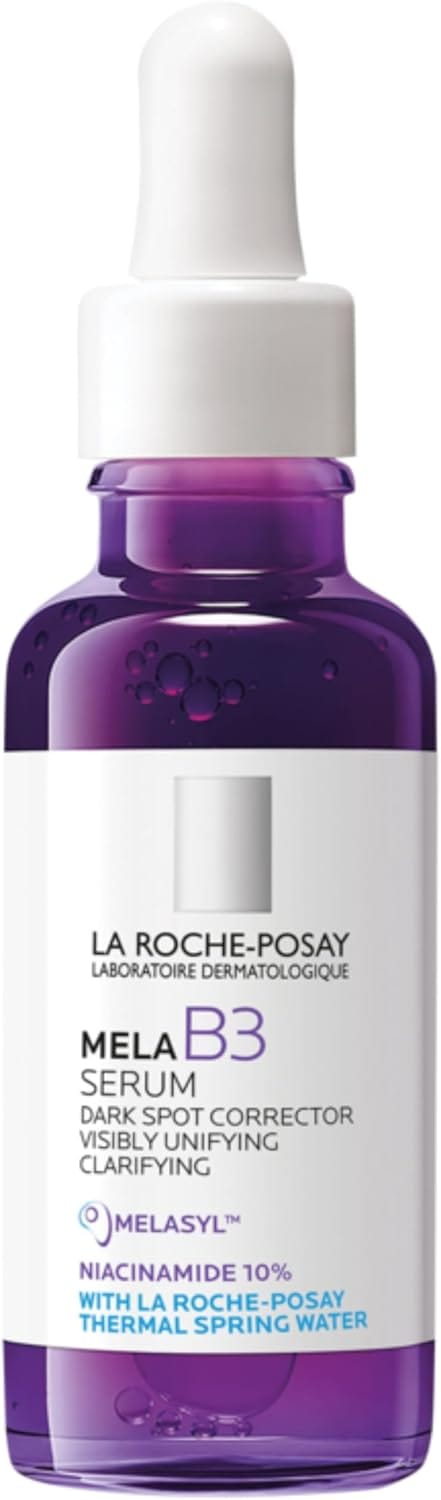
La Roche-Posay Mela B3 Serum
Why it fits: A niacinamide-based dark-spot serum option from La Roche-Posay. It is a better fit for post-acne marks than for active inflamed acne, and teens should introduce it slowly.
Watch-out: Check the ingredient list and introduce it slowly if your skin is reactive.
Check Availability on Amazon →As an Amazon Associate, we earn from qualifying purchases.
As an Amazon Associate, we earn from qualifying purchases.
Conclusion: Embracing Healthy Skin Habits
Navigating skincare as a teenager doesn't need to be overwhelming. With the right knowledge and a small set of well-chosen products, you can build a routine that supports your skin barrier, balances oil, and protects against long-term damage.
The four ingredients covered in this guide - hyaluronic acid, niacinamide, salicylic acid, and azelaic acid - are the evidence-backed foundation for teen skin. They work, they're affordable, and they don't require a 10-step routine to see results.
As the dermatologists we quoted earlier emphasize, teens don't need complicated or expensive products. A gentle cleanser, a well-formulated serum, a lightweight moisturizer, and a daily SPF 30+ are the four non-negotiables. Add a targeted treatment for breakouts if needed, and you have a complete routine that will serve your skin well into adulthood.
Remember: less is more. The best serums for teenage skin are gentle, non-comedogenic, fragrance-free, and budget-friendly.
Skincare is a marathon, not a sprint. Trust the process, listen to your skin, and follow expert-backed habits to feel confident in your own face.
If you're dealing with persistent, painful, or cystic breakouts, or if a product causes severe redness, swelling, or burning, stop using it and consult a board-certified dermatologist. A pediatrician or pediatric dermatologist can also help with eczema, rosacea, or any skin concern that doesn't improve with a basic routine.
One Serum, One Measurable Goal
Dryness after cleansing points first to cleanser and moisturizer, not automatically to a hydrating serum. Oiliness with blackheads may justify a pore-active, while oiliness alone does not.
Use the smallest routine that solves the issue. A teen who cannot name the problem a serum addresses probably does not need that serum yet.
- Tight or dehydrated: fix cleanser and moisturizer first.
- Comfortable but wants extra hydration: add a bland humectant serum.
- Clogged pores: use one evidence-based acne active.
- Sensitive or medicated: avoid complex multi-active blends.
Compare the Options Before Changing the Routine
Use this table to match the intervention to the visible pattern and to identify the limit that should stop unnecessary escalation.
| Skin pattern or option | Best next step | Important limit |
|---|---|---|
| Hydration | Glycerin, hyaluronic acid, panthenol | Apply under moisturizer |
| Calming support | Low-strength niacinamide, centella | High niacinamide can sting |
| Clogged pores | Salicylic acid | Treat as an active; start slowly |
| Uneven post-acne marks | Azelaic acid may fit | Use SPF and expect gradual change |
Adjust the Plan to Real Teen Life
School mornings reward a short routine that works even when time is limited. Keep the required products visible and in order, and move optional steps out of the way until the base routine is automatic.
Sports, helmets and heavy sweating change the exposure, not the biology of the skin. Rinse or cleanse gently after activity, clean reusable contact surfaces, and avoid compensating with rough cloths or extra exfoliation.
Cold weather, indoor heating and air conditioning can lower tolerance even when the underlying concern has not changed. Reduce active frequency when tightness appears instead of assuming the treatment has stopped working.
Makeup and shaving should be treated as separate routine variables. Remove makeup completely without repeated rubbing, and review shaving technique before applying stronger acne products to irritated follicles.
Budget also affects treatment quality because an unaffordable routine will not be repeated. Prioritize cleanser, moisturizer, sunscreen and one evidence-based treatment before spending on masks, mists or overlapping serums.
Travel and weekends should not require a second routine. Use the same essentials in smaller containers and keep the treatment schedule unchanged unless the environment affects tolerance.
Stress about appearance can also drive picking and constant mirror checking. Use neutral weekly photos, reduce magnifying-mirror time and involve a trusted adult or professional when skin concerns affect school, sleep or confidence.
Finally, build a stop rule before starting. Persistent burning, swelling, rash, painful cracking or a rapid increase in deep lesions is a reason to pause the newest product and seek qualified advice when appropriate. Clear rules protect both skin and consistency.
How to Test the Routine Without Losing the Signal
Keep cleanser, moisturizer and sunscreen stable while testing one treatment variable. When several products change together, a breakout, sting or improvement cannot be assigned confidently.
Use the same amount and schedule unless the label or a qualified professional says otherwise. More product or more frequent application can increase irritation without shortening the biological treatment timeline.
Set the Baseline
Record the main concern, current products and two photos in consistent light.
Protect Tolerance
Track tightness, burning, peeling and whether the routine is easy enough to repeat.
Judge the Trend
Compare new lesions and comfort over weeks, not the appearance of one day.
| Check point | What to assess | Decision |
|---|---|---|
| First 48 hours | Burning, swelling, rash or painful cracking | Stop the newest product and get advice when symptoms are significant |
| Weeks 1-2 | Comfort, dryness and whether the schedule is realistic | Reduce frequency before adding another active |
| Weeks 6-8 | Fewer new lesions, calmer texture or a clearer pattern | Continue, adjust one variable or seek professional help |
| Any time | Deep pain, scars, rapid worsening or major distress | Escalate care rather than waiting for a retail product to solve it |
A routine is not successful merely because it feels active. The useful outcome is a gradual improvement that the skin can tolerate and the teenager can sustain.
Do not measure success by tingling, dryness or how many steps were completed. Those sensations can reflect irritation, while the meaningful measures are fewer new lesions, better comfort, less picking and a routine that remains consistent.
Use weekly rather than daily comparisons because acne and oil fluctuate. A single stressful day, sports session or menstrual-cycle shift should not trigger a complete product change.
Write the planned review date on a calendar before starting. That simple boundary reduces impulsive switching and makes the final decision more evidence-based.
Do not wait through deep pain, scarring, rapid worsening or significant emotional distress. Those are reasons to seek professional care even when the planned test period is not complete.
Frequently Asked Questions About Best Serums for Teenage Skin
What serum is best for a teenager?
The best choice depends on a real need. A bland hydrating serum is the lowest-risk optional step, while acne actives should match the breakout pattern.
Can a 13-year-old use niacinamide?
A simple low-strength formula may be tolerated, but it is optional. Patch test and stop if persistent stinging or rash develops.
Should teens use vitamin C serum?
It is not a basic requirement. Sunscreen provides more reliable daily protection, and vitamin C can be added only for a defined goal and good tolerance.
Can teens use multiple serums?
Usually there is no need. Multiple serums add cost, layering problems and irritation variables without guaranteed extra benefit.
When should a teen avoid serums?
Skip them when the skin barrier is irritated, the routine already contains several treatments, or there is no clear problem the serum solves.