Hormonal Acne Solutions: Evidence-Based Guide to Medical & Natural Treatments
Evidence-based guide to hormonal acne solutions. Learn about prescription treatments (spironolactone, clascoterone, retinoids), OTC options, routines, and when to see a dermatologist.

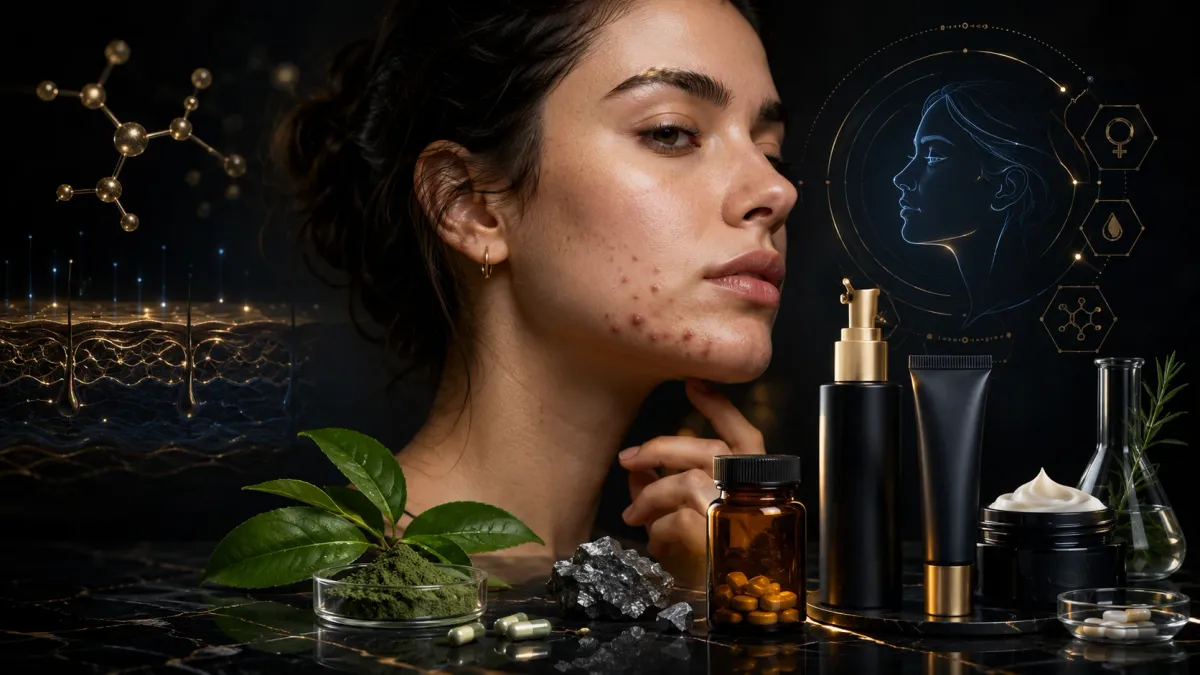
Hormonal acne is one of the most common dermatological concerns among adults, particularly women. Unlike teenage acne that often clears with age, hormonal acne can persist into the 30s, 40s, and beyond.
It follows a distinct pattern: deep, tender cysts along the jawline, chin, and lower cheeks that flare cyclically — typically 7-10 days before menstruation. Standard spot treatments often fail because the root cause is not surface bacteria but androgen-driven sebum production.
This guide covers the evidence-based treatments for hormonal acne — from first-line OTC topicals to prescription options like spironolactone and clascoterone — along with the routines and lifestyle factors that make a difference.
- First-Line Topicals: Adapalene 0.1% nightly + benzoyl peroxide 2.5% in AM or azelaic acid 10-20% for redness and post-acne marks.
- Prescription Options for Women: Spironolactone (oral anti-androgen) and combined oral contraceptives are proven effective. Clascoterone 1% cream is the first FDA-approved topical anti-androgen.
- Patience Is Key: Hormonal acne treatments take 6-12 weeks for visible improvement. Consistency matters more than intensity.
- Barrier Support: Avoid over-exfoliating. Use a ceramide moisturizer and SPF 30+ daily. Retinoids require diligent sun protection.
What Is Hormonal Acne?
Hormonal acne is driven by androgens — primarily testosterone and dihydrotestosterone (DHT) — which stimulate sebaceous glands to produce excess sebum and increase keratinocyte adhesion within the follicle.
This creates a plug (comedone) that traps Cutibacterium acnes bacteria and triggers inflammation. The result is the deep, tender cysts characteristic of hormonal acne.
Key features that distinguish hormonal acne from other forms:
- Location: Jawline, chin, lower cheeks, neck. Rarely on the forehead or T-zone.
- Timing: Flares cyclically 7-10 days before menstruation (luteal phase).
- Lesion type: Deep, painful nodules and cysts — not superficial whiteheads.
- Age of onset: Often starts or worsens in the 20s and 30s, even in those with no history of teenage acne.
- Treatment resistance: Responds poorly to benzoyl peroxide or salicylic acid alone. Multi-modal therapy is usually required.
Underlying conditions such as polycystic ovary syndrome (PCOS) can amplify hormonal acne. Signs include irregular periods, hirsutism, and elevated androgen levels on lab work.
Evidence-Based Topical Treatments
Adapalene 0.1% (Differin)
Adapalene is a third-generation retinoid available OTC in 0.1% gel form. It normalizes follicular cell turnover, prevents comedone formation, and has anti-inflammatory properties.
A North American study of adapalene-benzoyl peroxide combination gel showed significantly higher success rates and greater percentage reduction in all acne lesion types compared to monotherapy. The fixed-dose combination provides greater efficacy as early as week 1.
Adapalene is generally better tolerated than tretinoin, with less irritation and photosensitivity. It remains the first-line OTC retinoid for hormonal acne.
- Apply a pea-sized amount to the entire face nightly
- Use the "sandwich method" (moisturizer → adapalene → moisturizer) if irritation occurs
- Results visible at 8-12 weeks
- Not for use during pregnancy or breastfeeding
Benzoyl Peroxide 2.5-5%
Benzoyl peroxide (BP) is an antimicrobial agent that targets C. acnes without inducing bacterial resistance. The 2.5% concentration is as effective as 5% or 10% with significantly less irritation.
- Use as a leave-on treatment in AM (thin layer)
- Can bleach fabrics — allow to dry before dressing
- Combine with adapalene for synergistic effect
- Reduces inflammatory lesions faster than retinoids alone
Azelaic Acid 10-20%
Azelaic acid is a dicarboxylic acid with anti-inflammatory, antioxidant, and antimicrobial properties. It is particularly useful for hormonal acne because it reduces post-inflammatory hyperpigmentation (PIH) — a common concern in darker skin types, as covered in our guide to safe ingredients for darker skin.
A systematic review confirmed azelaic acid's efficacy in managing acne vulgaris, rosacea, and melasma. The 15% gel and 20% cream are most commonly used.
- Apply AM and/or PM as a leave-on treatment
- Safe for long-term use and during pregnancy
- Reduces redness and PIH without causing irritation
- Can be combined with retinoids and BP
The biggest mistake I see with topical retinoids is starting too strong, too fast. Adapalene 0.1% three times per week for the first two weeks, then every other night for two weeks, then nightly is a gradual build schedule that dramatically reduces irritation. "Retinoid ugliness" — the initial purge phase where skin looks worse before it improves — typically peaks at week 3-4 and resolves by week 8.
If the purge persists past week 8 or the irritation is unbearable, you are either using too much product, applying too frequently, or the formulation is wrong for your skin type.
Prescription Treatments for Hormonal Acne
When OTC treatments are insufficient after 8-12 weeks, prescription options offer significantly better outcomes.
Spironolactone
Spironolactone is an oral potassium-sparing diuretic that also acts as an androgen receptor blocker. It reduces sebum production by competing with androgens at the receptor level.
The SAFA trial — a pragmatic, multicentre, phase 3, double-blind, randomized controlled trial — confirmed spironolactone's effectiveness for women with acne vulgaris. Low doses (50-100 mg/day) are typically sufficient.
- Prescribed for women only (can cause feminization of male fetus)
- Improvement visible at 8-12 weeks
- Requires blood pressure and potassium monitoring
- Common side effects: breast tenderness, menstrual irregularity, fatigue
Clascoterone 1% Cream (Winlevi)
Clascoterone is the first FDA-approved topical androgen receptor inhibitor for acne. Unlike spironolactone, it works locally in the skin without systemic absorption, making it suitable for all genders.
Clinical trials demonstrated significant reductions in both inflammatory and non-inflammatory lesions with minimal side effects (mild erythema, dryness).
- Apply twice daily to affected areas
- No systemic hormonal effects — safe for men and women
- Requires prescription
- Newer and more expensive than spironolactone
Combined Oral Contraceptives
Combined oral contraceptives (OCPs) containing estrogen and progestin suppress ovarian androgen production and increase sex hormone-binding globulin (SHBG), reducing free testosterone.
FDA-approved options for acne include drospirenone-containing pills (Yaz, Yasmin). Multiple randomized trials support their efficacy for cycle-linked hormonal acne.
- Takes 3-6 months for full effect
- Not suitable for smokers over 35 or those with clotting risk
- Progestin-only pills do not help acne
- Discuss risks and benefits with your clinician
The treatment ladder for hormonal acne should be sequential: OTC retinoid + BP/azelaic acid for 8-12 weeks → add spironolactone (women) or clascoterone → consider OCPs → escalate to isotretinoin for severe, scarring, or treatment-resistant cases.
Skipping steps increases the risk of unnecessary side effects and antibiotic resistance. Antibiotics should be reserved for short-term inflammatory control only — never as monotherapy for hormonal acne.
Educational skincare guide. Not medical advice.
Daily Skincare Routine for Hormonal Acne
The right routine supports treatment efficacy and minimizes irritation. Over-washing and over-exfoliating are the most common mistakes.
Morning (AM)
- Cleanse: Gentle, non-comedogenic cleanser (avoid sulfates) — see our best cleansers guide for recommendations suitable for acne-prone skin
- Treat: Benzoyl peroxide 2.5% or azelaic acid 10-20% as leave-on
- Moisturize: Oil-free, non-comedogenic moisturizer
- Protect: SPF 30+ mineral or hybrid sunscreen
Evening (PM)
- Cleanse: Gentle cleanser (double cleanse if wearing makeup/SPF)
- Treat: Adapalene 0.1% pea-size to full face
- Moisturize: Ceramide-rich moisturizer (sandwich if irritation occurs)
Key Rules
- Introduce one active at a time, 2 weeks apart
- Do not combine adapalene and BP in the same PM routine (use BP in AM)
- If irritation occurs, reduce frequency before reducing strength
- Track your cycle — increase adherence in the luteal phase (7-10 days before period)
- For guidance on balancing barrier health with active treatments, see our hydration vs moisturization guide
Lifestyle Factors
Diet
High glycemic index (GI) foods and dairy — particularly skim milk — have been associated with acne exacerbation in multiple observational studies. Low-GI diets and reduced dairy intake may improve symptoms, though individual responses vary.
Stress
Stress increases cortisol and adrenal androgen production, which can amplify hormonal acne. Consistent sleep, exercise, and stress management support treatment efficacy but do not replace medical therapy.
Cosmetics
Use non-comedogenic, oil-free makeup and sunscreen. Mineral SPF (zinc oxide, titanium dioxide) is less likely to clog pores than chemical filters for acne-prone skin.
- Stick to the 8-Week Rule: Give every treatment at least 8 weeks before judging efficacy. Hormonal acne treatments are slow-acting.
- Don't Skip Moisturizer: Retinoids and BP are drying. A compromised barrier worsens acne, not improves it. See our barrier repair protocol for guidance.
- Avoid Picking: Manipulating cysts increases inflammation, prolongs healing, and causes scarring. Use hydrocolloid patches for surface whiteheads.
- See a Dermatologist: If OTC treatments fail at 12 weeks, prescription options significantly improve outcomes. Our anti-aging ingredients guide covers evidence-based alternatives for concurrent concerns.
When to See a Dermatologist
If your acne is deep, painful, scarring, or unresponsive to 12 weeks of consistent OTC treatment, professional evaluation is indicated. A dermatologist can prescribe spironolactone, clascoterone, OCPs, or isotretinoin as appropriate.
For more on building an acne-safe routine, see our best cleansers for teenage and adult acne guide. If you are managing both acne and signs of aging, our science-backed anti-aging ingredients guide covers retinoid-compatible options. And if your barrier is affected by treatments, our barrier repair protocol explains how to maintain skin health while using actives.
Scientific References
- The SAFA trial: a pragmatic, multicentre, phase 3, double-blind, randomized controlled trial confirmed spironolactone's effectiveness for women with acne vulgaris (PubMed).
- Clascoterone is a novel topical androgen receptor inhibitor with demonstrated safety and efficacy for acne vulgaris (PubMed).
- A North American study of adapalene-benzoyl peroxide combination gel demonstrated significantly higher success rates compared to monotherapy (PubMed).
- A systematic review confirmed azelaic acid's efficacy in managing acne vulgaris, with strongest evidence for rosacea followed by acne and melasma (PubMed).
- The American Academy of Dermatology has published updated guidelines for the management of acne in adults, adolescents, and children (AAD).
Frequently Asked Questions About Hormonal Acne
What is the best treatment for hormonal acne?
How do I know if my acne is hormonal?
Does birth control help hormonal acne?
What foods trigger hormonal acne?
How long does spironolactone take to work for acne?
This article is for informational purposes only and does not replace professional dermatological advice. Acne is a medical condition. Consult a board-certified dermatologist for diagnosis and treatment.