Charcoal Face Masks: Science-Backed Guide to Benefits, Safety & Best Picks
Science-backed guide to charcoal face masks. Learn how adsorption works, who should use them, safe frequency, top product picks, and when to avoid them.

In this guide
Charcoal face masks are among the most popular skincare products on the market. Brands promise deep detox, instant pore cleansing, and glowing skin. But how much of this is backed by science?
Want the product picks?
Jump to product picksThe reality is more nuanced. Activated charcoal works through adsorption - not absorption - binding impurities to its porous surface so they can be rinsed away. It can be effective for oily and acne-prone skin when used correctly, but it is not a cure-all, and overuse can damage the skin barrier.
This guide separates marketing from mechanism. You will learn how charcoal masks work, who should use them, how often to apply them, and which products deliver results without causing irritation.
TL;DR
- Adsorption, Not Absorption: Activated charcoal traps impurities on its porous surface; it does not "suck out" toxins from deep within the skin.
- Best for Oily & Acne-Prone Skin: Charcoal masks help control shine and reduce blackheads. Dry and sensitive skin should use with caution or choose gentler alternatives.
- Limit to 1-2 Times Per Week: Overuse strips the skin barrier, causing rebound oil production, irritation, and increased TEWL.
- Wash-Off Over Peel-Off: Wash-off charcoal masks are gentler and safer for regular use. Peel-off masks carry a higher risk of irritation and skin trauma.
What Is Activated Charcoal?
Activated charcoal is a fine black powder produced by heating carbon-rich materials - typically coconut shells, wood, or peat - to very high temperatures in a controlled environment. The "activation" process involves treating the charcoal with gases (steam, oxygen, or carbon dioxide) that create an internal network of tiny pores, dramatically increasing its surface area.
One gram of activated charcoal can have a surface area of up to 3,000 square meters. This porous structure is what gives activated charcoal its ability to trap impurities through adsorption - a physical process where particles adhere to the surface of the charcoal, similar to how a magnet attracts metal filings.
It is important to note the distinction between adsorption (surface binding) and absorption (soaking into a material). Charcoal does not "absorb" toxins from the skin. It binds surface impurities - excess sebum, dead skin cells, and environmental debris - that it comes into direct contact with. Once the mask is rinsed off, the bound impurities go with it.
Benefits of Charcoal Face Masks
When used appropriately, charcoal face masks offer several evidence-supported benefits:
Oil (Sebum) Control
The porous structure of activated charcoal is particularly effective at binding lipophilic (oil-loving) substances. For individuals with oily or combination skin, a charcoal mask applied 1-2 times per week can help reduce visible shine and temporarily mattify the skin.
Blackhead Reduction
Blackheads are open comedones - pores filled with oxidized sebum and dead skin cells. Charcoal masks can help by adsorbing the surface layer of this buildup, making blackheads less noticeable. However, charcoal masks are not a treatment for blackhead prevention; consistent use of salicylic acid or retinoids addresses the underlying cause. For product recommendations, see our guide to best cleansers for teenage skin which includes salicylic acid options for blackhead treatment.
Immediate Texture Improvement
After rinsing off a charcoal mask, the skin often feels smoother and looks more even. This is primarily because the mask has removed surface debris and excess oil from the outermost layer of the stratum corneum. The effect is temporary (typically 24-48 hours) and cosmetic rather than structural.
Limitations and What Charcoal Masks Cannot Do
- No deep detox: Activated charcoal cannot penetrate beyond the stratum corneum. It does not "detoxify" the bloodstream or deeper skin layers. Claims of systemic detoxification through topical charcoal are not supported by dermatological evidence.
- No cystic acne treatment: Inflamed, cystic acne originates deep within the pilosebaceous unit. Surface adsorption has negligible effect on deep inflammatory lesions. If you have cystic acne, a dermatologist-prescribed treatment (topical or oral) is required.
- No anti-aging effect: A 2020 review in the Journal of the American Academy of Dermatology explicitly noted that there is a lack of evidence to support anti-aging claims for activated charcoal in cosmetic products.
- No pore size reduction: Pores do not have muscles and cannot open or close. Charcoal masks can make pores appear smaller by clearing debris from within them, but the physical size of the pore remains unchanged.
🧬 The Skin Insider
Not all charcoal masks are created equal. In my testing, the texture and rinse-off experience vary significantly between formulations. Wash-off charcoal masks with a creamy or gel-like consistency tend to be gentler and easier to remove than peel-off versions, which can tug at the skin and disrupt the barrier. If you have ever peeled off a mask and seen visible hair vellus (peach fuzz) or small skin flakes on the peel, that is a sign the mask was too aggressive for your skin type.
Who Should Use Charcoal Face Masks?
Charcoal masks are most suitable for:
- Oily skin - helps control shine and remove excess sebum
- Combination skin - effective on the T-zone (forehead, nose, chin) where oiliness is concentrated
- Acne-prone skin (non-inflammatory) - helps reduce blackheads and surface comedones
Use with caution if you have:
- Dry skin - charcoal masks can worsen dryness by stripping already-limited surface lipids
- Sensitive skin - the physical adsorption process can cause irritation, redness, or stinging
- Rosacea or eczema - avoid charcoal masks entirely, as they can trigger flares
- Compromised skin barrier - wait until the barrier is fully restored before using any clay or charcoal mask. See our barrier repair protocol for guidance on rebuilding the lipid barrier.
Frequency: How Often Is Safe?
The optimal frequency depends on your skin type and the specific formulation:
- Oily skin: 2 times per week
- Combination skin: 1 time per week
- Normal skin: 1 time per week or every other week
- Dry or sensitive skin: 1 time every 2 weeks, or avoid entirely
A clinical study on clay masks (which share similar oil-absorbing properties) demonstrated significant improvements in acne outcomes with twice-weekly use over 4 weeks, with no significant adverse events reported. This supports the safety of 1-2 applications per week for appropriate skin types.
If you are using retinoids, which already accelerate skin cell turnover, reduce charcoal mask frequency further to avoid over-exfoliation. Our retinol safety guide explains how to combine active treatments without compromising the barrier.
Product pick
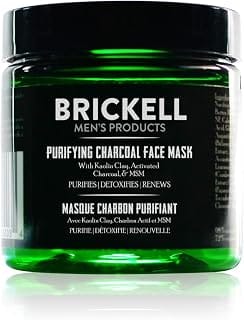
Brickell Purifying Charcoal Face Mask
Why it fits: A wash-off charcoal mask with kaolin clay for oily or congested-feeling skin. Use it sparingly and moisturize after rinsing to avoid over-drying.
Watch-out: Check the ingredient list and introduce it slowly if your skin is reactive.
Check Availability on Amazon →As an Amazon Associate, we earn from qualifying purchases.
As an Amazon Associate, we earn from qualifying purchases.
🎯
Charcoal vs. Clay Masks: What Is the Difference?
Both charcoal and clay masks work by adsorbing impurities, but their mechanisms differ:
- Activated charcoal uses physical adsorption - its porous carbon structure traps oil and debris through Van der Waals forces. It is particularly effective at binding lipophilic substances.
- Clay masks (bentonite, kaolin, montmorillonite) use ionic adsorption - the charged particles in clay attract oppositely charged impurities. Clays also contain minerals that can provide additional skin benefits.
Both are effective for oil control and blackhead reduction. The choice between them comes down to formulation and personal preference. Many products combine both ingredients for a synergistic effect. For those managing oiliness alongside hyperpigmentation concerns, our guide on skincare ingredients to avoid for darker skin covers which mask formulations are safe for melanin-rich skin.
Product pick
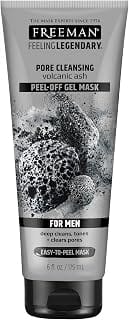
Freeman Pore Clearing Volcanic Ash Peel-Off Gel Mask
Why it fits: An affordable pore-clearing peel-off gel option. Skip peel-off masks if your skin is sensitive, peeling, or currently irritated.
Watch-out: Check the ingredient list and introduce it slowly if your skin is reactive.
Check Availability on Amazon →As an Amazon Associate, we earn from qualifying purchases.
As an Amazon Associate, we earn from qualifying purchases.
💰
DIY Charcoal Masks: Are They Safe?
DIY charcoal mask recipes are popular online, but they carry risks that commercial formulations address:
- Particle size: DIY activated charcoal powder may have irregular, sharp-edged particles that can cause micro-abrasions on the skin
- pH imbalance: Commercial masks are formulated to match the skin's natural pH (4.5-5.5). DIY recipes often mix ingredients with no pH consideration
- Contamination: Homemade masks lack preservatives and can harbor bacterial growth
- Adhesion strength: DIY peel-off masks (often using charcoal + gelatin) can be excessively adhesive, potentially removing the stratum corneum when peeled off
If you choose to make a DIY charcoal mask, use food-grade activated charcoal powder, patch test on a small area first, and do not use peel-off versions. Wash-off clay + charcoal blends are the safest DIY option.
💡 The Optimizer's Edge
The idea that pores "open" and "close" is a persistent myth. Pores do not contain muscles and cannot physically change size in response to temperature or products. What charcoal masks actually do is clear the debris inside the pore, making the pore opening appear smaller because there is less dark, oxidized sebum creating visual contrast against the surrounding skin. This is a cosmetic improvement, not a structural one.
⛶ Fullscreen01Peel-Off CharcoalOTCPotencyGentleStrongest extraction, highest irritation risk. Can remove the stratum corneum if peeled aggressively. Use sparingly (max 1x/month) and avoid on active breakouts.02Charcoal + ClayOTCPotencyGentleBalanced adsorption from both charcoal and clay. Good for combination skin. Apply 1x/week on T-zone, avoid dry areas.03Charcoal Gel MaskOTCPotencyGentleGentle gel-based formula with less drying effect. Ideal for normal to slightly oily skin. Can be used 1-2x/week without significant barrier disruption.04Charcoal + SoothingOTCPotencyGentleCharcoal combined with aloe vera, niacinamide, or allantoin. Best for sensitive or reactive skin that still needs oil control. Use 1x/week or every other week.Concern Oily, clogged pores → Peel-off charcoal maskConcern Combination skin → Charcoal + clay maskConcern Dry + occasional breakouts → Charcoal gel or cream maskConcern Sensitive skin → Charcoal + soothing (aloe/niacinamide)Concern Blackheads on nose → Salicylic acid + spot charcoal
Educational skincare guide. Not medical advice.
✅ Your Clear Skin Checklist
- Patch Test First: Apply a small amount behind your ear or on your jawline 24 hours before full-face application to rule out irritation.
- Apply to Clean, Damp Skin: Wash your face with a gentle cleanser first, then pat dry. Apply the mask to dry skin unless the product instructions say otherwise.
- Follow the Timer: Leave on for the time specified on the packaging (usually 10-15 minutes). If the mask dries and cracks before the timer, rinse off immediately.
- Moisturize Afterward: Charcoal masks can temporarily disrupt the barrier. Always follow with a hydrating serum and moisturizer - see our hydration vs moisturization guide for the correct layering order - to restore equilibrium.
Charcoal face masks are a useful tool for oily and acne-prone skin, but they are not a comprehensive skincare solution. They work best as part of a balanced routine that includes a gentle cleanser, a hydrating serum, and a barrier-supporting moisturizer.
Scientific References: A 2020 review in the Journal of the American Academy of Dermatology examined the use of activated charcoal in cosmetic products and concluded that while generally safe, evidence supporting anti-aging and exfoliation claims is lacking (PubMed). A clinical study on clay masks (similar mechanism to charcoal) demonstrated significant improvements in acne lesions and sebum control with twice-weekly use over 4 weeks (PubMed). An earlier pilot study also found a 54% reduction in total lesion count after 6 weeks of clay mask use (PubMed).
Frequently Asked Questions About Charcoal Face Masks
Are charcoal face masks safe for all skin types?No. Charcoal masks are best suited for oily and combination skin. Dry, sensitive, or reactive skin types may experience irritation, redness, or barrier disruption. If you have rosacea, eczema, or a compromised barrier, avoid charcoal masks entirely and use gentler options like hydrating or colloidal oatmeal masks instead.How often should I use a charcoal face mask?For oily skin: 2 times per week. For combination or normal skin: 1 time per week. For dry or sensitive skin: 1 time every 2 weeks at most, or avoid entirely. Overuse can strip the skin barrier, leading to rebound oil production, increased TEWL, and irritation. A clinical study found good outcomes with twice-weekly use over 4 weeks with no significant adverse events.Can charcoal masks help with cystic acne?No. Cystic acne originates deep within the pilosebaceous unit, below the level where a topical charcoal mask can reach. Surface adsorption has negligible effect on deep inflammatory lesions. Cystic acne requires dermatologist-prescribed treatment such as topical retinoids, oral antibiotics, or isotretinoin.What is the difference between charcoal and clay masks?Charcoal uses physical adsorption through its porous carbon structure to bind oil and debris. Clay uses ionic adsorption - charged mineral particles attract oppositely charged impurities. Both are effective for oil control, but clay masks also deliver minerals and often have a stronger drying effect. Many products combine both ingredients.Should I use a peel-off or wash-off charcoal mask?Wash-off masks are safer for regular use. They provide effective oil adsorption without the physical trauma of peeling. Peel-off masks can remove the stratum corneum (the outermost skin layer) when pulled off, causing barrier damage, especially if used too frequently or on sensitive skin. If you prefer peel-off masks, limit use to once per month and apply a thin layer only on the T-zone.
This article is for informational purposes only and does not replace professional dermatological advice.