Evidence-Based Natural Acne Remedies: What Science Says About Tea Tree Oil, Green Tea, and Zinc
The best natural acne remedies backed by clinical evidence. Science-based guide to tea tree oil, green tea, zinc, and niacinamide for clear skin.
In this guide
Not all natural acne remedies are backed by science. While social media promotes countless herbal treatments, only a few have been tested in randomized clinical trials. This evidence-based guide separates the remedies that work from those that are just hype.
The best natural acne remedies — tea tree oil, green tea extract, zinc, and niacinamide — have clinical data supporting their efficacy. But natural does not mean risk-free, and not every remedy is right for every skin type. Here is what the science actually says.
TL;DR — Natural Acne Remedies That Actually Work
- ✦ Tea tree oil 5% gel is proven effective — RCT shows 60% lesion reduction in 45 days
- ✦ Topical green tea extract reduces inflammatory acne lesions (meta-analysis confirmed)
- ✦ Niacinamide 2–5% regulates sebum production and calms inflammation
- ✦ Zinc has anti-inflammatory benefits but oral supplements require medical supervision
- ✦ Always patch test natural remedies — they can still cause irritation and allergic reactions
Tea Tree Oil: The Most Studied Natural Acne Remedy
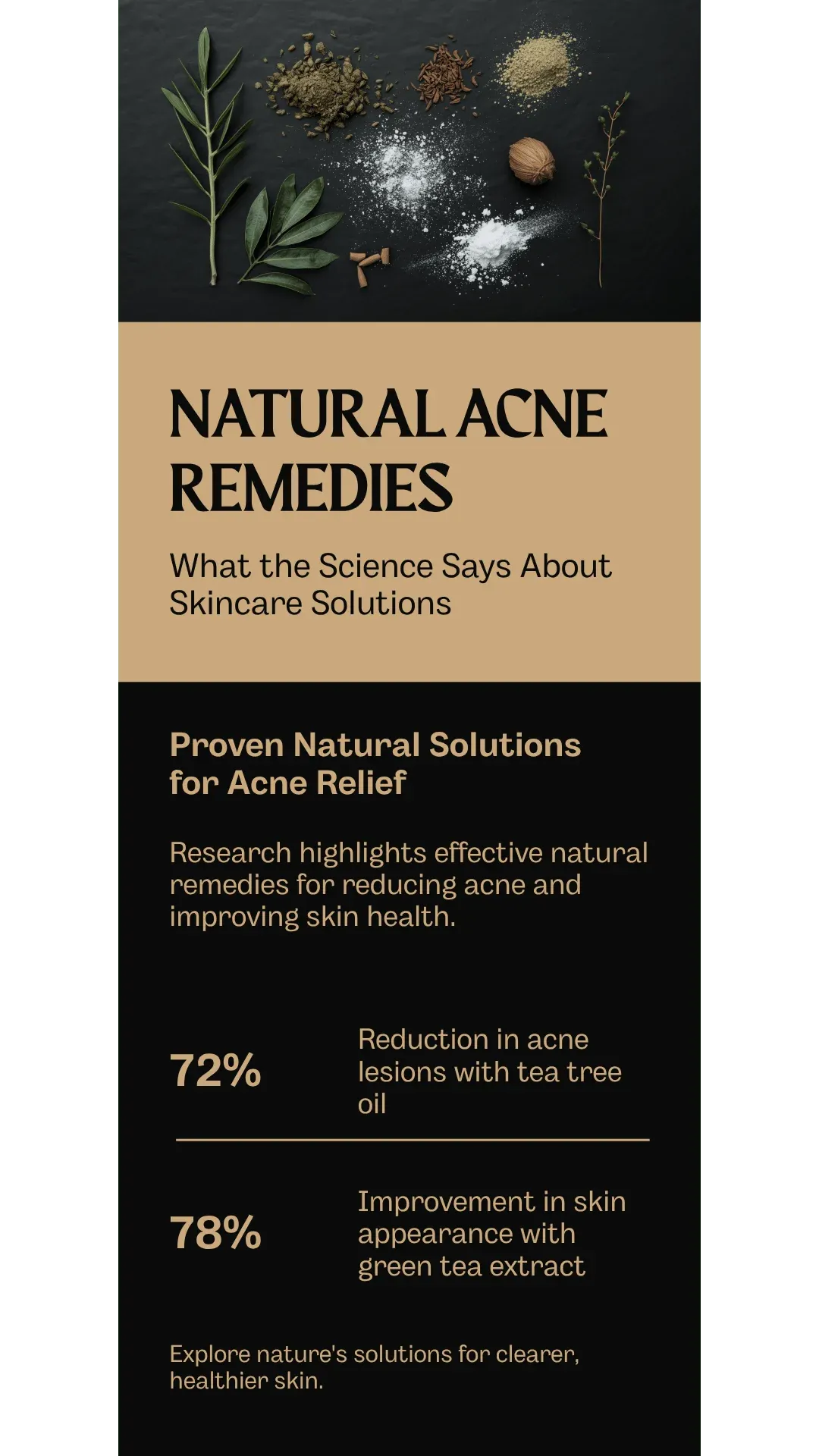
Tea tree oil is the natural acne remedy with the strongest evidence base. A randomized, double-blind clinical trial published in the Medical Journal of Australia tested 5% tea tree oil gel against placebo in 60 people with mild to moderate acne. After 45 days, the tea tree oil group showed a 5.75-fold reduction in acne lesion count compared to placebo, and a 3.4-fold greater improvement in acne severity score.
A more recent 2026 evidence-based review in the Journal of Cosmetic Dermatology (PMC12729506) confirmed that tea tree oil possesses antimicrobial activity against Cutibacterium acnes and anti-inflammatory properties that make it a viable option for mild to moderate acne. The review emphasized that 5% concentration appears to be the most effective and best-tolerated formulation.
Tea tree oil is available over the counter in gel, serum, and cleanser formats. The key is to use products formulated at the studied concentration rather than applying pure essential oil, which can cause severe irritation and contact dermatitis.
If you are new to tea tree oil, our guide to the best spot treatments for teenage acne includes tea tree options and other clinically proven spot treatments.
Green Tea Extract: Antioxidant Protection for Acne-Prone Skin
Green tea extract (GTE) has been studied for its anti-inflammatory and antioxidant effects on acne. A systematic review and meta-analysis published in PubMed (32812270) analyzed five randomized controlled trials and found that topical green tea extract significantly reduced inflammatory acne lesions. The standardized mean difference was -9.38 lesions, with topical application showing strong benefits while oral intake had minimal effect.
A separate review in PMC (PMC5384166) confirmed that green tea polyphenols, particularly epigallocatechin-3-gallate (EGCG), reduce sebum production and inhibit the growth of C. acnes. The research suggests that topical application is the effective route — drinking green tea alone is unlikely to produce significant acne improvements.
Zinc: Anti-Inflammatory Support for Acne
Zinc is a mineral with well-documented anti-inflammatory properties. Clinical studies have examined both topical and oral zinc for acne treatment. Topical zinc, often combined with niacinamide or other ingredients, can reduce inflammation and support healing of acne lesions. A clinical trial comparing 2% tea lotion with 5% zinc sulphate solution found that while the tea lotion showed significant lesion reduction, zinc sulphate showed anti-inflammatory benefits without the same level of direct antimicrobial effect.
Oral zinc supplements should only be taken under medical supervision, as excessive zinc intake can cause side effects including nausea and copper deficiency. The American Academy of Dermatology notes that while zinc may help some patients, the evidence is not strong enough for universal recommendation without medical guidance.
For a deeper understanding of how different acne treatments work together, explore our guide to managing teenage oily skin which covers ingredient combinations and routine building.
Niacinamide: The Science-Backed Oil Regulator
While often grouped with natural remedies, niacinamide (vitamin B3) is one of the most clinically studied ingredients for acne-prone skin. Clinical research demonstrates that 2–5% niacinamide effectively reduces sebum production, calms inflammation, and improves skin barrier function.
A double-blind clinical trial found that 2% niacinamide moisturizer significantly reduced sebum excretion rates compared to placebo. A 2024 comprehensive review in PMC (PMC11047333) confirmed that niacinamide's sebostatic effects are consistent across different ethnic populations and skin types.
For a detailed breakdown of how niacinamide compares to other acne-fighting ingredients, our review of The Ordinary Niacinamide 10% + Zinc 1% covers clinical studies and real-world results.
Azelaic Acid: The Multi-Benefit Natural Compound
Azelaic acid is a naturally occurring dicarboxylic acid produced by yeast that lives on healthy skin. It has multiple benefits for acne-prone skin: it kills acne-causing bacteria, reduces inflammation, normalizes skin cell turnover in follicles, and fades post-inflammatory hyperpigmentation (the dark marks acne leaves behind).
Clinical studies show that 10–20% azelaic acid is comparable to benzoyl peroxide, tretinoin, and topical antibiotics for treating mild to moderate acne, with fewer side effects. It is particularly valuable for people with darker skin tones who are prone to post-inflammatory hyperpigmentation.
How to Use Natural Acne Remedies Safely
Natural does not mean harmless. Many plant-based ingredients can cause contact dermatitis, photosensitivity, or allergic reactions. Follow these safety guidelines:
- Patch test every new product on a small area behind your ear or on your inner arm for 3–5 days before applying to your face.
- Introduce one remedy at a time so you can identify which ingredient works or causes a reaction.
- Never apply undiluted essential oils to your skin. Tea tree oil should always be used in a formulated product at 5% concentration or lower.
- Use sunscreen daily — some natural ingredients (especially azelaic acid and AHAs) can increase photosensitivity.
- Consult a dermatologist if your acne is moderate to severe, cystic, or not responding to over-the-counter treatments after 8–12 weeks.
For building a complete routine with evidence-based ingredients, our guide to the best ingredients for skin barrier repair explains how to maintain healthy skin while using active treatments.
Conclusion
The most effective natural acne remedies are those with clinical evidence: tea tree oil (5% gel), topical green tea extract, niacinamide, and azelaic acid. Zinc offers anti-inflammatory support but works best as part of a broader regimen. Skip the viral trends — stick with what the research supports.
Start with one proven ingredient, patch test carefully, and give it at least 8–12 weeks to show results. If your acne is persistent, severe, or inflamed, see a board-certified dermatologist rather than relying solely on natural remedies.
For more information on evidence-based acne treatments, read our guide to the best retinol serums and our breakdown of the best AHA/BHA exfoliants for acne-prone skin.
Frequently Asked Questions About Natural Acne Remedies
What is the most effective natural acne remedy?
Does tea tree oil really work for acne?
Can green tea help reduce acne?
Is zinc good for acne-prone skin?
How long do natural acne remedies take to work?
This article is for informational purposes only and does not replace professional dermatological advice.