Best Water-Resistant Sunscreens: 3 Picks by Activity
Compare three water-resistant sunscreens for swimming, sweat and sensitive skin, with 40- or 80-minute label checks and reapplication guidance.

In this guide
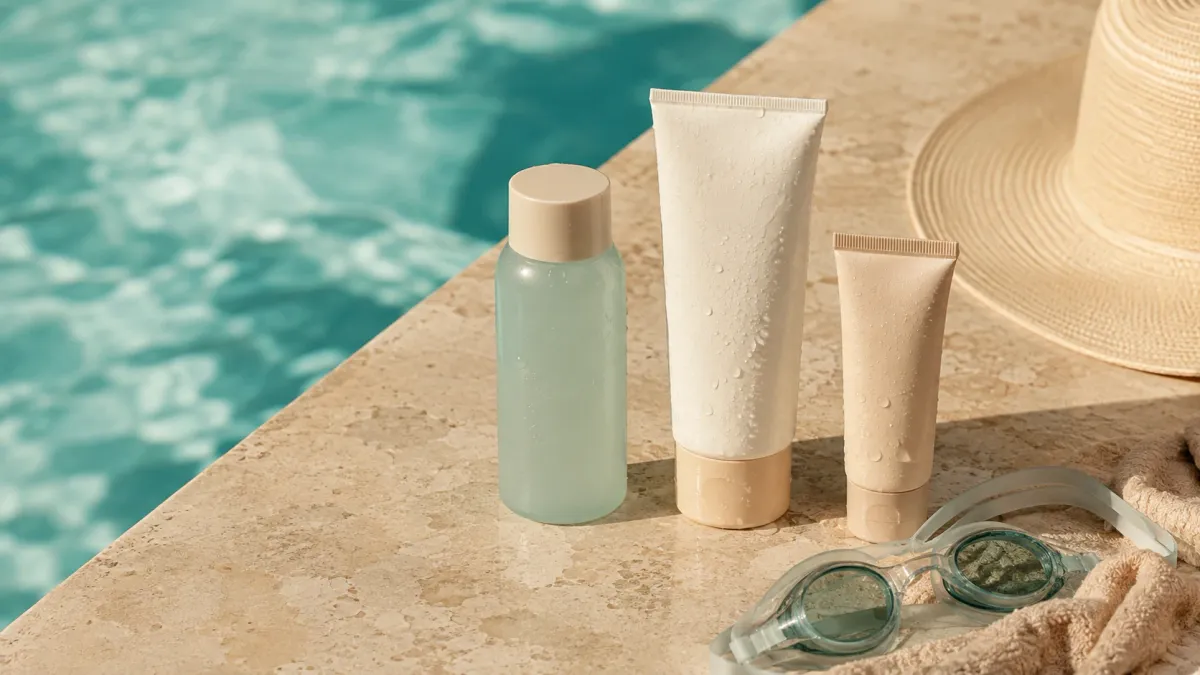
The best water-resistant sunscreen is the one whose tested label matches your activity and whose texture lets you apply a full, even layer. Choose an 80-minute formula for sustained swimming or heavy sweat; choose a 40-minute formula for a short dip or lighter activity.
Our most practical 80-minute pick is Neutrogena Hydro Boost Water Gel Lotion SPF 50. CoTZ Sensitive SPF 40 is the gentler mineral option for a short swim, while Badger Active Mineral Sunscreen Cream SPF 30 suits readers who want a compact, unscented zinc formula and accept a richer finish.
- No sunscreen is waterproof. U.S. labels may claim water resistance for only 40 or 80 minutes.
- Best for a long swim: Neutrogena Hydro Boost SPF 50, labeled water resistant for 80 minutes.
- Best for sensitive skin: CoTZ Sensitive SPF 40, a fragrance-free zinc formula with 40-minute resistance.
- Best short-ingredient mineral cream: Badger Active SPF 30, with 18.75% zinc oxide and 40-minute resistance.
- The clock resets early after towel drying; reapply immediately instead of waiting for 40 or 80 minutes.
Compare the three picks, decode the label, or build a reapplication plan before you leave.
SkinOptimizer did not run a controlled wear or water-resistance test on these products. We compared current U.S. brand pages, Drug Facts information, water-resistance duration, filters, fragrance information, use case, and the limitation most likely to affect a purchase.
Product formulas, packages, and marketplace sellers can change. Check the Drug Facts panel and seller before buying, and follow the directions on the bottle you receive.
“Waterproof sunscreen” sounds like a simple shopping category, but the phrase hides the decision that matters. A sunscreen can remain effective through a tested 40- or 80-minute water exposure and still need immediate reapplication after you towel off.
That distinction changes what belongs in your beach bag. A light 80-minute lotion may be the better face-and-body choice for swimming laps, while a richer 40-minute mineral cream can make more sense for a short dip when fragrance or organic filters are the bigger concern.
This guide keeps the shortlist intentionally small. It compares three traceable products instead of presenting a long ranking filled with near-duplicate options and unverified claims.
Best Water-Resistant Sunscreens: Quick Comparison
Start with duration, then use skin feel and sensitivity as tie-breakers. SPF, water resistance, and finish answer different questions, so do not let a high SPF number distract you from a short water-resistance window.
| Product | Water resistance | Best for | Main trade-off |
|---|---|---|---|
| Neutrogena Hydro Boost Water Gel Lotion SPF 50 | 80 minutes | Swimming, sweat, lightweight face-and-body wear | Fragrance and alcohol may bother reactive skin or eyes |
| CoTZ Sensitive SPF 40 | 40 minutes | Sensitive, dry, or fragrance-averse skin | Rich, dewy mineral finish; shorter activity window |
| Badger Active Mineral Sunscreen Cream SPF 30 | 40 minutes | Short swims, dry body skin, minimal-ingredient preference | Dense oil-and-beeswax base can feel heavy or leave residue |
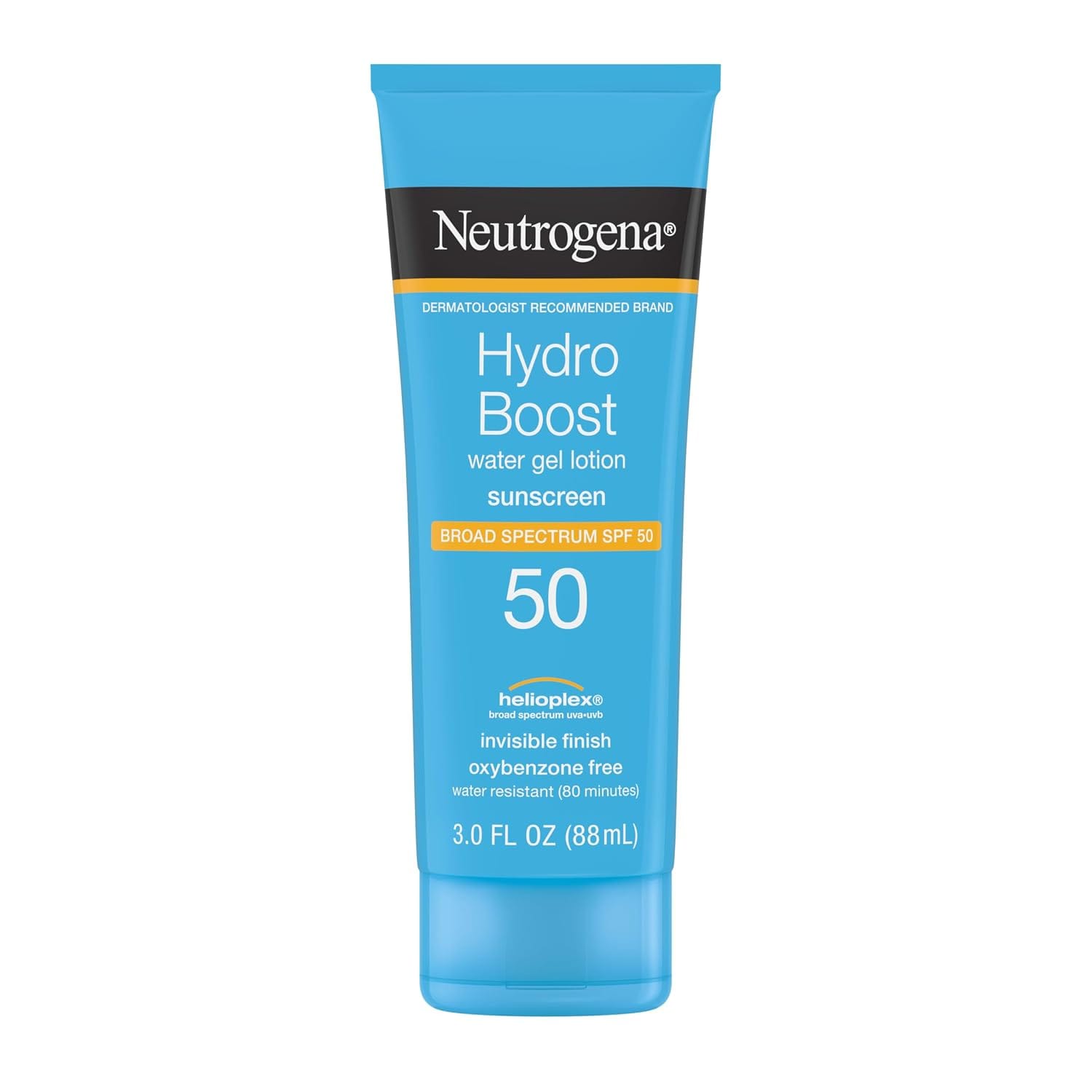
Neutrogena Hydro Boost Water Gel Lotion SPF 50
This broad-spectrum SPF 50 lotion has an 80-minute water-resistance claim and a water-light, hydrating finish. It is the strongest fit here for a long swim, a sweaty hike, or a beach day when a dense mineral cream encourages under-application.
The formula is oil-free and non-comedogenic, but “lightweight” does not mean universally gentle. The current ingredient list includes fragrance and alcohol, so sensitive eyes or a damaged barrier may prefer a fragrance-free mineral alternative.
Buy it if: you want an 80-minute face-and-body lotion with SPF 50 and dislike thick sport creams.
Skip it if: fragrance, alcohol, or organic sunscreen filters commonly sting your skin or eyes.
As an Amazon Associate, we earn from qualifying purchases.
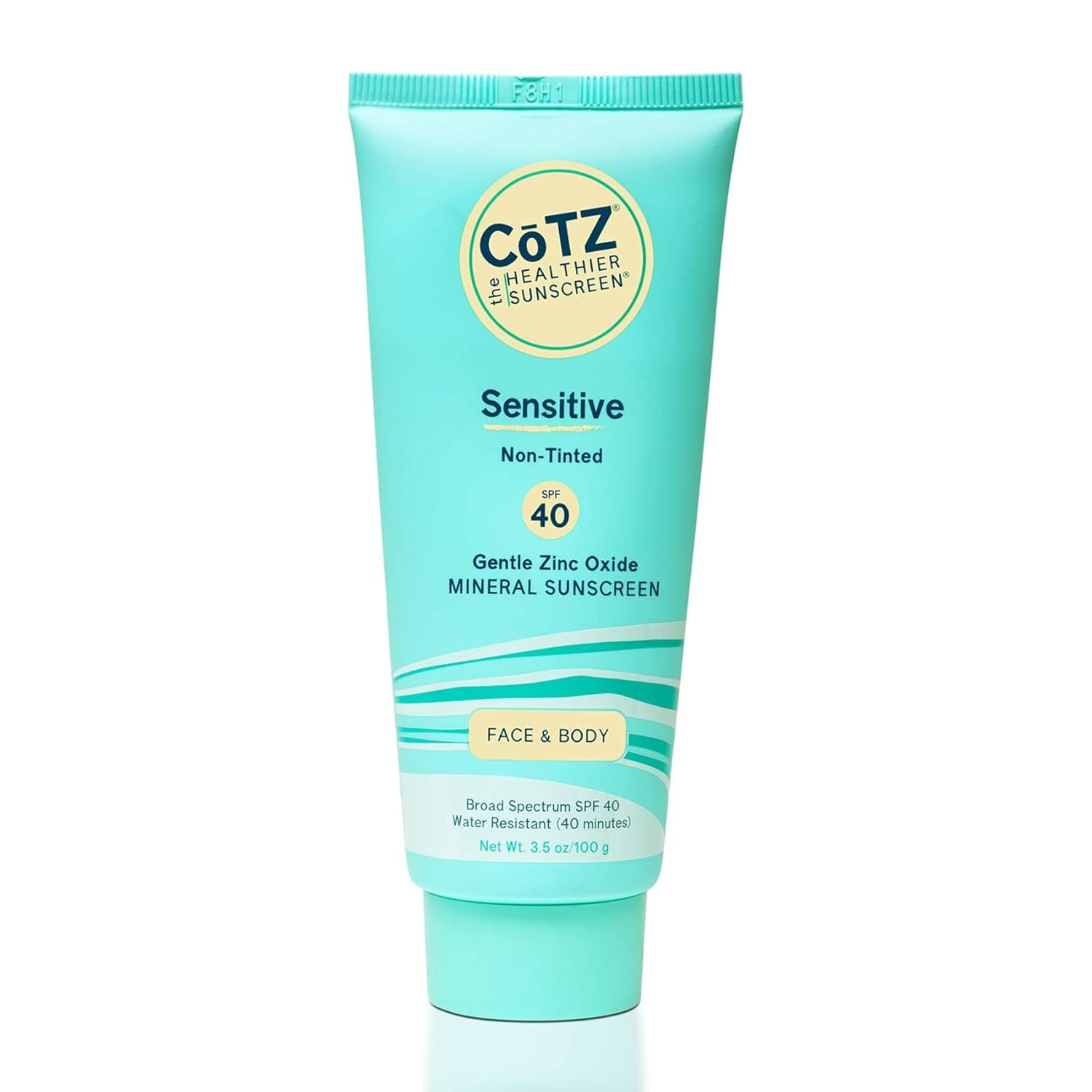
CoTZ Sensitive SPF 40
CoTZ Sensitive uses 20% zinc oxide, is fragrance-free, and is labeled water resistant for 40 minutes. Its richer, moisturizing feel makes it a rational option for dry or reactive skin during a short swim or moderate outdoor activity.
The trade-off is texture. A dewy mineral cream may feel substantial in humid weather, and any untinted zinc formula can look different across skin tones when applied at the full amount.
Buy it if: you prioritize a fragrance-free zinc formula and your water exposure will fit a 40-minute window.
Skip it if: you want a matte, invisible finish or expect continuous swimming beyond 40 minutes.
As an Amazon Associate, we earn from qualifying purchases.
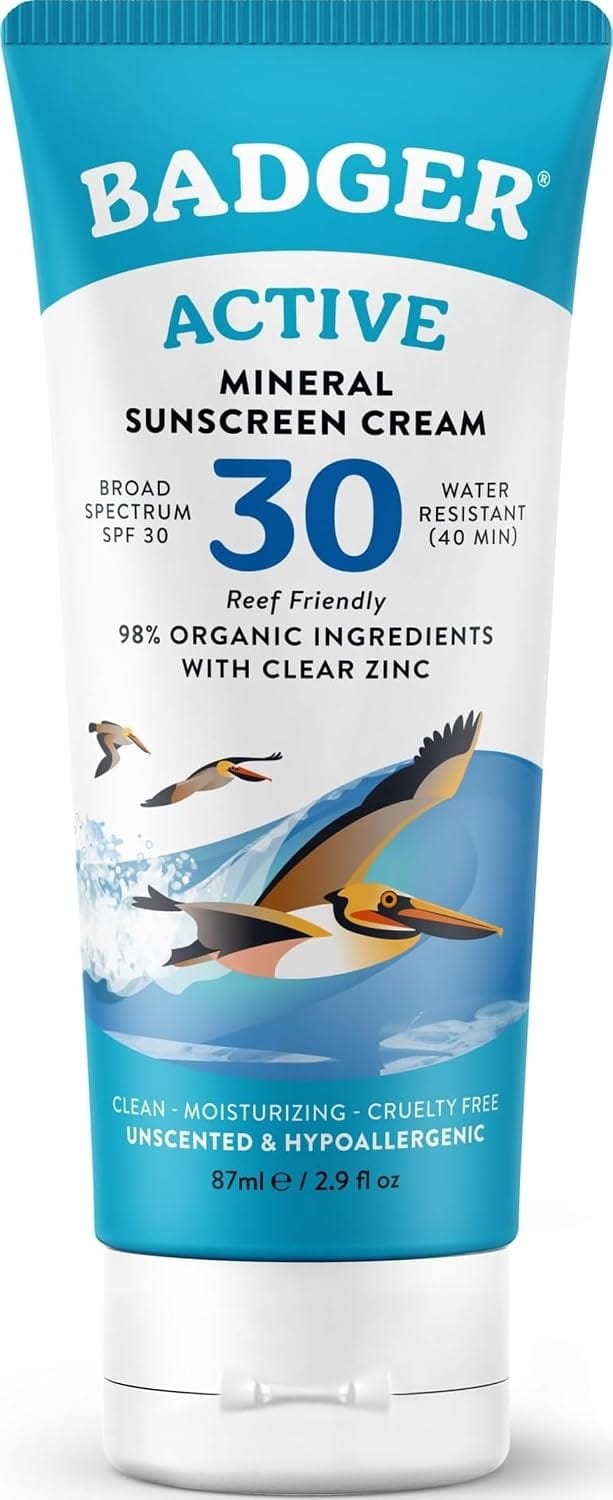
Badger Active Mineral Sunscreen Cream SPF 30
Badger Active combines broad-spectrum SPF 30 with 18.75% zinc oxide and 40-minute water resistance. The current official formula uses an oil-and-beeswax base, is unscented, and is designed for short swims or light activity rather than an all-day continuous water session.
This is the richest option in the shortlist. The same waterless base that suits dry body skin may feel too heavy on an oily or acne-prone face, and mineral residue remains possible.
Buy it if: you want an unscented zinc cream for a short swim and prefer a short, traceable ingredient list.
Skip it if: you need 80-minute resistance, a weightless facial finish, or avoid beeswax.
As an Amazon Associate, we earn from qualifying purchases.
Product facts were checked against the current Neutrogena product page, CoTZ product page, Badger product page, and the Badger Drug Facts record. We did not use marketplace reviews as efficacy evidence.
What 40- and 80-Minute Water Resistance Actually Mean
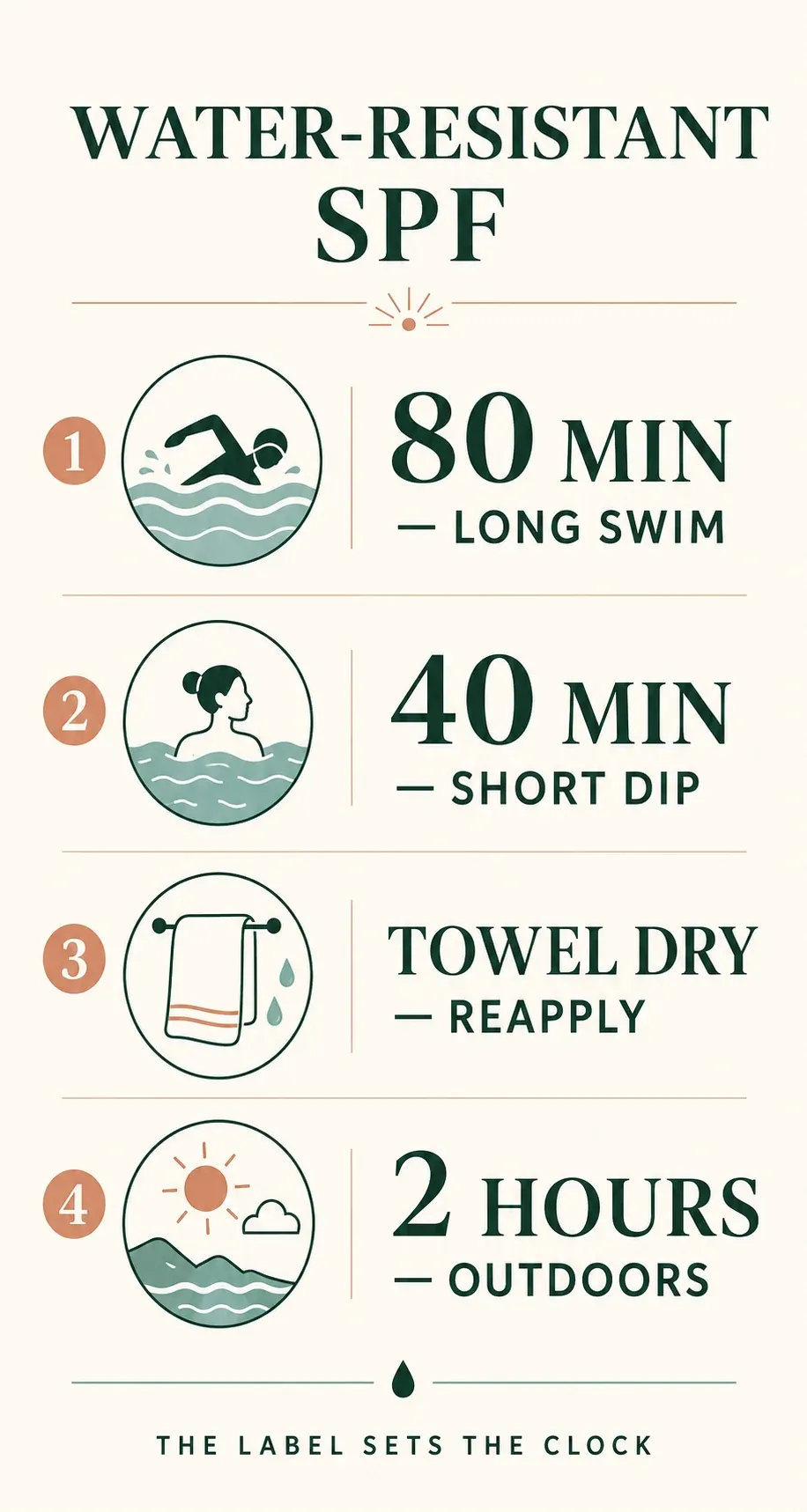
The FDA sunscreen labeling guidance allows a product to state that it is water resistant for 40 or 80 minutes when it passes the corresponding test. Terms such as “waterproof” and “sweatproof” are not permitted because they imply unlimited protection.
The 40- or 80-minute period is not an ordinary countdown from application. It describes tested performance while swimming or sweating, and the bottle still tells you to reapply at least every two hours outdoors.
Towel drying is the practical override. Fabric can physically remove the sunscreen film, so FDA Drug Facts directions tell users to reapply immediately after towel drying even when the labeled water-resistance interval has not elapsed.
| Your activity | Better label | Why | Reapply trigger |
|---|---|---|---|
| Swimming laps or long ocean session | 80 minutes | Longer tested water window | At 80 minutes or sooner after towel drying |
| Short pool dip or light paddle | 40 minutes | A shorter tested interval can be sufficient | At 40 minutes or sooner after towel drying |
| Running, cycling, or humid hike | Prefer 80 minutes for heavy sweat | Sweat challenges the film even without swimming | At the label interval, after wiping, and at least every two hours |
| Outdoor lunch with little sweat | Water resistance is optional but useful | Comfort and adequate application may matter more | At least every two hours outdoors |
| Children splashing and toweling often | 80 minutes plus close supervision | Frequent water exposure; however towels shorten real wear | Every time the skin is towel dried |
The American Academy of Dermatology’s label guide uses the same 40- and 80-minute distinction. It also recommends broad-spectrum SPF 30 or higher and combining sunscreen with shade and protective clothing.
If your day is mostly commuting or office time, compare a lighter formula in our guide to the best everyday sunscreens. A sport sunscreen and a daily facial sunscreen solve different problems, and owning two purposeful options can be more useful than forcing one bottle into every situation.
How to Choose the Right Formula for Your Skin
Water resistance does not predict whether a sunscreen will feel comfortable. Filter type, base, fragrance, alcohol, tint, and how the film behaves around the eyes can matter more after you have matched the activity window.
For reactive skin, start with our detailed sensitive-skin sunscreen guide. “Mineral” is a useful first filter for some people, but it is not a guarantee against irritation, dryness, white cast, or breakouts.
For oily or acne-prone skin
Look for a lotion that spreads quickly, sets without a greasy film, and is labeled non-comedogenic if congestion is a recurring issue. A very rich oil-and-wax mineral cream can work on the body while feeling wrong on the face.
Our oily-skin sunscreen comparison focuses more heavily on finish and pore-conscious wear. Whatever you choose, cleansing gently after a beach day is more sensible than scrubbing away residue.
For dry or sensitive skin
A creamier base can reduce the temptation to underapply, especially on dry body skin. Fragrance-free labeling and a short ingredient list can simplify troubleshooting, although neither promises universal tolerance.
If mineral sunscreen looks flaky, apply a bland moisturizer first and allow it to settle. The separate guide to sunscreen for dry skin explains how hydration, finish, and filter type interact.
For deeper skin tones
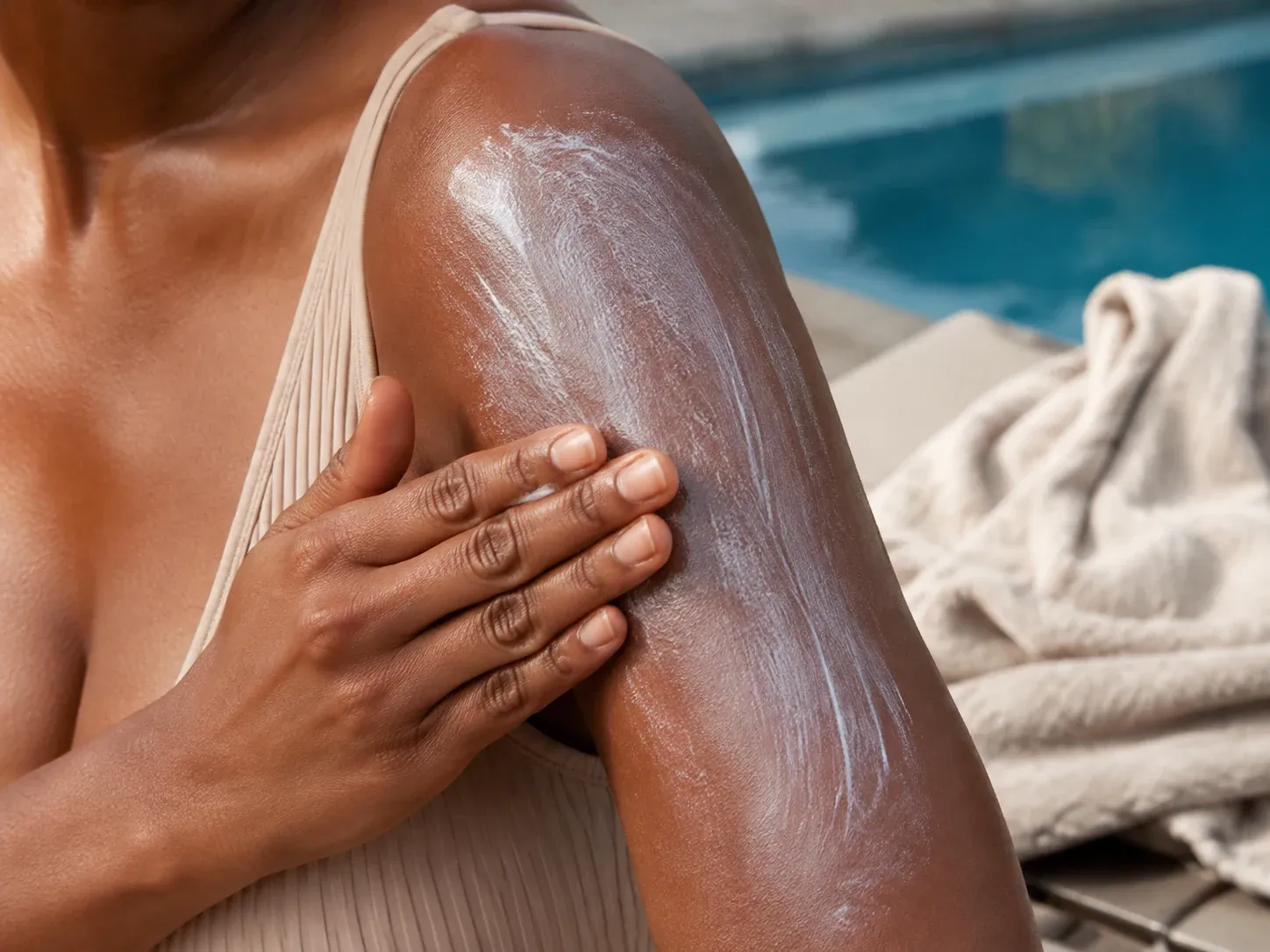
Untinted zinc formulas may leave a white, purple, or gray cast when applied generously. Rub-in technique can reduce residue, but it cannot make every mineral base invisible on every complexion.
If cast leads you to use less than the labeled amount, consider a sheer organic-filter lotion or a well-matched tint. Our guide to the best tinted sunscreens treats shade match as a protection issue, not only a cosmetic preference.
How to Apply and Reapply Water-Resistant Sunscreen
A good purchase can still fail through thin or uneven application. The SPF on the bottle reflects standardized testing at a defined application amount, not the protection from a few dots stretched across the face and shoulders.
Follow the bottle’s directions first. Many U.S. Drug Facts labels instruct users to apply liberally 15 minutes before sun exposure, but your specific product is the authority for its setting time and age restrictions.
Apply before exposure. Cover every exposed area, including ears, hairline, neck, shoulders, backs of hands, tops of feet, and the edges of swimwear.
Use enough product. For an adult body, a shot-glass amount is a common practical estimate. Apply in sections so missed patches are easier to spot.
Let the film set. Wait the label’s instructed time before dressing, sweating, or entering the water. Friction before setting can create thin spots.
Track water exposure. Count active swimming or heavy sweating against the 40- or 80-minute label, and do not stretch the claim.
Reapply after towels. Dry the skin, then rebuild an even layer immediately. Do the same after rubbing, wiping sweat, or changing clothes that disturbed the film.
Keep the two-hour rule. Even without swimming, reapply at least every two hours outdoors and use shade, a hat, sunglasses, and protective clothing.
For face and neck, the two-finger method is a useful visual estimate, but product thickness and bottle design vary. The fuller walkthrough in how to reapply sunscreen properly covers makeup, sprays, sticks, and missed areas.
A sunscreen stick can help with small zones such as the nose, ears, or a child’s face, but multiple slow passes are needed for even coverage. See our sunscreen stick guide before treating one quick swipe as a full application.
A Beach-Bag Plan That Prevents Common Failures
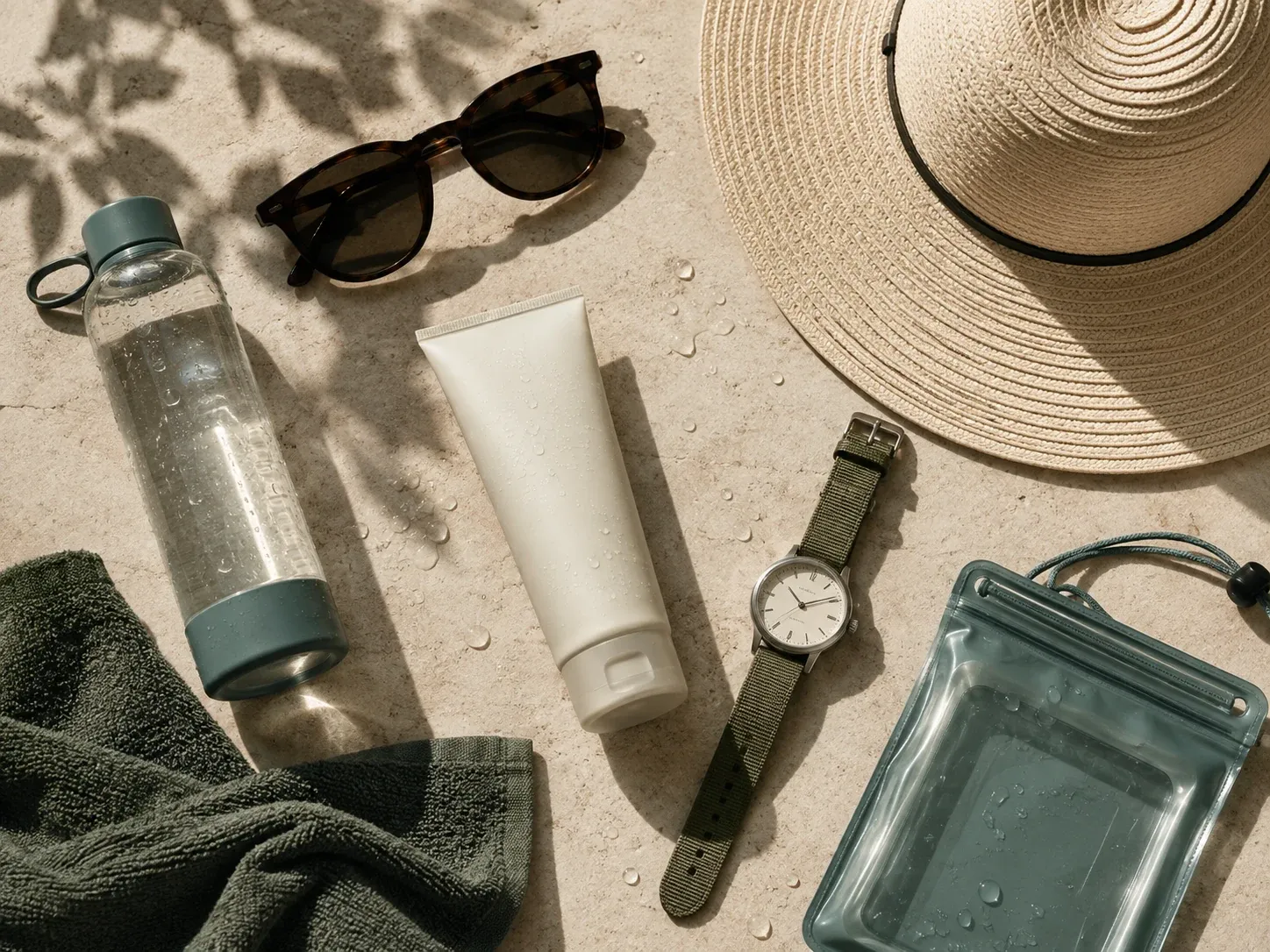
Bring more sunscreen than the theoretical minimum. Sharing one small face bottle across several adults and children often leads everyone to ration it, especially when a second full-body application is needed.
Keep the bottle out of direct heat and sunlight according to its storage directions. A cooler bag can help protect the product, but avoid freezing it or assuming the formula is stable after months in a hot car.
| Failure point | What goes wrong | Better plan |
|---|---|---|
| Applying after reaching the beach | Skin is exposed while you spread product, and the film may not set before swimming | Apply at home, then touch up missed areas outdoors |
| Using one thin coat | Coverage is patchy and below the tested amount | Apply in sections or two passes |
| Trusting an “80-minute” label after toweling | The towel physically removes the protective film | Reapply immediately after drying |
| Relying on sunscreen alone | Shoulders, scalp, eyes, and lips remain vulnerable | Add shade, UPF clothing, a hat, sunglasses, and SPF lip balm |
| Buying from an unknown seller | Storage, age, or authenticity may be uncertain | Check seller, seal, expiration, and current Drug Facts |
Sunburn, blistering, dizziness, nausea, confusion, or signs of heat illness need prompt attention. Move out of the sun, cool down, hydrate when appropriate, and seek medical care for severe symptoms or concern about a child.
Our broader guide to preventing sun damage explains why clothing and shade are not backup plans. They reduce how much exposed surface must be covered perfectly and how often a sunscreen film is disturbed.
If you are deciding between SPF 30 and SPF 50, read is SPF 30 enough?. A higher SPF does not extend the water-resistance interval or excuse a thin application.
Frequently Asked Questions
Is water-resistant sunscreen waterproof?
No. FDA labeling does not allow “waterproof” or “sweatproof” claims because no sunscreen provides unlimited protection in water. A water-resistant label must state either 40 or 80 minutes, after which you should reapply.
Is 80-minute sunscreen better than 40-minute sunscreen?
It is better for longer swimming or heavier sweating, but not automatically better for every person. A 40-minute fragrance-free mineral cream may be the more usable option for a short dip if an 80-minute formula irritates your skin.
Do I need to reapply before 80 minutes?
Yes, when you towel dry, rub or wipe the skin, or notice uneven coverage. You should also follow the product’s directions and reapply at least every two hours while outdoors even if you have not been in water.
Can I use water-resistant body sunscreen on my face?
Usually, if the label permits face-and-body use and your skin tolerates it. Avoid the eye area as directed, patch test a rich or fragranced formula, and choose a separate facial sunscreen if body lotion feels heavy or stings.
How much sunscreen should I pack for a beach day?
Pack enough for a generous first application plus full reapplications for every person. An adult body application is often estimated at about one ounce, so one small bottle may be insufficient for a family or a long day.
The Bottom Line
For swimming or heavy sweat, start with a broad-spectrum SPF 30 or higher and match the tested duration to the activity. Neutrogena Hydro Boost SPF 50 is the clearest 80-minute option in this shortlist; CoTZ Sensitive SPF 40 and Badger Active SPF 30 are purposeful 40-minute mineral choices with different texture trade-offs.
No product removes the need to apply enough, reapply after towel drying, and use shade and clothing. The best water-resistant sunscreen is the one whose label you understand and whose limitations you are prepared to manage.
Question discovery: We reviewed recurring user questions about swimming, beach volleyball, sensitive skin, and face-sunscreen texture in public skincare communities. Those discussions helped shape this guide’s decision points; official labels and medical guidance—not anecdotes—support the factual recommendations.
Medical disclaimer: This article is educational and does not diagnose or treat a medical condition. Ask a dermatologist or pediatric clinician about persistent reactions, severe sunburn, photosensitizing medication, or sunscreen use for babies younger than six months.