Can You Overdo Skincare Products? Signs to Stop and Reset
Learn the signs of skincare product overload, what to stop first, and how to reset your routine with fewer irritating steps.

In this guide
If you are rebuilding after irritation, use this slow skincare routine to reintroduce cleanser, moisturizer, SPF, and actives in a cleaner order.
Need the practical part first?
Skip directly to the sections most readers look for: the simple product reset kit, the stop list, or the restart plan.
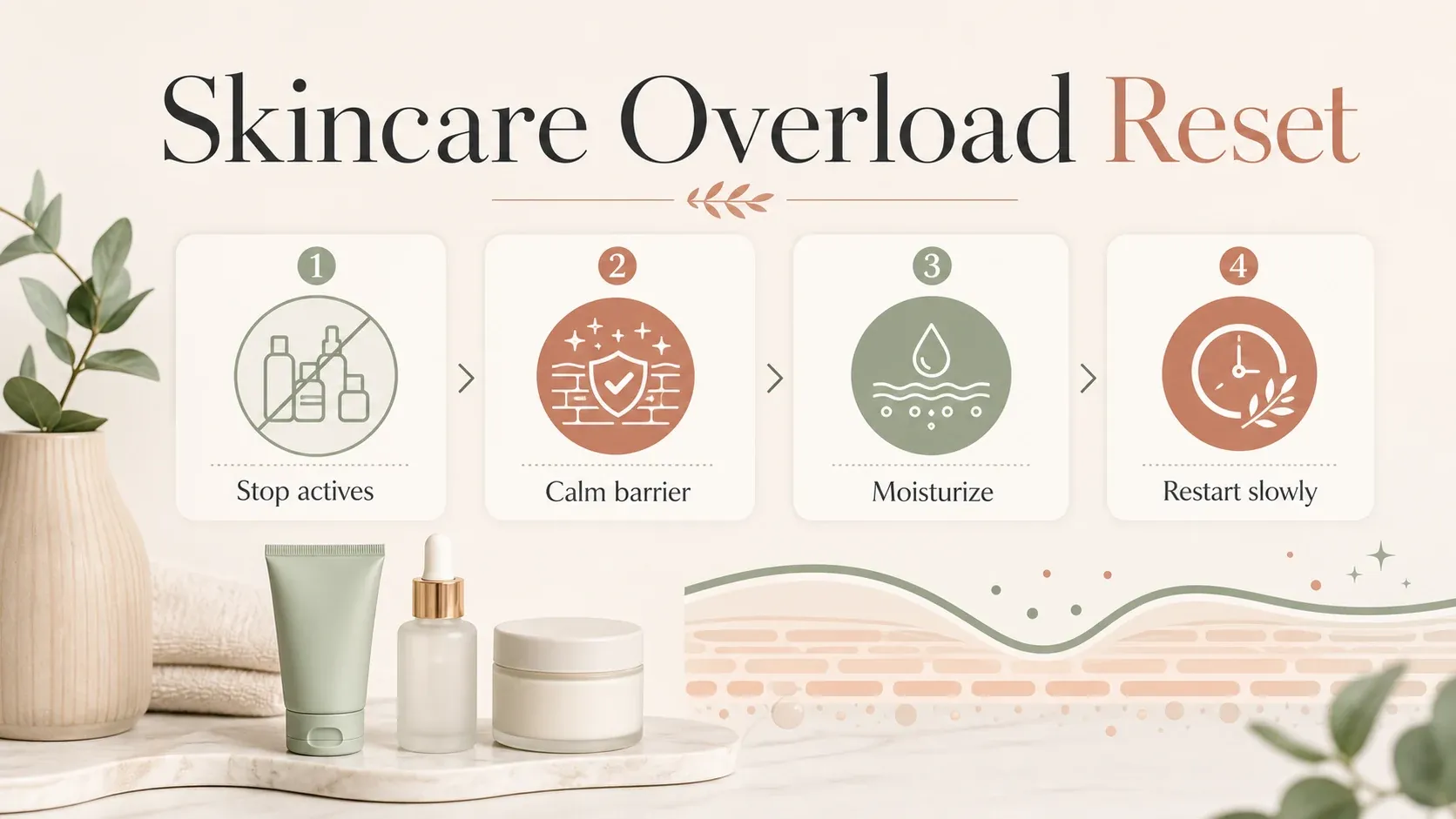
Can you overdo skincare products? Yes, and it is more common now because modern routines can become crowded fast. One toner turns into an essence, two serums, an exfoliating pad, a retinoid, a spot treatment, a barrier cream, and a mask. Each step may look reasonable alone. Together, they can become too much for your skin.
The goal is not to make skincare scary. A routine can include actives, exfoliation, retinoids, sunscreen, and targeted products. The problem starts when the routine has no system. If you add new products before your skin has adjusted, you may not know what is helping and what is causing irritation.
If a once-stable routine seems ineffective, run the six-point skincare plateau audit before adding a stronger active.
This guide uses a simple rule: when skin feels angry, do less before you do more. We will separate normal adjustment from product overload, show what to stop first, and build a restart plan that is practical for real bathrooms, not perfect shelf photos.
The 2026 skincare mistake is not “using skincare.” It is stacking too many strong ideas at the same time: exfoliation, retinoids, vitamin C, acne treatments, brightening acids, and barrier repair. A better routine has a clear job for each step. If two products do the same aggressive job, one usually needs to wait.
Can You Overdo Skincare Products? The Short Rule
You are probably overdoing skincare products when your routine is causing more problems than it solves. A helpful product should support your skin over time. It should not leave your face feeling like it needs another product to recover from the last one.
The American Academy of Dermatology recommends a simple baseline for skin care: gentle cleansing, moisturizing, and sun protection. That does not mean active ingredients are always wrong. It means the basics are the base. Actives work best when the base is stable.
The important part is sequence. Many people keep the irritating product, then add a calming product on top. That can work in a mild case, but it often hides the real issue. If your skin is already reactive, the cleaner move is to reduce the number of triggers first.
Signs You Are Using Too Many Skincare Products
Product overload can look like acne, dryness, sensitivity, or a dull texture. That is why it gets confusing. The same routine may feel great for one person and too strong for another. Skin type matters, but current skin condition matters more.
| Sign | What it may mean | Best first move |
|---|---|---|
| Moisturizer burns | Your skin may be irritated or barrier-stressed | Stop actives and simplify |
| New tightness | Too much cleansing or exfoliation | Cleanse gently, moisturize more |
| Flakes with oiliness | Skin may be both dehydrated and overworked | Pause acids and scrubs |
| Redness after routine | Possible irritation or sensitivity | Reduce fragrance and strong actives |
| Sudden small bumps | Could be irritation, clogged pores, or product mismatch | Stop new products and track changes |
If irritation feels sharp, painful, swollen, or lasts, do not treat it like a normal skincare phase. DermNet describes irritant contact dermatitis as skin inflammation from contact with irritating substances. Skincare products can be part of that picture, especially when strong ingredients are layered or used too often.
Why Product Overload Happens
Most product overload is not random. It usually comes from one of four patterns. The first is trend stacking. A person sees skin cycling, exfoliating acids, retinol, niacinamide, slugging, vitamin C, and barrier cream advice, then tries to combine all of it.
The second pattern is problem chasing. You get dry, so you add a rich cream. Then you get bumps, so you add an acne active. Then the acne active dries you out, so you add an oil. Soon the routine is treating side effects from other routine steps.
The third pattern is duplicate jobs. Two exfoliating products, two brightening serums, or two acne treatments may sound more effective, but they can raise irritation risk. The fourth pattern is no test window. If you add a new serum every three days, you cannot judge what changed.
Use this rule before buying: every product needs one clear job. If you cannot say the job in one sentence, wait. If another product already does that job, do not add the new one until you know why it is different.
What to Stop First When Your Skin Feels Overworked
When your skin feels irritated, do not remove everything forever. Remove the highest-risk triggers first. Most people do not need a dramatic routine purge. They need a short reset period with fewer active ingredients.
This is where many routines improve quickly. The skin is not always asking for a miracle product. Sometimes it is asking for fewer repeated hits. If your main issue is exfoliation, read our deeper guide on whether exfoliating too much can cause acne. If your skin feels stripped or tight, compare this with our skin barrier reset guide.
The Simple Reset Routine
A reset routine should be boring on purpose. It is not meant to be your forever routine. It is meant to calm the noise so you can see what your skin actually needs.
| Routine step | Use during reset | Skip during reset |
|---|---|---|
| Cleanse | Gentle, non-scrub cleanser once daily or as needed | Harsh foaming cleansers, scrubs, brushes |
| Treat | Usually none for a short reset window | Acids, retinoids, spot treatments, peeling pads |
| Moisturize | Plain cream or lotion with barrier-supporting ingredients | Fragranced masks or many layered serums |
| Protect | Broad-spectrum sunscreen in the morning | Skipping SPF because skin feels irritated |
The Cleveland Clinic explains signs of a damaged skin barrier, including dryness, itching, and sensitivity. You do not need to diagnose yourself. But those signs are useful because they tell you when the routine should become quieter.
If you have acne-prone skin, a reset can feel scary because you may worry that stopping actives will cause breakouts. Keep the reset short. Use it to reduce irritation, then restart acne support carefully. Our acne-prone skincare routine can help you rebuild without stacking too many steps at once.
Which Ingredients Are Most Likely to Clash?
Ingredients do not clash only because they are “bad together.” They clash when the total routine becomes too strong for your current tolerance. A person with oily, resilient skin may use more actives than someone with dry, reactive skin. The same product can be helpful or too much depending on frequency.
| Ingredient or step | Why it can be too much | Safer routine rule |
|---|---|---|
| Retinoids | Can cause dryness and irritation when introduced too fast | Start low and slow; do not combine with many exfoliants |
| AHA/BHA acids | Can over-exfoliate when used too often | Use less often than you think at first |
| Vitamin C | Some formulas sting on reactive skin | Pause during a reset; restart on calm mornings |
| Benzoyl peroxide | Can dry or irritate when layered with other strong actives | Use with a simple moisturizer plan |
| Essential oils/fragrance | Can bother sensitive or allergy-prone skin | Choose fragrance-free during a reset |
If your biggest concern is “natural” products, remember that natural does not always mean gentle. Our guide on whether natural ingredients are safe for skin explains why essential oils and fragrance can still be irritating for some people.
Reset Kit: Simple Products That Fit This Routine
You do not need a large shopping list. If you already own a gentle cleanser, plain moisturizer, and sunscreen that do not sting, use those first. If you are missing a basic step, these Amazon options fit the reset logic. They are shown in separate sections so you can choose only what you actually need.
As an Amazon Associate, we earn from qualifying purchases.
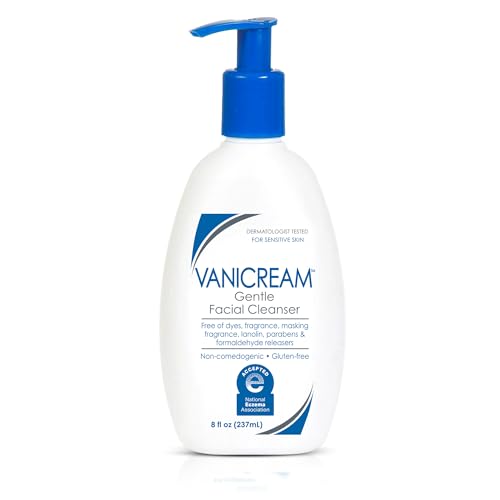
1. Gentle Cleanse: Vanicream Gentle Facial Cleanser
Best for: the cleansing step when your skin feels stripped, tight, or reactive.
Why it fits: it keeps the reset routine simple and avoids scrubby exfoliation.
Watch out: if even gentle cleanser burns, rinse with lukewarm water and consider professional advice.
Check price on Amazon
2. Moisturize: CeraVe Moisturizing Cream
Best for: dry or tight skin that needs a plain moisturizer during a reset.
Why it fits: it is a straightforward cream option for a less complicated routine.
Watch out: rich creams can feel heavy on very oily skin, so use a thin layer first.
Check price on Amazon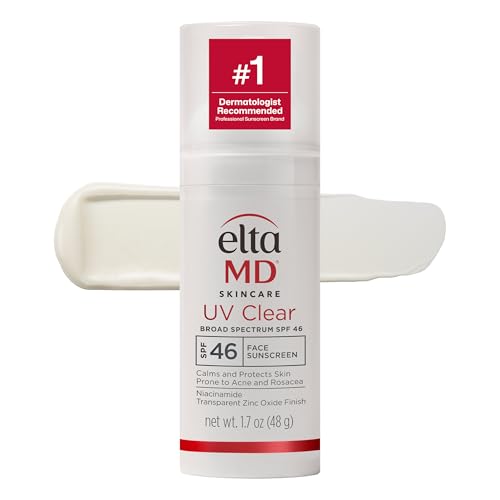
3. Protect: EltaMD UV Clear Broad-Spectrum SPF
Best for: morning protection when you want a lightweight facial sunscreen.
Why it fits: sunscreen stays important while you pause exfoliants and retinoids.
Watch out: sunscreen feel is personal. Patch test if your skin is very reactive.
Check price on AmazonHow to Restart Actives Without Overdoing It Again
The restart is where the routine becomes personal again. Do not bring everything back on the same night. If your skin calms during the reset, add one active back, then wait. That waiting period matters because irritation can take time to show.
If your active is retinol, start with frequency before strength. Our retinol for eyes guide explains why delicate areas need slower use. If your concern is oiliness, our daily routine for oily skin may help you avoid over-cleansing.
Can product overload look like breakouts?
If bumps appear with stinging, burning, flakes, or tightness, simplify first before adding another acne active.
Short visual note: breakouts can have many causes. Product overload is more likely when bumps come with burning, stinging, or new dryness.
When Product Overload Looks Like Acne
Overdoing skincare can sometimes look like acne because irritation may create bumps, roughness, and redness. But not every breakout is caused by overuse. Comedogenic products, hormones, sweat, makeup, and acne-prone skin can also play a role.
The practical move is to separate irritation from congestion. If bumps appear with burning, stinging, flakes, or tightness, reset first. If bumps appear without irritation and are mostly clogged pores, product texture may be the issue. Our guide on whether facial oils cause breakouts explains how to think about texture, skin type, and product fit.
| Situation | Likely routine problem | Next step |
|---|---|---|
| Bumps plus burning | Irritation may be involved | Reset before adding acne actives |
| Closed comedones, no sting | Product texture or clogged pores may matter | Review oils, heavy creams, and makeup |
| Dry flakes plus shine | Over-cleansing or over-exfoliation may be involved | Pause acids and restore moisture |
| Deep painful acne | May need medical guidance | Ask a dermatologist or qualified professional |
How Many Skincare Products Is Too Many?
There is no perfect number. A five-step routine can be gentle. A three-step routine can be too harsh if two steps are strong actives. The better question is: how many jobs is your routine asking your skin to handle at once?
A simple routine usually has three core jobs: clean, moisturize, protect. A more targeted routine may add one treatment job at a time. That could be acne support, pigment support, texture support, or fine-line support. Trouble starts when every goal gets a separate active every day.
When to Get Professional Help
Some irritation can improve when you simplify. But you should not try to manage every skin reaction with blog advice. Seek professional help if you have swelling, open skin, crusting, severe pain, spreading rash, eye-area irritation, infection signs, or symptoms that keep returning.
You should also be careful if you use prescription acne products, prescription retinoids, eczema treatments, or medications that affect your skin. In those cases, do not stop or restart a treatment plan without qualified guidance. This article is about routine logic, not medical diagnosis.
If your skin is mainly sensitive, you may also find our minimalist skincare routine useful. If your routine changes with weather, compare our nighttime skincare routine and combination skin routine for calmer structure.
Bottom Line
You can overdo skincare products, but the fix is not to fear every active ingredient. The fix is to build a routine with order. Start with the basics. Add one treatment step for one clear reason. Watch how your skin responds. If your skin starts burning, flaking, or reacting to products that used to feel fine, simplify before you add more.
A good routine should make your skin easier to live with. It should not turn your face into a daily experiment.
Frequently Asked Questions About Overdoing Skincare Products
Can too many skincare products damage your skin barrier?
Too many strong or irritating products may stress the skin barrier, especially if you combine exfoliating acids, retinoids, scrubs, and harsh cleansing. A short simple routine can help you see whether your skin feels calmer with fewer triggers.
How long should I reset my skincare routine?
Many people use a 7 to 14 day reset. Keep the routine simple during that time: gentle cleanser, moisturizer, and sunscreen. If symptoms are severe or do not improve, ask a qualified professional.
Should I stop retinol if my skin is irritated?
If retinol burns, stings, or worsens peeling, it may be sensible to pause it during a reset. Restart slowly after your skin feels calm, or ask a professional if you use prescription retinoids.
Is a minimalist skincare routine better?
A minimalist routine is better when your skin is reactive, confused, or irritated. It is not always the final routine. It is a cleaner baseline that helps you add targeted products with less guesswork.
Can overdoing skincare cause breakouts?
It can contribute to bumps when irritation, dryness, or barrier stress is involved. But breakouts can also come from clogged pores, hormones, sweat, or acne-prone skin. Look for stinging, burning, and flakes to decide whether a reset should come first.
This article is for informational purposes only and does not replace professional dermatological advice.