Do Facial Oils Cause Breakouts? What to Use and Avoid
Learn which facial oils are lower risk, which ones to avoid, and how to patch test face oil if your skin clogs or breaks out easily.

In this guide
A facial oil and a cleansing oil are not the same format. Compare the best emulsifying cleansing oils for oily, dry, and sensitive skin before judging the category by a leave-on oil.
Natural oils can still clog or irritate some skin. If you prefer botanical products, use our guide to natural skincare ingredient safety before testing a new oil blend.
Look at your breakout pattern before blaming one ingredient.
Patch test one oil, one area, for 7 to 10 days.
Use fewer drops, skip heavy oils, or stop if bumps repeat.
Do facial oils cause breakouts? Sometimes, yes. But the better question is: which oil, on which skin, in which routine? A single bottle of face oil can feel soothing for one person and cloggy for another. That is why a useful answer has to go beyond the old rule that oil is either good or bad.
If you still want to test one, our face-oil comparison by skin type and texture ranks six current options and explains why squalane is a clearer starting point than a rich or fragranced blend.
Breakouts can happen when pores become clogged by oil, dead skin cells, bacteria, and inflammation. The American Academy of Dermatology explains that acne can include whiteheads, blackheads, pimples, and deeper painful bumps, and that product choice can matter for acne-prone skin. Facial oils sit inside that bigger routine picture, not outside it.
This guide is built for practical decisions. You will learn which facial oils are lower risk, which ones deserve caution, which ones to skip if you already clog easily, and how to patch test without turning your whole face into an experiment.
Coconut oil needs extra caution because a rich raw oil can be difficult to troubleshoot on clog-prone areas. Our evidence-based coconut oil guide explains where it may fit, where to skip it, and how to patch test.
Do Facial Oils Cause Breakouts? The Real Answer
Facial oils can contribute to breakouts when they trap too much residue, feel too rich for your skin, or sit on top of products that already irritate or clog. They can also look guilty when the real trigger is something else: a new sunscreen, heavy makeup, hair oil, over-cleansing, hormonal acne, or a damaged skin barrier.
That is why the first step is not to panic-throw every oil away. The first step is to identify the pattern. If you used one oil for three nights and suddenly have tiny closed bumps exactly where you applied it, that oil is a likely suspect. If your acne was already active across your chin and jaw before the oil, the oil may not be the main cause.
Why Some Face Oils Clog and Others Do Not
Not all oils behave the same way on skin. Some are light and spread thinly. Some feel plush but can be too rich for clog-prone areas. Some are used in tiny amounts inside a balanced formula, while others are applied as pure oil straight from a bottle. Those details matter.
The word comedogenic means likely to clog pores or form comedones. The problem is that comedogenic ratings are not perfect. A PubMed Central review on cosmetic comedogenicity explains that testing methods and real-life use can vary, so a single number should not be treated as a guarantee. In plain English: the scale can guide you, but your skin still gets a vote.
The American Academy of Dermatology recommends looking for terms like oil free and non-comedogenic when you have oily or acne-prone skin. That does not mean every oil is banned. It means the more acne-prone you are, the more careful your testing should be.
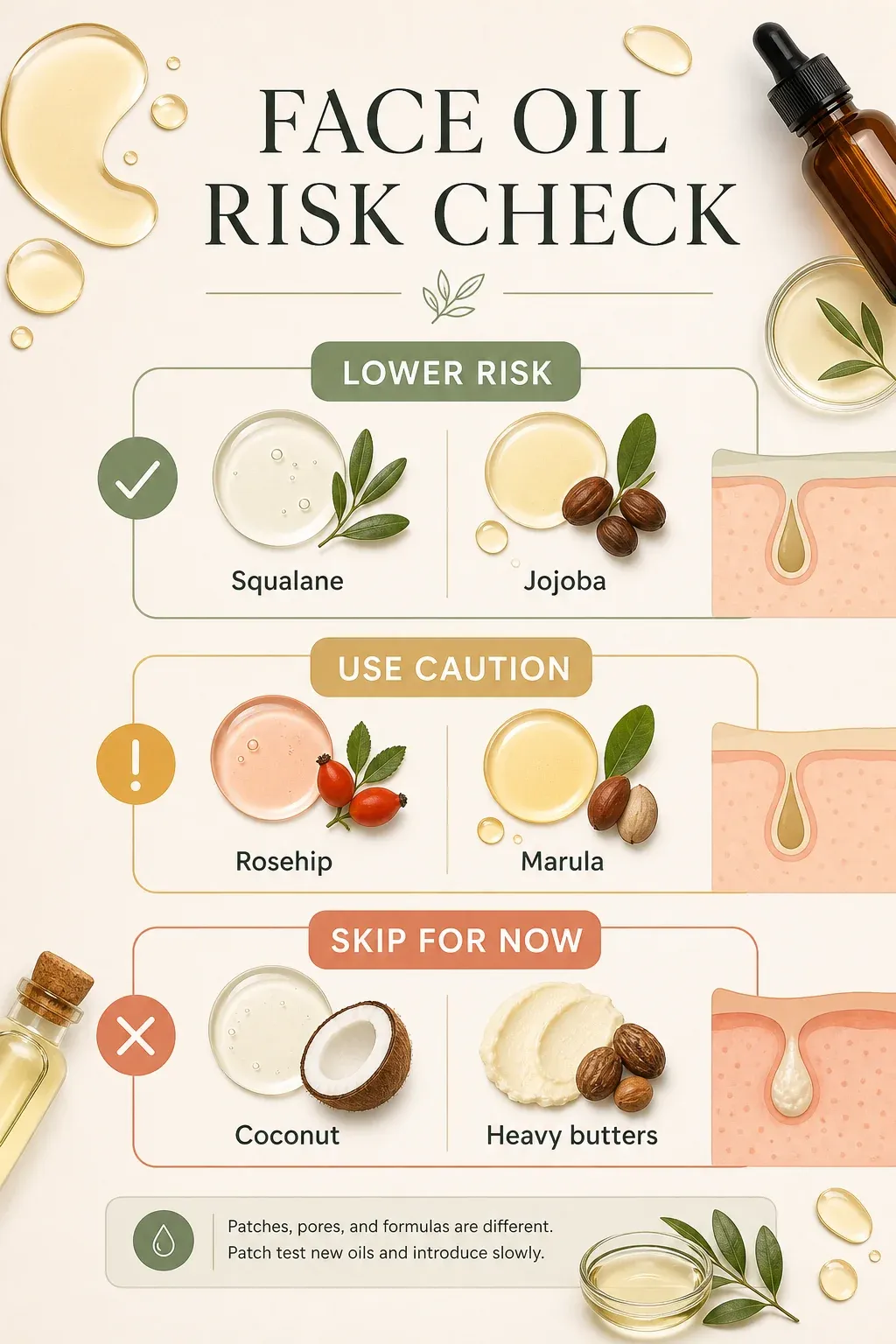
| Oil or texture | Breakout risk | Best move |
|---|---|---|
| Squalane | Lower risk for many routines | Patch test as a lightweight final step |
| Jojoba oil | Lower to moderate risk | Use 1 to 2 drops; watch clogged-prone zones |
| Rosehip oil | Moderate risk; can feel active for some skin | Patch test if sensitive or acne-prone |
| Marula oil | Moderate to richer feel | Better for dry skin than congested oily skin |
| Coconut oil | Higher risk on the face for clog-prone skin | Skip for facial acne-prone areas |
| Heavy butters and balms | Higher risk when used over the full face | Use only on dry patches, not acne-prone zones |
The Breakout Pattern Matters More Than the Oil Label
A face oil label can say lightweight, natural, balancing, or non-comedogenic and still not work for your skin. The pattern on your face gives better clues than the marketing words.
If you see tiny bumps across the forehead after using a hair oil or applying face oil near the hairline, the issue may be product migration. If you get closed comedones on the cheeks after adding a rich oil every night, the issue may be occlusion or too much product. If you get red, itchy bumps immediately, the issue may be irritation or sensitivity rather than classic clogged pores.
If your skin is already burning, peeling, or stinging, fix the barrier first. A face oil can make irritated skin feel softer for a few hours, but it will not solve an overloaded routine. Use our guide to skin barrier damage if your basic products sting before adding any oil.
Best Facial Oils for Breakout-Prone Skin: Lower-Risk Starting Points
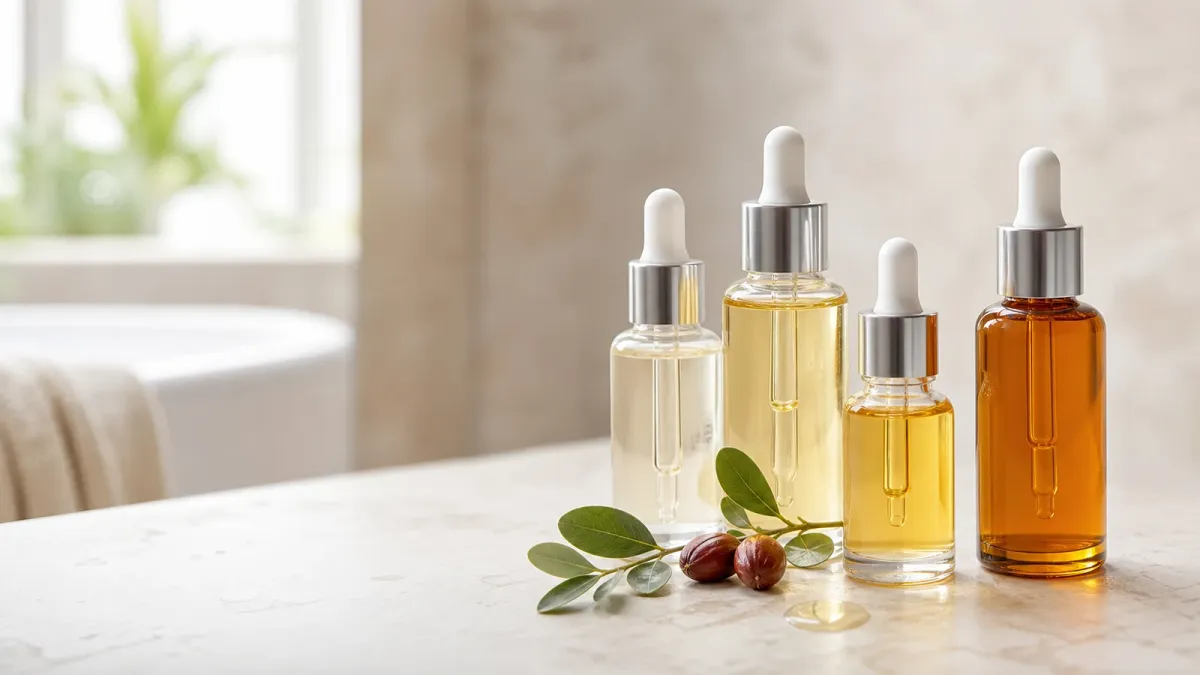
For breakout-prone skin, the best facial oil is usually the one you can use in the smallest amount without feeling coated. That is why squalane and jojoba are common starting points. They are not magic and they are not guaranteed, but they are easier to test than heavy cooking oils or rich butters.
Squalane
Squalane is technically an oil-like emollient, but it usually feels lighter than many plant oils. It can help reduce a dry, tight feel without adding a heavy film. If your acne-prone skin gets dehydrated from cleansers, benzoyl peroxide, acids, or retinoids, squalane may be easier to test than richer oils.
Jojoba oil
Jojoba oil is actually a wax ester, not a typical triglyceride oil. Many people like it because it spreads thinly and feels less greasy than heavier oils. It can still break out some people, so the right approach is not blind trust. Use one or two drops and watch your most clog-prone zones.
Rosehip and marula
Rosehip and marula can work well for some dry or mature skin routines, but they deserve more caution if you are acne-prone. Rosehip may feel too active or irritating for some sensitive skin. Marula can feel richer than squalane or jojoba. Neither is automatically bad, but both should be patch tested.
Rosehip oil and rosewater are different ingredients and formats. The rosewater skin guide explains the limited role of a water-based floral mist, including why it should not be treated as an acne remedy.
Facial Oils to Avoid If You Break Out Easily
If you get closed comedones easily, skip coconut oil on the face. It may be fine for body or hair for some people, but the facial acne-prone zone is less forgiving. Also be careful with heavy butters, thick balms, and oil blends that contain several fragrant plant extracts.
Fragrance is another issue. A product can be non-greasy and still irritate your skin if it contains essential oils or perfume. Irritation can make acne routines harder to tolerate. If your skin is reactive, choose simple, fragrance-free products first. Our guide on whether natural skincare is always better explains why natural does not always mean gentle.
How to Patch Test Face Oil Without Wrecking Your Routine
A patch test is not exciting, but it saves time. Most people get into trouble because they apply a new oil to the whole face, use too much, and add it on the same week as a new cleanser, sunscreen, or serum.
Use this simple test instead. Keep the rest of your routine unchanged. Apply one drop of the oil to a small area near your jaw, cheek, or behind the ear. Use it every night for 7 to 10 days. If you get repeated clogged bumps, itching, burning, or redness in that same test area, stop. If the area stays calm, try one to two drops on the driest zones only.
If acne is your main concern, do not rely on oil as your treatment. The AAD explains that acne treatment often depends on the acne type and severity, and persistent acne may need professional care. Facial oil can be a comfort step, not a cure.
| Patch test step | What to do | Why it matters |
|---|---|---|
| Days 1-3 | One drop on one small area at night | Checks quick irritation and texture changes |
| Days 4-7 | Keep testing the same area only | Lets clogged bumps show before full-face use |
| Days 8-10 | If calm, try 1-2 drops on dry zones | Prevents overuse on oily or acne-prone zones |
| If bumps repeat | Stop the oil and return to baseline | Confirms the product is not a good fit right now |
Where Face Oil Fits in Your Routine
Face oil usually belongs near the end of a routine. Think of it as a comfort layer, not the main hydrator. Hydration comes from water-binding ingredients like glycerin and hyaluronic acid. Moisture support comes from a balanced moisturizer. Oil can help seal or soften, but it cannot replace every part of a good routine.
If you are acne-prone, keep the order simple: gentle cleanser, treatment if you use one, lightweight moisturizer, then one to two drops of oil only where needed. In the morning, sunscreen still matters. If you struggle with product order, read our skincare routine for acne-prone skin.
Do not mix oil into sunscreen unless the sunscreen brand tells you to. Changing sunscreen texture can affect how evenly you apply it. If you need a better sunscreen texture, choose a lighter sunscreen instead. Our guide to the best sunscreen for everyday use can help.
Mistakes That Make Facial Oils More Likely to Break You Out
Using too much
A full dropper is almost never needed. Too much oil can sit on top of the skin and make sunscreen, sweat, and makeup feel heavier. Start with one drop. Add more only if your skin still feels dry and calm.
Choosing a rich oil because your skin feels dry
Dry-feeling skin is not always oil-deficient. It may be dehydrated, irritated, over-cleansed, or barrier-damaged. In that case, a better moisturizer may help more than a richer oil. Use our guide on how to pick the right moisturizer if creams keep failing you.
Forgetting cleansing
Oil residue, sunscreen, and makeup can build up if cleansing is too weak or too harsh. A cleanser should remove the day without leaving skin stripped. If acne is part of the issue, compare your routine with our guide to skincare mistakes that cause acne.
Using face oil as an acne treatment
Face oil may make skin feel softer, but it is not an acne treatment. If you have regular breakouts, look at acne-specific ingredients, irritation triggers, and product labels. Our guide to the best acne-fighting serums explains treatment-style options.
Face Oil Starter Kit: lower-risk options to test carefully
You do not need a big oil collection. If you want to try a face oil while staying cautious, start with one lower-risk option and one gentle cleanser that helps remove residue. These are not acne treatments. They are simple products that fit the patch-test approach in this guide.

1. Lightweight Test: The Ordinary 100% Plant-Derived Squalane
Best for: dry-feeling skin that wants a simple, lighter oil-like step.
Watch out: even squalane can feel too much if you use a full dropper or layer it over a heavy cream.
Check price on Amazon
2. Simple Oil Test: Cliganic Organic Jojoba Oil
Best for: readers who want a single-ingredient oil to patch test before full-face use.
Watch out: jojoba can still clog some skin. Start with one drop on dry zones only.
Check price on Amazon
3. Residue Control: Vanicream Gentle Facial Cleanser
Best for: removing sunscreen, makeup, and light oil residue without a harsh scrubby feel.
Watch out: if cleanser stings, stop actives and focus on barrier repair before testing oils.
Check price on AmazonAs an Amazon Associate, we earn from qualifying purchases. Product availability, images, and prices can change on Amazon.
When to Stop Using a Face Oil
Stop using a face oil if you get repeated clogged bumps in the same area, new painful acne, itching, burning, swelling, or a rash-like reaction. Stop faster if your skin is already inflamed or if you are using prescription acne treatment. Do not try to push through because an oil is popular online.
If your skin improves after stopping the oil, keep your routine stable for two weeks before testing another product. If breakouts continue, the oil may not be the main trigger. Look at sunscreen, makeup, hair products, cleanser, pillowcases, stress, hormones, and acne treatment consistency.
| If this happens | What it may mean | What to do |
|---|---|---|
| Small closed bumps after 1-2 weeks | Possible clogging or too much product | Stop the oil and simplify the routine |
| Burning or itching quickly | Possible irritation or sensitivity | Rinse off, stop, and avoid re-testing soon |
| Dryness improves but acne worsens | Oil may be comforting but too occlusive | Use a better moisturizer instead of oil |
| No change after patch testing | Oil may be tolerated in small amounts | Use 1-2 drops only where needed |
Bottom Line
Facial oils do not automatically cause breakouts, but they can trigger or worsen clogged pores when the oil is too heavy, the dose is too high, or the skin is already acne-prone. The safest path is boring: choose a lighter option, patch test it, use fewer drops, avoid coconut oil on acne-prone facial areas, and keep the rest of your routine stable.
If you want a simple rule, use this: do not add face oil to solve a problem you have not identified. If your skin is dry, choose the right moisturizer first. If your barrier is damaged, repair the barrier first. If acne is active, keep the routine acne-safe and get help if it does not improve.
Frequently Asked Questions About Facial Oils and Breakouts
Can facial oil cause closed comedones?
Yes, facial oil can contribute to closed comedones if it is too heavy for your skin, used too often, or layered over other rich products. Closed comedones can also come from sunscreen, makeup, hair products, or acne-prone skin itself, so look at the full routine.
Is squalane safe for acne-prone skin?
Squalane is often a lower-risk option because it feels light and spreads thinly, but it is not guaranteed for every person. Patch test it first and use only one to two drops.
Is jojoba oil good for breakout-prone skin?
Jojoba oil can work for some breakout-prone routines, especially when used sparingly. It can still clog some people, so treat it as a test product rather than a guaranteed acne-safe choice.
Which facial oils should I avoid if I break out easily?
If you break out easily, avoid coconut oil on the face, heavy butters, thick balms over acne-prone zones, and fragrant oil blends. Start with simple, lighter products instead.
Should I use face oil before or after moisturizer?
Most people should use face oil after moisturizer as a final comfort layer. If you are acne-prone, start at night, use one drop, and apply it only to dry areas.
This article is for informational purposes only and does not replace professional dermatological, medical, or nutrition advice.
Tolerance also depends on dose and placement. The face-oil routine guide shows where oil belongs, why it should not sit over sunscreen and how to test one facial zone first.