Do Pore Strips Really Work? What They Actually Remove
Do pore strips really work? Learn what they pull from your nose, why dots return, who should skip them, and what helps blackheads long term.

In this guide
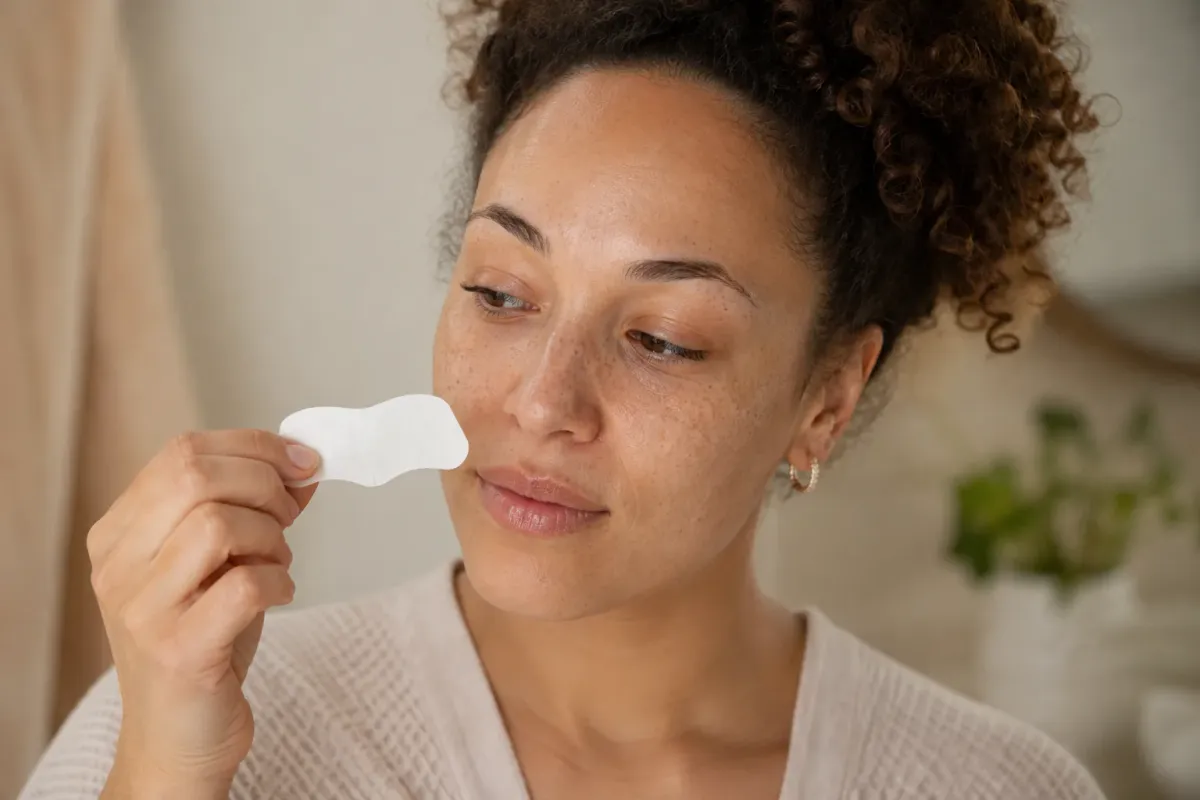
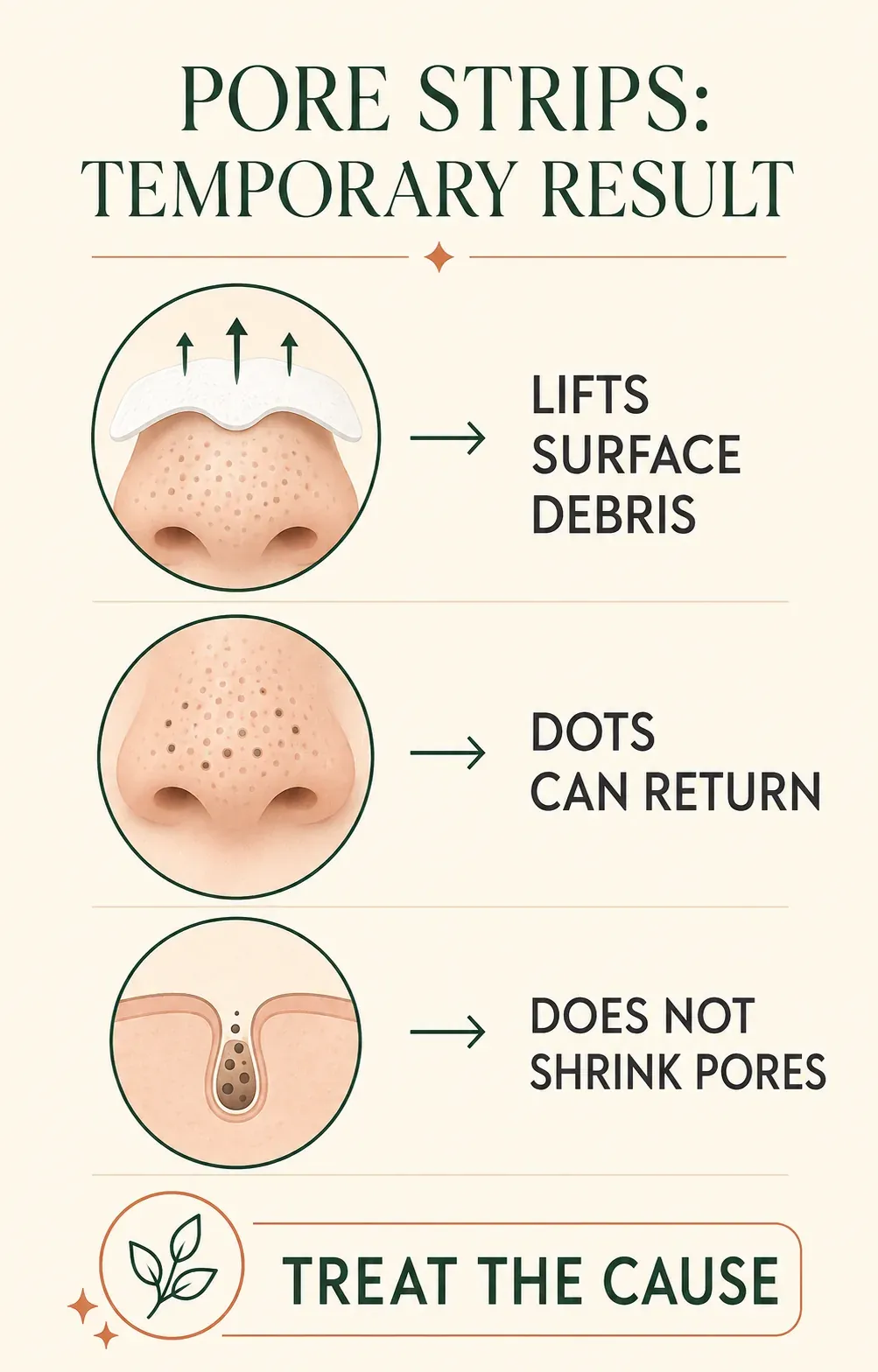
Yes, pore strips can work as a temporary cosmetic tool. Their adhesive can lift surface oil, keratin, fine hairs, and the exposed tops of some open comedones, which may make the nose feel smoother and its dots look less obvious for a while.
They do not stop follicles from filling again, permanently shrink pores, or treat the process that creates blackheads. If your goal is lasting control rather than a satisfying peel, consistent salicylic acid or a suitable retinoid has a stronger dermatology rationale.
- What the strip does: grips material exposed at the skin surface and pulls some of it away.
- What you may be seeing: a mixture of sebum, keratin, sebaceous filament casts, open-comedone tops, and fine hairs—not simply “dirt.”
- Why dots return: sebum production and cell shedding continue after the strip comes off.
- Who should skip it: anyone with broken, sunburned, inflamed, very reactive, or recently exfoliated skin in the treatment area.
- Better long-term plan: gentle cleansing, one evidence-based pore-clearing active, moisturizer, sunscreen, and enough time to judge the routine.
See what is actually on the strip, how to reduce irritation if you still use one, or what to do when the dots keep returning.
This guide is evidence-led and independent. No pore-strip or skincare brand paid for inclusion, no product was hands-on tested for this update, and no Amazon recommendation is included because the reader’s main need is an honest use decision rather than another shopping list.
Few skincare products deliver feedback as dramatic as a pore strip. You wet your nose, let the strip harden, peel it away, and see rows of pale spikes that look like undeniable proof of a deep clean.
The result is real in a narrow sense: material adhered to the strip and left the surface. The mistake is assuming every spike was a blackhead, the entire pore was emptied, or the treatment changed what will happen inside that follicle tomorrow.
This guide gives you a more useful answer than “pore strips are good” or “pore strips are bad.” You will learn how to identify the dots, decide whether a temporary result fits your goal, and choose a longer-term approach when recurring congestion is the real problem.
What Does a Pore Strip Actually Remove?
Most classic pore strips use a water-activated polymer adhesive on a shaped fabric backing. Moisture helps the strip conform to the nose, then drying creates a firm bond with whatever projects from or rests on the surface.
When you peel, the strip applies mechanical force. It can remove loose surface cells, oxidized oil, keratin-and-sebum casts, tiny hairs, and the exposed top of some open comedones.
That action is different from dissolving a plug throughout the follicle. It is also different from changing sebum production, normalizing cell turnover, or reducing the formation of future microcomedones.
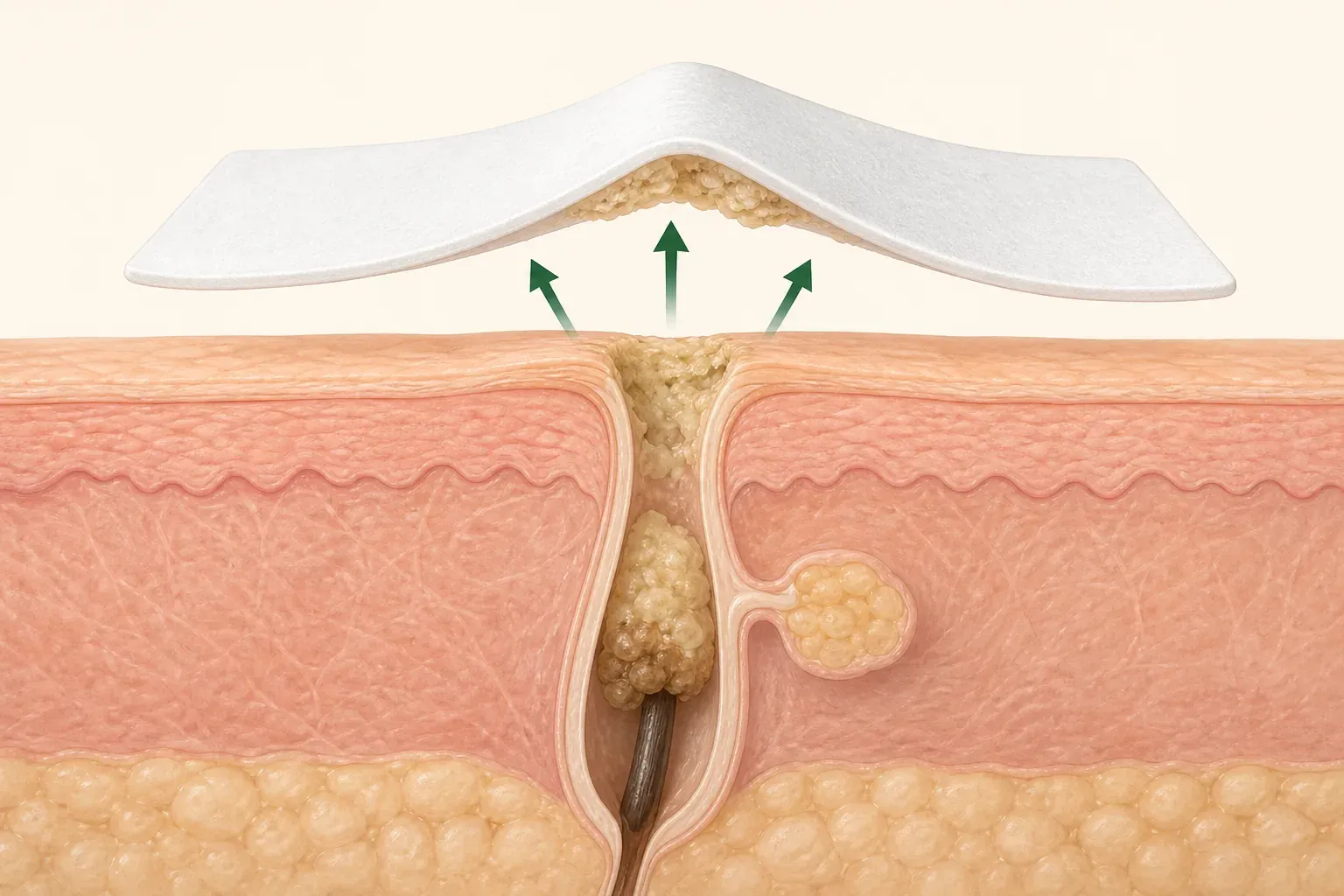
The satisfying spikes are therefore mixed evidence. They show that the strip stuck to something, but they do not prove that everything removed was unwanted or that each visible nose dot was acne.
Some strips add charcoal, witch hazel, or an exfoliating ingredient. Those additions can change feel or marketing, but the defining instant effect still comes from adhesion and peeling rather than a durable change in pore biology.
| What you notice | What it may be | What that means |
|---|---|---|
| Evenly spaced gray, tan, or skin-colored nose dots | Sebaceous filaments | Normal structures that help move sebum; they naturally refill and do not need to be eliminated |
| A darker, more distinct raised or flat dot | Open comedone, commonly called a blackhead | A clogged follicle open to air; the dark color is oxidation, not dirt |
| Very fine pale or dark strands | Vellus hairs | Normal facial hair that adhesive can capture |
| Irregular flakes or film | Loose corneocytes or product residue | Surface material, not proof of a deep follicular blockage |
| Red, painful, or swollen bump | Inflamed acne or another irritated lesion | Do not place strong adhesive over it; consider appropriate acne care or clinical advice |
Blackheads and Sebaceous Filaments Are Not the Same
A blackhead is an open comedone: oil and shed cells accumulate in a follicle, and the exposed material darkens through oxidation. The American Academy of Dermatology explains that the color is not trapped dirt, so scrubbing harder is not the answer.
See the AAD guide to acne signs for that distinction. If you are dealing with repeated breakouts rather than only nose dots, our acne-breakout prevention guide helps you review the full routine.
Sebaceous filaments are normal, tube-like accumulations that line oil-rich follicles and help sebum reach the surface. They tend to be smaller, flatter, lighter, and more evenly distributed across the nose and central face.
The Cleveland Clinic overview of sebaceous filaments explains why they can be made less noticeable but not permanently removed. Their return after a strip is normal skin function, not a sign that your face is dirty or that the strip “failed.”
If you are unsure, do not repeatedly squeeze or strip the area to force an answer. A dermatologist can distinguish comedonal acne from normal filaments, irritation, folliculitis, or other look-alike conditions.
So, Do Pore Strips Really Work?
They work when the goal is defined narrowly: remove some adhered surface material and temporarily make the area feel smoother or look clearer. That can be useful before an event or simply because you enjoy the short-term cosmetic effect.
They do not work as a lasting blackhead-prevention strategy. The follicle continues to produce oil and shed cells, while a normal sebaceous filament starts reforming after removal.
There is little direct long-term clinical research showing that consumer pore strips change acne severity, permanently reduce pore appearance, or prevent new comedones. That evidence gap matters because a dramatic strip is easy to photograph while durable prevention takes weeks to evaluate.
| Claim | Best evidence-based verdict | Expectation to set |
|---|---|---|
| “The strip removes visible material” | Reasonable | Adhesive can lift surface debris and exposed follicular material |
| “Every spike is a blackhead” | Not supported | Spikes may include sebaceous filament casts, keratin, sebum, or fine hairs |
| “It deep-cleans the whole pore” | Overstated | The strongest action is mechanical removal at the opening and surface |
| “It permanently shrinks pores” | False | A clearer opening may look smaller temporarily; anatomy does not close like a door |
| “Pore strips are always damaging” | Too absolute | Risk depends on skin condition, adhesive strength, frequency, and removal technique |
| “They prevent future blackheads” | Not established | They do not address the ongoing processes that form comedones |
Think of a strip as grooming, not treatment. A lint roller works because it removes what it touches; it does not alter the process that placed lint on the fabric.
This distinction protects you from two extremes. You do not need to pretend the visible result is imaginary, and you do not need to build your acne strategy around repeating it.
Can Pore Strips Damage Your Skin?
Any strong adhesive can irritate skin, especially when the barrier is already dry, inflamed, or recently exfoliated. Short-lived redness can occur from pressure and peeling, but persistent burning, swelling, skin lifting, or worsening dermatitis is a reason to stop.
The old version of this article claimed that routine pore-strip use stretches skin and causes long-term elasticity damage. Direct evidence for that confident statement is lacking, so the more accurate concern is immediate mechanical irritation rather than a guaranteed permanent change.
Your baseline condition matters more than a universal weekly schedule. A person with comfortable, intact, oilier skin may tolerate an occasional strip, while someone with rosacea, eczema, a sunburn, or active peeling may react after one use.
Do not apply it over broken skin, a sunburn, inflamed acne, an eczema or rosacea flare, or an area that is tender from acids, scrubs, waxing, a peel, or a retinoid. Avoid it if you know you react to adhesives, and follow any post-procedure instructions from your clinician.
More force is not more effective. If a strip feels painfully welded to the skin, re-wet the edges and remove it slowly rather than ripping through discomfort.
If your skin often stings even with bland products, review the signs of a disrupted skin barrier before adding another removal step. Our guide to over-exfoliation and acne also explains why stacking scrubs, acids, and adhesive can create irritation without creating clearer pores.
How to Use a Pore Strip More Safely
Start by reading the exact package directions because timing and activation differ. Do not assume that leaving a strip on longer or waiting until it becomes rock-hard improves removal.
Cleanse gently and remove makeup or sunscreen from the target area. Use the amount of water specified by the manufacturer, smooth the strip without aggressive rubbing, and keep it away from the delicate eye area.
Frequency should be based on tolerance and the label, not an online challenge. Repeating a strip as soon as dots return simply repeats temporary extraction and may keep a reactive nose in a cycle of redness.
Do not pair the same session with a strong scrub, peel, waxing, or multiple acids. If you use adapalene, tretinoin, or another retinoid, the safest spacing depends on your formula, prescription instructions, and how dry or sensitive the area is.
A bland moisturizer after removal is usually more useful than astringent toner. You cannot “close” a pore with cold water, and a burning sensation is not evidence that a product is tightening it.
What Works Better for Recurring Blackheads?
Recurring open comedones call for a routine that works inside the cycle of cell shedding and follicular plugging. That requires consistency and patience, not progressively stronger extraction.
Salicylic acid is oil-soluble and commonly used for blackheads and whiteheads. The American Academy of Dermatology's adult-acne guidance recommends giving an OTC acne treatment about six to eight weeks before judging early improvement.
In the United States, the federal OTC acne monograph permits salicylic acid at 0.5% to 2% in acne drug products. That regulatory range does not mean the highest concentration is best for every face, and cosmetic products outside your region may follow different rules.
Introduce one leave-on active gradually, keep cleansing gentle, and reduce frequency if dryness or stinging accumulates. Adding several treatments at once makes both irritation and useful results harder to interpret.
Topical retinoids such as adapalene can help prevent comedones by influencing cell turnover within the follicle. They are not instant extraction products, and irritation is more likely when you begin too often or stack several actives.
Our retinol and retinoid guide explains how to start slowly. If your acne includes inflamed spots as well as blackheads, read the benzoyl peroxide guide before assuming every pore needs the same ingredient.
| Option | Best fit | Time horizon | Main limitation |
|---|---|---|---|
| Pore strip | Optional temporary surface smoothing on calm, intact skin | Immediate | Does not prevent refilling or treat comedone formation |
| Salicylic acid | Oiliness, blackheads, whiteheads, and congestion | Several weeks | Can dry or irritate; needs consistent use |
| Topical retinoid | Persistent comedonal acne and broader acne prevention | Several weeks to months | Can irritate and may require individualized medical guidance |
| Gentle cleansing | Removing daily sunscreen, makeup, sweat, and excess surface oil | Daily support | Does not independently clear every comedone |
| Professional assessment | Persistent, painful, scarring, or uncertain bumps | Individual | Access and cost vary, but diagnosis prevents wasted irritation |
Choose a cleanser for comfort and residue removal, not for a “squeaky” finish. Our acne-prone cleanser guide shows what to look for without treating harshness as proof of effectiveness.
If oiliness drives constant product switching, use the daily routine for oily skin to simplify the order of steps. Consistency becomes easier when you are not rotating a strip, scrub, clay mask, acid toner, and spot treatment on the same area.
What About Clay Masks, Steam, and DIY Strips?
A clay mask can absorb surface oil and temporarily reduce shine, but it does not permanently empty or shrink follicles. It may be an optional oil-control step if it does not leave your skin tight, itchy, or flaky.
Warm water can soften surface material and make a cleansing step feel more comfortable, but pores do not open and close with temperature. Hot steam can increase redness and is a poor trade for anyone prone to flushing or barrier disruption.
Skip homemade peel-off recipes made with gelatin, glue-like mixtures, egg white, baking soda, sugar, or harsh waxes. Their adhesion, pH, hygiene, and removal force are not standardized, and “natural” does not mean low-irritation.
The prior version of this article recommended egg-white, sugar-and-honey, and gelatin strips without adequate support. Those suggestions have been removed because they add avoidable uncertainty without treating the underlying reason dots recur.
When to See a Dermatologist
Get professional help when bumps are painful, inflamed, itchy, rapidly changing, leaving dark marks or scars, or not improving after a consistent OTC routine. What looks like a blackhead in a magnifying mirror is not always acne.
A dermatologist can confirm whether you have open comedones, normal sebaceous filaments, milia, folliculitis, rosacea-related texture, or another condition. They can also match treatment intensity to pregnancy, medication use, allergies, and skin sensitivity.
Do not dig at a stubborn spot with metal tools or repeated adhesive. The AAD warns that squeezing acne can increase inflammation and the risk of infection or scarring, which is a much larger problem than a visible pore.
The Bottom Line
Pore strips really do remove some material from the skin surface, and the immediate smoothing can be satisfying. Their effect is temporary because they do not change the ongoing production of sebum and shed cells inside follicles.
Use one occasionally if your skin tolerates it and the short-term result matches your goal. Skip it on compromised skin, reject claims about permanent pore shrinking, and use salicylic acid, a suitable retinoid, or professional guidance when recurring blackheads are the issue you actually want to solve.
Frequently Asked Questions
What is the stuff you see on a pore strip?
The spikes and dots can include keratin, sebum, the exposed tops of some open comedones, sebaceous filament casts, fine hairs, and surface residue. Seeing material on the strip proves adhesion and removal at the surface, not that every follicle was fully emptied.
Why do nose dots come back after using a pore strip?
Skin keeps producing sebum and shedding cells, and normal sebaceous filaments refill. A strip does not change that ongoing process, so the dots can become visible again even when the strip removed some surface material.
Are pore strips bad if you use them occasionally?
Occasional careful use may be tolerable for many people, but it can irritate sensitive or already-compromised skin. Skip a strip on broken, sunburned, inflamed, or recently exfoliated skin, and stop if removal causes pain, persistent redness, or skin lifting.
Can you use pore strips while using retinol or adapalene?
Retinoids can increase dryness and irritation, so combining them with strong adhesive removal may be uncomfortable. Avoid a strip when the area is peeling or tender, and ask a dermatologist how to space products if you use a prescription retinoid.
Do pore strips make pores larger?
A pore strip does not permanently open or close pores. Removing surface material may make an opening look temporarily clearer, while irritation or dryness can make texture look more obvious.
There is not good evidence that careful occasional use permanently enlarges pores. If pore appearance is your main concern, our guide to what can and cannot make pores look smaller sets realistic expectations.
Method note: We reviewed dermatology guidance, a US regulatory monograph, and human comedonal-acne research. Five Reddit discussions were used only to identify recurring reader questions; community anecdotes were not treated as evidence.
This article is for informational purposes only and does not replace professional dermatological advice.