Under-Eye Wrinkles: Evidence-Based Treatment Ladder from Eye Cream to Surgery
Evidence-based guide to under-eye wrinkles from eye creams to procedures. Compare retinoids, peptides, fillers, and laser treatments by efficacy and cost.

In this guide

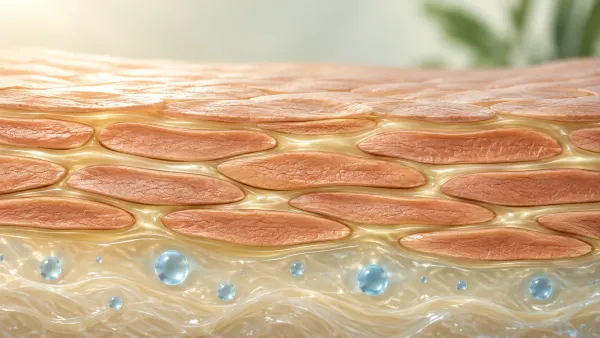
Most eye creams promise dramatic results, but the skin around your eyes is fundamentally different from the rest of your face. At just 0.5 millimeters thick - about one-quarter the thickness of facial skin - the periorbital area has fewer oil glands, less collagen, and is in constant motion from blinking and facial expressions.
Looking for the product picks?
Jump to product picksThis evidence-based guide explains why eye cream alone is rarely enough and presents a treatment ladder: a step-by-step approach from OTC topicals to surgical options, backed by clinical evidence.
TL;DR - Under-Eye Wrinkle Treatment Ladder
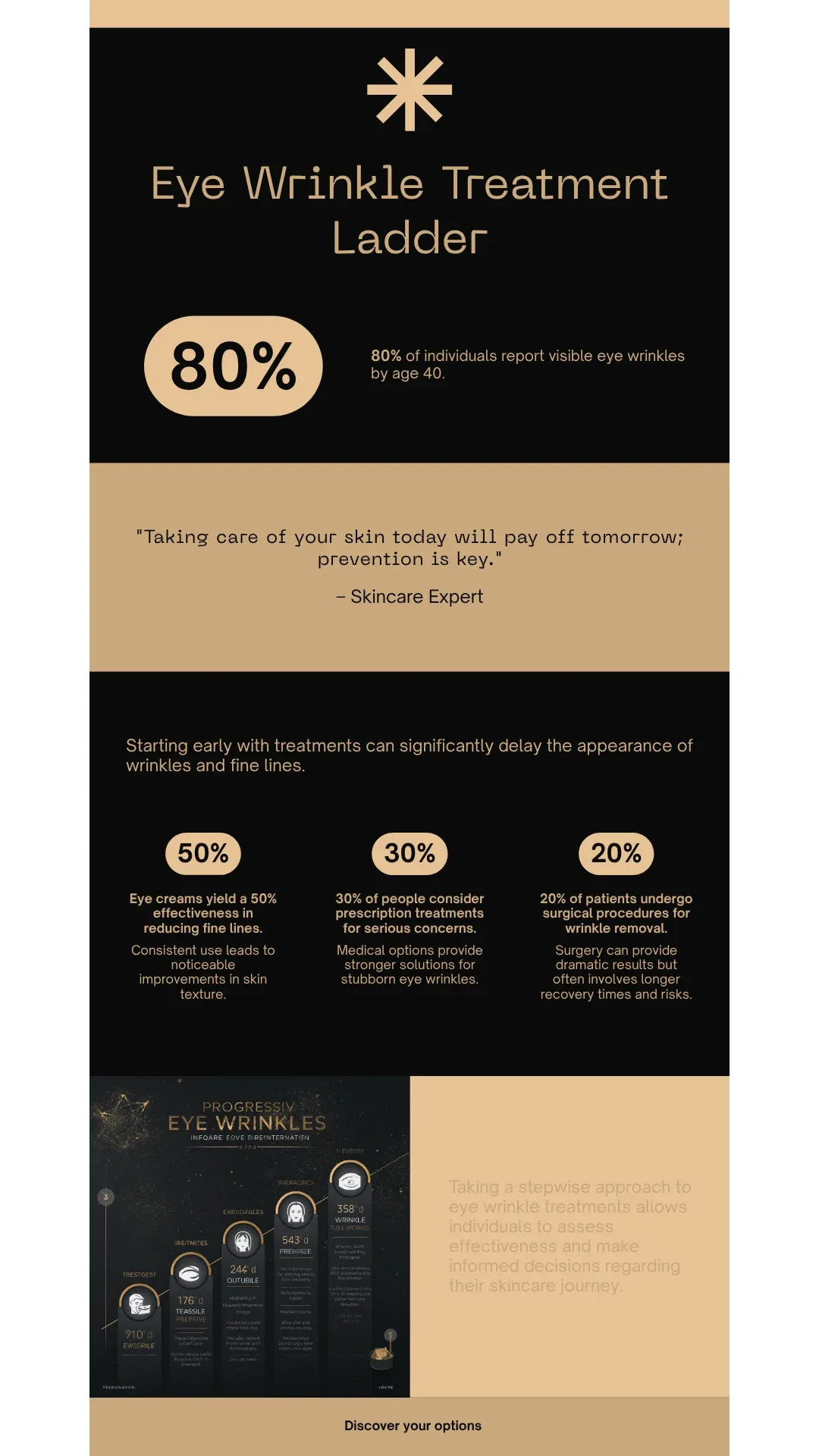
- ✦ Level 1: OTC eye creams with retinol or peptides - mild improvement after 12+ weeks
- ✦ Level 2: Prescription retinoids (tretinoin) - stronger, proven collagen stimulation
- ✦ Level 3: In-office procedures - laser, PRP, fillers, Botox
- ✦ Level 4: Blepharoplasty - for advanced wrinkling and skin laxity
- ✦ Start at the lowest effective level and escalate only if needed
Why Eye Cream Alone Is Not Enough
The skin around your eyes is structurally unique. It is the thinnest skin on your body, with minimal subcutaneous fat and few sebaceous glands. This makes it prone to dehydration, fine lines, and wrinkling. Repetitive muscle movement from blinking and squinting creates dynamic wrinkles that topical products cannot fully address.
A review of eye cream ingredients published in PMC (PMC11175953) confirmed that while retinoids and peptides show clinical efficacy for periorbital skin, the effects are modest and require consistent use over months. Deep wrinkles caused by collagen loss and muscle activity need more targeted interventions.
For retinol options for the face, our guide to the best retinol serums covers formulations that can be used carefully around the eye area.
The Treatment Ladder
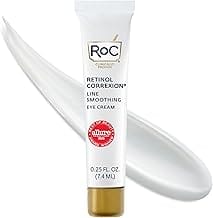
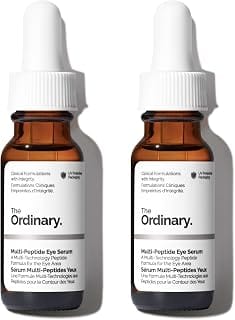
Level 1: OTC Eye Creams
- Retinol - stimulates collagen, improves fine lines. Studies show 0.2-1% retinol improves periorbital wrinkles over 12 weeks (PMC9618501)
- Peptides - signal collagen synthesis, support skin structure
- Hyaluronic Acid - plumps skin temporarily by binding water
- Caffeine - reduces puffiness temporarily
- Ceramides - support barrier function, reduce water loss
| Ingredient | How It Works | Timeline | Efficacy |
|---|---|---|---|
| Retinol | Boosts collagen, accelerates cell turnover | 8-12 weeks | Moderate |
| Peptides | Signal collagen synthesis | 4-8 weeks | Mild-Moderate |
| Hyaluronic Acid | Binds water, plumps skin | Immediate (temporary) | Mild |
| Ceramides | Supports barrier function | 2-4 weeks | Supportive |
Level 2: Prescription Topicals
Prescription retinoids like tretinoin are significantly more potent than OTC retinol. Clinical research in PMC (PMC2699641) demonstrated that 0.05% tretinoin cream produces measurable improvement in fine periorbital wrinkles within 3 months, with continued improvement at 6 months. Irritation is more common with prescription strength.
For insights on barrier health while using retinoids, our guide to the best ingredients for skin barrier repair explains how to maintain healthy skin during treatment.
Level 3: In-Office Procedures
- Laser resurfacing (CO2, erbium) - deep collagen remodeling. Results last 2-5 years.
- Microneedling with PRP/PRF - micro-injuries trigger collagen, combined with growth factors.
- Botox - relaxes muscles causing crow's feet. Results last 3-4 months.
- Dermal fillers - add volume, smooth tear troughs. Results last 6-18 months.
- RF microneedling - needling with radiofrequency for deeper tightening.
Level 4: Surgical Options
Lower blepharoplasty (eye pinch surgery) is the most effective treatment for advanced under-eye wrinkles with excess skin or fat pads. It permanently removes tissue and provides long-lasting results for individuals with significant skin laxity.
Cost-Benefit Comparison
| Treatment | Cost Range | Downtime | Results Duration |
|---|---|---|---|
| OTC Eye Cream | $10-80/month | None | Only with use |
| Prescription Retinoid | $30-120/month | None | Only with use |
| Laser Resurfacing | $500-3,000/session | 3-7 days | 2-5 years |
| Botox | $200-600/session | None | 3-4 months |
| Dermal Fillers | $600-1,500/session | 1-3 days | 6-18 months |
| Blepharoplasty | $3,000-8,000 | 1-2 weeks | Permanent |
The American Academy of Dermatology recommends consulting a board-certified dermatologist to determine the most appropriate treatment level.
For more on barrier-supporting ingredients, our guide to the power of ceramides for moisture locking explains how barrier health supports overall skin appearance.
Conclusion
Under-eye wrinkles exist on a spectrum, and treatment should match their severity. Start with Level 1 and allow 12 weeks for results. If insufficient, consider Level 2 with dermatologist guidance. For persistent wrinkles, Level 3 procedures may be appropriate. Level 4 surgery is for advanced cases with significant skin laxity. Always consult a board-certified dermatologist.
Frequently Asked Questions About Under-Eye Wrinkles
Why do not eye creams work for deep wrinkles?
What is the most effective treatment for under-eye wrinkles?
Are retinoids safe to use around the eyes?
How much do cosmetic treatments for eye wrinkles cost?
What is the best eye cream for wrinkles?
This article is for informational purposes only and does not replace professional dermatological advice.