Skin Barrier Damage: What to Stop, Use, and Avoid for Calmer Skin
Learn what causes skin barrier damage, what to stop first, what to use instead, and how to restart actives without irritating your skin again.

In this guide
Once the barrier feels calmer, follow a slow skincare routine so retinoids, acids, and new serums come back one at a time.
Wait until skin is calm before adding an ampoule, then use our ampoule routine guide to introduce one formula at a time and keep the rest of the routine stable.
If your barrier feels dry or reactive, choosing the right day vs night moisturizer setup can reduce unnecessary product changes.
If your barrier is already irritated, natural does not automatically mean gentle. Review our guide to natural ingredients and skin safety before adding essential oils or botanical blends.
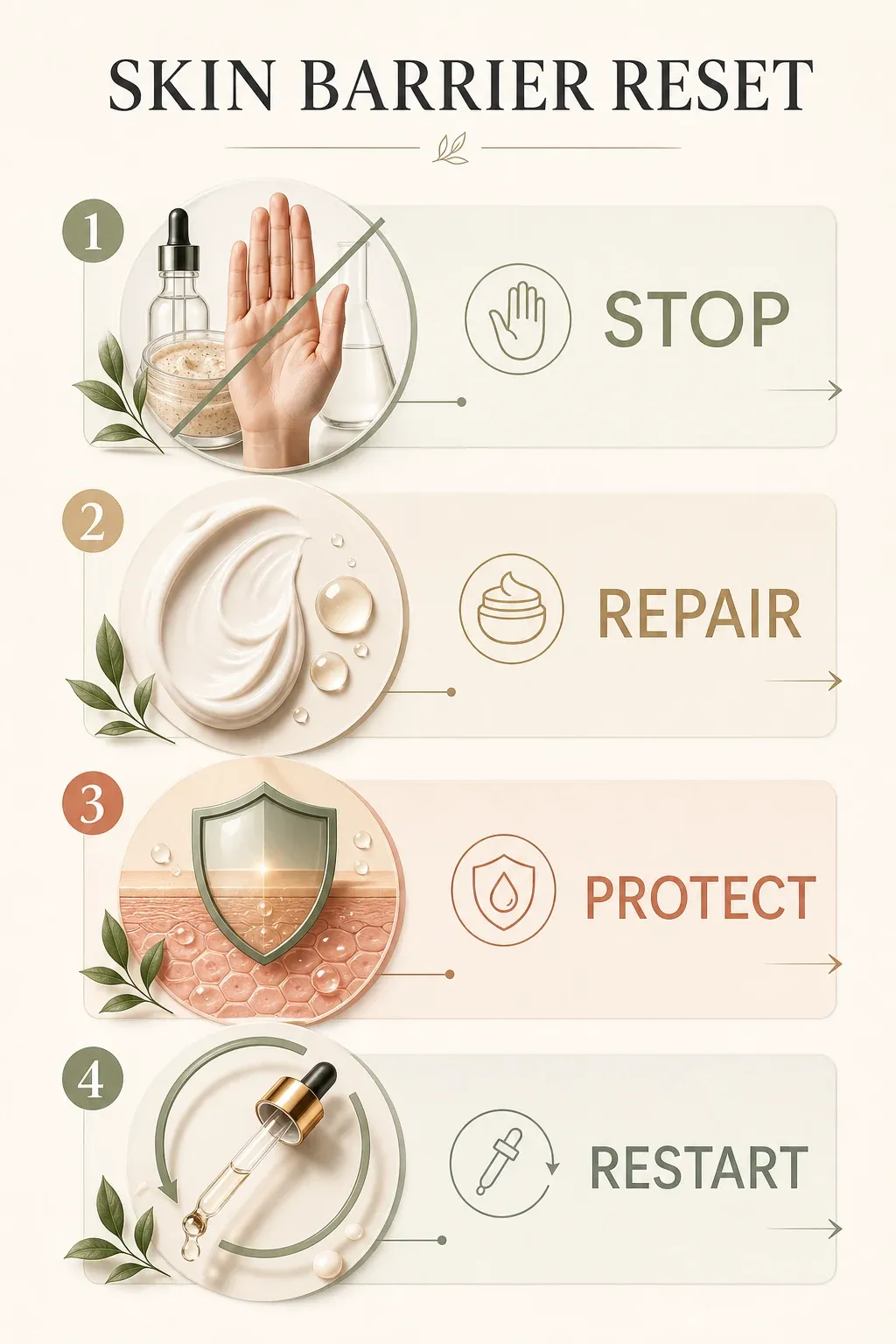
Pause acids, scrubs, retinoids, fragrance, and new products.
Use gentle cleanser, bland moisturizer, ceramides, glycerin.
Keep sunscreen daily and avoid hot water or harsh cleansing.
Add one active back slowly after skin feels calm.
Remove exfoliants, retinoids, hot water, fragrance, and new products before adding more repair products.
Cleanse gently, moisturize well, and protect with sunscreen until your skin stops stinging.
Bring back one active at a time, 2 to 3 nights per week, only after your skin feels calm.
Skin barrier damage is usually not caused by one bad product. More often, it comes from a routine that asks the skin to handle too much. One night it is a peeling serum. The next morning it is a foaming cleanser. Then comes vitamin C, retinol, a scrub, a clay mask, and a new moisturizer because the old one suddenly stings.
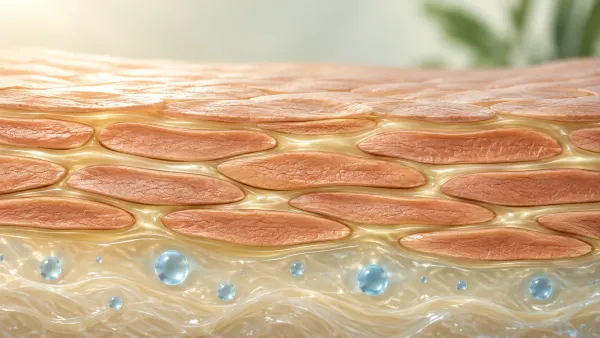
The skin barrier is the outer layer that helps keep water in and irritants out. When it is stressed, skin can feel dry, tight, hot, rough, itchy, or sensitive. Cleveland Clinic lists common signs of a damaged barrier such as dryness, irritation, rough patches, stinging, and tenderness when products are applied. You can read their overview of skin barrier damage signs for a medical explanation.
This guide is built differently from a generic barrier article. The goal is not to tell you to buy ten repair products. The goal is to help you decide what to stop, what to use instead, how long to wait, and when it is time to get help.
If you are searching for how to repair a damaged skin barrier, start with this rule: remove the irritants before you add more treatments. A damaged skin barrier usually needs fewer steps, not a louder routine.
Skin Barrier Damage: The Simple Rule
If your skin barrier feels damaged, your first job is not to repair everything at once. Your first job is to stop adding new stress.
A damaged barrier acts like an overloaded alarm system. Even gentle products can feel uncomfortable because the skin is already irritated. That is why adding more serums is often the wrong move. A better approach is to reduce the routine until your skin can tolerate basic care again.
| If your skin feels like this | Stop this first | Use this instead |
|---|---|---|
| Stinging from moisturizer or water | Acids, scrubs, retinoids, fragrance | Bland moisturizer, gentle cleanser, sunscreen |
| Dry, flaky, tight, or shiny-tight | Hot water, foaming cleanser, clay masks | Cream cleanser, glycerin, ceramides, occlusive layer |
| Red, itchy, or bumpy after products | New products, essential oils, exfoliation | Fragrance-free basics and patch testing |
| Breakouts plus irritation | Stacking acne actives every day | Pause actives, calm skin, then restart one active slowly |
The 7 Habits Most Likely to Damage Your Skin Barrier
1. Over-exfoliating because your skin looks dull
Exfoliation can help some routines, but too much exfoliation is one of the fastest ways to make skin feel raw. This includes physical scrubs, peeling pads, strong glycolic acid, salicylic acid used too often, and mixing several exfoliating products in the same week.
The American Academy of Dermatology warns that exfoliation should be chosen with skin type in mind because it can lead to irritation, redness, or breakouts when done incorrectly. Their guide on how to exfoliate safely at home is a useful source if you are not sure whether your skin can tolerate exfoliation.
For readers navigating pigment changes across varied Asian skin tones, use our skincare guide for Asian skin. It explains why avoiding repeated irritation matters more than ethnicity-based product labels.
For barrier-prone skin, do not exfoliate just because your skin looks uneven for one day. If your face feels tight or burns after applying moisturizer, pause exfoliation completely. Restart later with one mild exfoliant once weekly, not a full acid routine.
2. Using retinoids when your skin is already irritated
Retinoids can be useful for acne, texture, and visible aging, but they are not barrier-friendly when your skin is already angry. A common mistake is to push through burning and peeling because someone online said irritation means it is working.
Some dryness can happen when starting retinoids. But strong burning, painful peeling, or sensitivity to simple products is different. That is a sign to stop and rebuild your baseline. If you use retinoids around the eye area, be extra careful. Our guide to retinol for eyes explains why thin skin needs a slower approach.
3. Cleansing like oily skin is always dirty skin
A cleanser should remove sunscreen, makeup, oil, and daily grime without leaving your face stripped. If your skin feels squeaky clean, tight, or shiny after washing, your cleanser may be too strong or you may be cleansing too often.
This matters for oily and acne-prone skin too. Stripping the skin does not train it to become less oily. It can leave skin irritated and dehydrated, which makes acne routines harder to tolerate. If breakouts are part of the problem, read our guide to skincare mistakes that cause acne before adding another active.
4. Hot water and long showers
Hot water feels relaxing, but it can leave skin dry and uncomfortable. If your cheeks turn red after washing, your shower or sink water may be too hot. Use lukewarm water and keep cleansing short.
Pat the skin dry instead of rubbing it. Then apply moisturizer while the skin is slightly damp. This simple timing helps trap water before it evaporates.
5. Fragrance, essential oils, and too many extras
Fragrance is not automatically bad for everyone. But when the skin barrier is damaged, fragrance and essential oils are common troublemakers. They add possible irritation without adding much repair value.
During a barrier reset, choose boring products. Look for fragrance-free, dye-free, and simple formulas. This is especially important if you already have sensitive skin. Our sensitive skin routine guide explains how to reduce product triggers without giving up skincare completely.
6. Stacking vitamin C, acids, retinoids, and acne treatments
Many good ingredients become a bad routine when they are stacked too aggressively. Vitamin C in the morning, benzoyl peroxide at lunch, glycolic acid at night, and retinol the next evening may be too much for many people.
This does not mean you must avoid every active forever. It means your routine needs spacing. If you are using vitamin C for brightening or visible aging, start with a stable routine first. Our guide to vitamin C for anti-aging can help you use it more carefully after your skin is calm.
7. Changing products every few days
Barrier repair needs a boring window. If you change moisturizer every three days, you will not know what helped or what made things worse. Give your skin a stable routine long enough to respond.
A practical rule: use the same gentle basics for 2 to 4 weeks unless something clearly burns, itches, or triggers a rash. Take notes if needed. This is not exciting, but it is useful.
What to Pause During a Skin Barrier Reset
Pause first: scrubs, exfoliating pads, glycolic acid, strong salicylic acid routines, retinoids, benzoyl peroxide, clay masks, peel-off masks, fragrance-heavy creams, essential oils, aftershave-style toners, and any new product you just added before the irritation began.
Pausing actives does not mean your routine has failed. It means your skin needs a lower-stress phase. Think of it as removing background noise so you can see what your skin actually needs.
If you have acne, melasma, rosacea, eczema, or a prescription routine, do not stop prescribed treatment without asking your clinician. But if the irritation came from over-the-counter skincare, a short pause is often a sensible first step.
What to Use Instead
A barrier-friendly routine is simple. In the morning, cleanse only if needed, moisturize, and apply sunscreen. At night, use a gentle cleanser and moisturizer. If your skin is very dry, add a thin occlusive layer over moisturizer in dry areas.
This is also the safest starting point if your goal is to repair skin barrier irritation without guessing which active caused the problem.
Look for ingredients that support water retention and comfort. Glycerin and hyaluronic acid act as humectants. Ceramides and fatty acids support the lipid feel of the outer skin layer. Petrolatum can reduce water loss by forming a protective layer on top.
Ceramides are especially relevant to barrier care. A 2024 review indexed on PubMed discusses the role of ceramides in skin barrier function and the formulation challenges around using them well in skincare. You can review the PubMed ceramide review if you want the research context.
If you want to stay within SkinOptimizer's deeper guides, start with ceramides for skin barrier health, then compare options in our guide to the best ingredients for skin barrier repair.
| Ingredient type | What it does | Best use |
|---|---|---|
| Glycerin | Pulls water into the outer skin layer | Daily moisturizer or serum |
| Ceramides | Support the lipid structure of the barrier | Barrier creams and moisturizers |
| Petrolatum | Helps reduce water loss from skin | Last step on dry or irritated patches |
| Niacinamide | May support barrier comfort, but can sting some sensitive skin | Use later, not during severe irritation |
You do not need a complicated routine. If you are shopping on Amazon, these three product sections match the reset approach in this guide: cleanse gently, moisturize with barrier-supporting ingredients, then seal dry patches only where needed.

1. Gentle Cleanse: Vanicream Gentle Facial Cleanser
Best for: the cleansing step when your skin feels stripped or reactive.
Watch out: if even gentle cleanser stings, rinse with lukewarm water only for a few mornings.
Check price on Amazon
2. Repair Moisture: CeraVe Moisturizing Cream
Best for: a thicker moisturizer step with ceramides and hyaluronic acid.
Watch out: rich creams can feel heavy for very oily or clog-prone skin.
Check price on Amazon
3. Seal Dry Patches: Aquaphor Healing Ointment
Best for: sealing very dry patches as the final step at night.
Watch out: use a thin layer. It is occlusive and can feel greasy on the full face.
Check price on AmazonAs an Amazon Associate, we earn from qualifying purchases. Product availability, images, and prices can change on Amazon.
The 2 to 4 Week Barrier Reset Routine
This is the routine I would use as a starting point for mild barrier stress. It is not a medical treatment plan. It is a simple structure to help you stop over-treating.
Morning
Rinse with lukewarm water or use a gentle cleanser if you wake up oily. Apply a fragrance-free moisturizer. Finish with broad-spectrum sunscreen. Sun exposure can worsen irritation and visible discoloration, so daily protection matters. If you need help choosing a sunscreen that feels wearable, use our guide to the best sunscreen for everyday use.
Evening
Use a gentle cleanser. Avoid cleansing brushes and harsh washcloths. Apply moisturizer while the skin is slightly damp. If your cheeks or mouth area feel tight, seal those areas with a thin layer of petrolatum or a simple balm.
Weekly
Do not exfoliate in the first week if your skin is stinging. Do not add a new serum because the routine feels too plain. Do not use multiple masks to speed things up. If your skin improves, keep the same routine for another week before changing anything.
How to Restart Actives Without Damaging Your Barrier Again
Once your skin feels calm for several days, restart slowly. Choose one active, not three. Use it 2 nights per week at first. Keep the rest of the routine unchanged so you can tell whether that active is tolerated.
For many readers, this slow restart matters more than finding one perfect product for a damaged skin barrier.
A good restart order is usually: sunscreen and moisturizer first, then one treatment active, then optional brightening or exfoliating products later. If the active causes burning, strong peeling, or renewed tightness, stop and wait longer.
If you are rebuilding an anti-aging routine, do not rush retinoids. You can still make progress with sunscreen, moisturizer, and slow retinoid use later. For a broader anti-aging ingredient view, see our guide to the best anti-aging ingredients.
When a Damaged Barrier Needs Professional Help
Most mild barrier problems can improve with a simpler routine. But not every irritated face is just a damaged barrier. Eczema, rosacea, allergic contact dermatitis, acne, fungal conditions, and infection can look similar to routine irritation.
Get professional help if you have swelling, pus, open cracks, yellow crust, spreading redness, intense pain, repeated infections, severe itching, or symptoms that do not improve after a careful reset. Also be careful if you are pregnant, using prescription acne treatment, using steroid creams, or treating a known skin condition.
The goal is not to self-diagnose. The goal is to stop obvious routine stress and know when the problem needs more than skincare advice.
Common Mistakes That Keep the Barrier Weak
Buying a repair cream but keeping the same irritating routine
A barrier cream cannot fix a routine that keeps causing irritation. If you keep using strong acids every night, a good moisturizer may only reduce some dryness. Remove the trigger first.
Assuming natural products are always safer
Natural does not automatically mean gentle. Essential oils, citrus extracts, and fragrant botanicals can be irritating for some people. If your skin is reactive, choose boring and fragrance-free first. Our article on whether natural skincare is always better explains this tradeoff.
Skipping moisturizer because you have oily skin
Oily skin can still be dehydrated or barrier-stressed. Choose a lighter moisturizer if heavy creams break you out, but do not skip moisture completely. If choosing texture is the hard part, read how to pick the right moisturizer.
Using sunscreen only when it is sunny
Sunscreen is part of barrier protection because UV exposure adds stress. It also helps reduce the risk of post-irritation discoloration, especially if your skin marks easily. This is important for deeper skin tones and anyone prone to hyperpigmentation.
Bottom Line
Skin barrier damage is usually a routine problem before it is a product problem. The best first move is not a complicated repair plan. It is a calmer plan. Stop the strongest irritants. Use a gentle cleanser, moisturizer, and sunscreen. Add barrier-supporting ingredients. Wait long enough to see a pattern. Then restart actives one at a time.
If your skin keeps burning, cracking, swelling, or reacting despite a simple routine, do not keep guessing. A dermatologist can help confirm whether you are dealing with barrier stress, eczema, rosacea, allergy, acne treatment irritation, or another condition.
Frequently Asked Questions About Skin Barrier Damage
How do I know if my skin barrier is damaged?
Common signs include tightness, dryness, flaking, rough texture, stinging when you apply products, redness, itching, and sudden sensitivity to products you used to tolerate. These signs can also overlap with skin conditions, so persistent or severe symptoms should be checked by a professional.
What should I stop first if my skin barrier feels damaged?
Stop exfoliants, scrubs, retinoids, fragrance-heavy products, strong acne actives, hot water, and new product testing first. Keep only a gentle cleanser, moisturizer, and sunscreen while your skin calms down.
How long does skin barrier repair take?
Mild irritation may feel better in 2 to 4 weeks with a simple routine. More severe dryness, eczema-prone skin, or long-term overuse of actives can take longer. If your skin is not improving, get professional advice instead of adding more products.
Are ceramides good for a damaged skin barrier?
Ceramides can be useful because they are part of the lipid structure linked to barrier function. A ceramide moisturizer may help dry or irritated skin feel more comfortable, especially when paired with a gentle cleanser and sunscreen.
Can I use retinol if my skin barrier is damaged?
It is better to pause retinol while your skin is burning, peeling, or stinging from basic products. Restart only after your skin feels calm. Begin slowly, use a small amount, and avoid using exfoliating acids on the same night.
This article is for informational purposes only and does not replace professional dermatological, medical, or nutrition advice.