How to Clear Back Acne: A 6-Week Treatment Plan
How to clear back acne: identify the bumps, choose the right wash, reduce friction, and follow a practical six-week plan for clearer skin at home.

In this guide
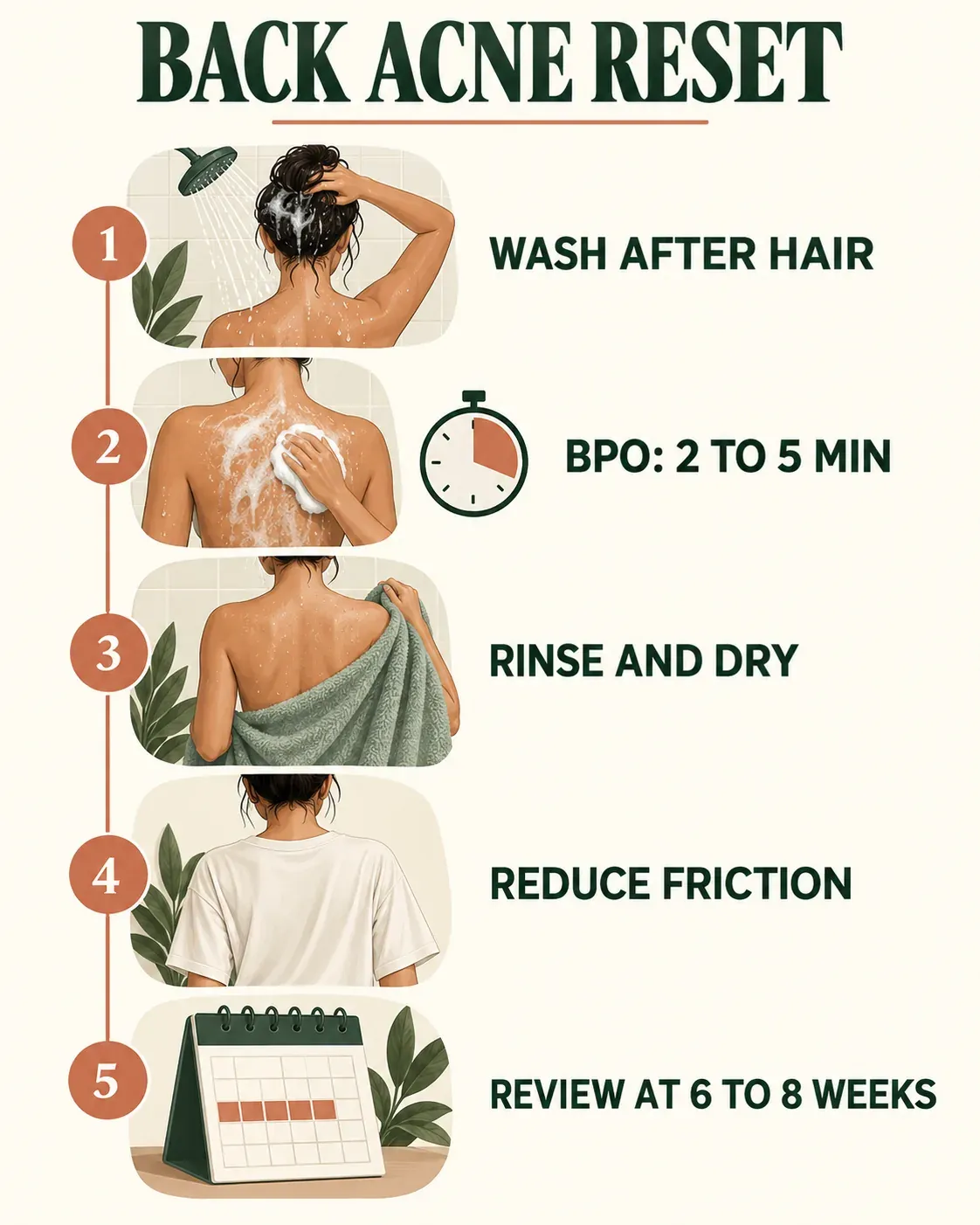
To clear mild back acne, wash gently after hair products are rinsed away, use one evidence-based acne treatment consistently, reduce heat and friction from tight gear, and reassess after six to eight weeks. A benzoyl peroxide wash is a practical first choice for inflamed pimples; salicylic acid fits clogged pores and rough congestion.
Leave benzoyl peroxide wash on the back for two to five minutes before rinsing, unless your label says otherwise. See a dermatologist sooner for deep painful lumps, scars, rapidly worsening acne, or itchy uniform bumps that may be a different condition.
- Start with the pattern: blackheads and whiteheads, inflamed pimples, and itchy uniform bumps do not point to the same plan.
- Use shower order: shampoo and condition first, then wash the back so residue is not the final layer left on acne-prone skin.
- Choose one lead active: benzoyl peroxide for inflamed lesions or salicylic acid for clogged pores; do not stack everything on day one.
- Control friction: change sweaty clothing, clean sports straps, and avoid abrasive brushes or repeated picking.
- Set a checkpoint: look for early improvement at six to eight weeks, not after three showers.
Identify the bumps, set the shower sequence, or go straight to the six-week reset.
SkinOptimizer is an independent skincare publication, not a medical provider. We reviewed current dermatology guidance and truncal-acne research, removed unsupported DIY remedies, and separated low-risk home care from problems that need diagnosis or prescription treatment.
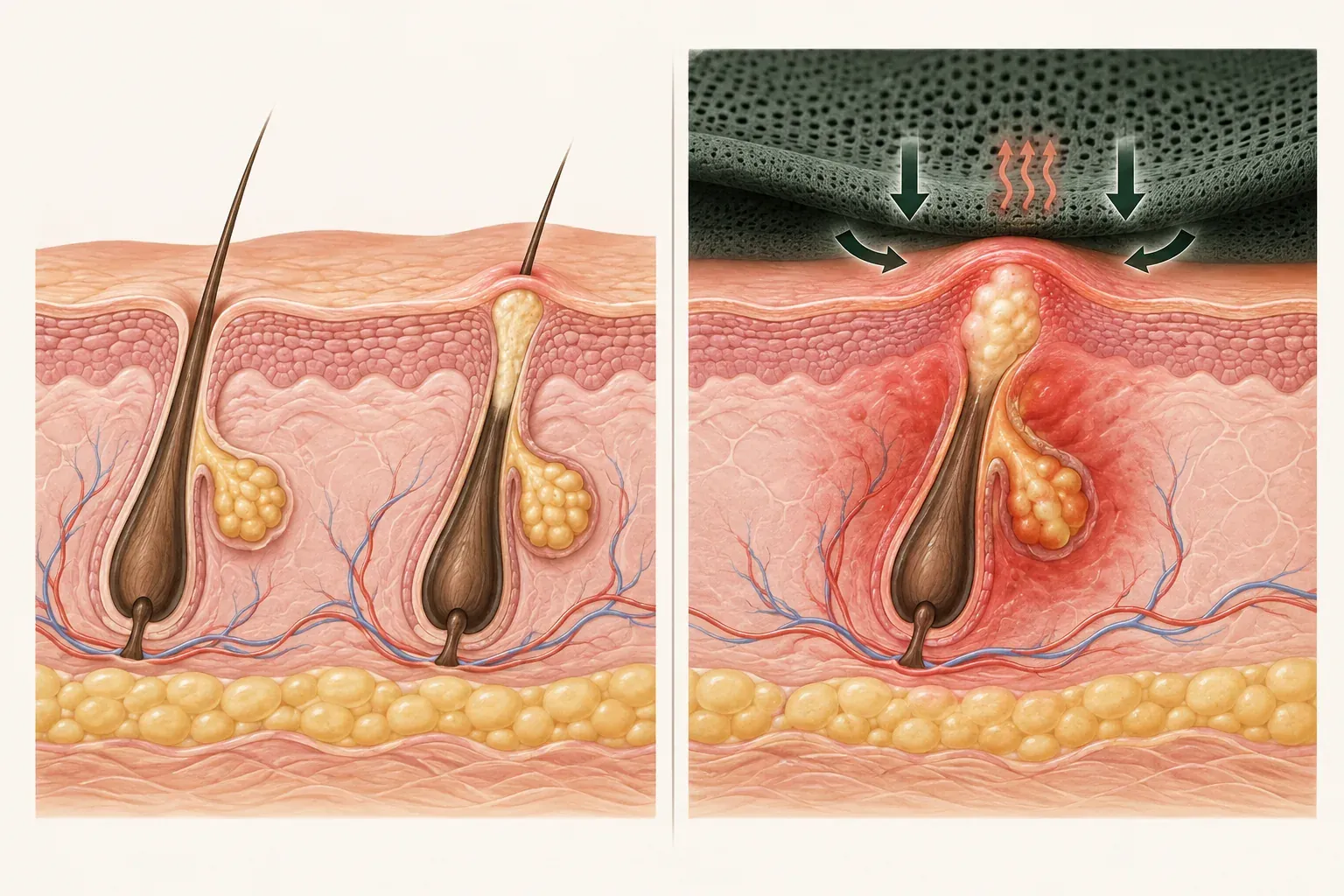
Back acne is easy to treat like a hygiene failure because the area is sweaty, hard to reach, and usually covered. That framing is both unfair and unhelpful: acne forms inside follicles, and scrubbing harder can add irritation without correcting the process.
The back also creates practical problems the face does not. A wash runs off quickly, conditioner can coat the shoulders, sports straps repeat pressure in the same place, and a product that works on a small facial area may be inconvenient across a large surface.
This guide turns those variables into a controlled plan. The aim is not “smooth skin fast,” but fewer new lesions, less picking and irritation, and a clear point at which professional care becomes the smarter next step.
First, Make Sure the Bumps Behave Like Acne
Truncal acne can include blackheads, whiteheads, red papules, pustules, nodules, and cysts across the back, shoulders, or chest. A mixture of clogged pores and inflamed spots supports acne more than a sudden crop of identical itchy bumps.
The Cleveland Clinic back-acne overview explains that oil, dead cells, and inflammation all contribute. Genetics, hormones, some medications, and occlusive products can shape the pattern, while sweat is usually a context rather than a single cause.
Malassezia folliculitis is one acne look-alike. It often appears as small, similar-looking itchy bumps on the upper trunk and may worsen with heat and moisture, but self-diagnosing every itchy breakout as “fungal acne” can delay appropriate care.
| Pattern | What it may suggest | Best next move |
|---|---|---|
| Blackheads, whiteheads, and mixed red pimples | Acne vulgaris is plausible | Try a consistent acne routine if lesions are mild and not scarring |
| Deep, painful lumps or new scars | Nodular or more severe acne | Book a dermatologist rather than escalating washes alone |
| Very uniform, itchy bumps without comedones | Folliculitis or another look-alike | Seek diagnosis because acne treatment may not fit |
| Bumps under straps, pads, or tight seams | Friction and occlusion may be contributing | Reduce repeated pressure while treating the underlying eruption |
| Sudden rash with pain, fever, or rapidly spreading redness | Not a routine home-care problem | Seek prompt medical care |
Keratosis pilaris can also create rough follicular bumps, while contact dermatitis may itch or burn where a product or fabric touches. If the pattern is unclear, photographs taken before treatment can help a clinician see how it began.
Our guide to preventing acne breakouts covers the broader facial and body-acne framework. If itching and identical bumps dominate, do not keep adding acne actives just because the location is the back.
Choose the Lead Treatment by Lesion Type
Benzoyl peroxide is a strong first option when red inflamed pimples are prominent. It reduces acne-causing bacteria without creating antibiotic resistance, and a rinse-off wash is practical across a broad area.
Salicylic acid is useful when blackheads, whiteheads, and rough clogged texture dominate. It helps exfoliate within oily follicles, but a quick-rinse cleanser may deliver less contact than a leave-on body product.
Adapalene is an OTC topical retinoid in the United States and can help prevent new comedones. It is harder to spread across the entire back, can irritate, and requires pregnancy-related caution, so a clinician or pharmacist can help you decide whether it fits.
The 2024 AAD acne guideline in PubMed supports benzoyl peroxide, topical retinoids, salicylic acid, and combination approaches. It also reinforces why antibiotic treatment should not become an unsupervised solo routine.
| Main pattern | Reasonable first active | Watch-out |
|---|---|---|
| Red inflamed pimples | Benzoyl peroxide wash | Dryness, irritation, and bleaching of towels or clothing |
| Blackheads, whiteheads, rough congestion | Salicylic acid wash or body product | Stinging and dryness when combined with other exfoliants |
| Repeated mixed comedonal acne | Adapalene may fit | Irritation, hard-to-reach application, and pregnancy precautions |
| Dark marks after acne | Prevent new lesions first; consider azelaic acid | Marks fade slowly and sunscreen still matters on exposed skin |
| Deep, painful, widespread, or scarring acne | Dermatologist-led treatment | Wash strength alone is unlikely to match disease severity |
Do not start benzoyl peroxide, salicylic acid, adapalene, a scrub, and a clay mask in the same week. One lead active plus a gentle cleanser and moisturizer gives you a readable experiment.
If benzoyl peroxide is the choice, our benzoyl peroxide wash comparison explains 2.5%, 4%, 5%, and 10% options. A higher percentage is not automatically a better starting point.
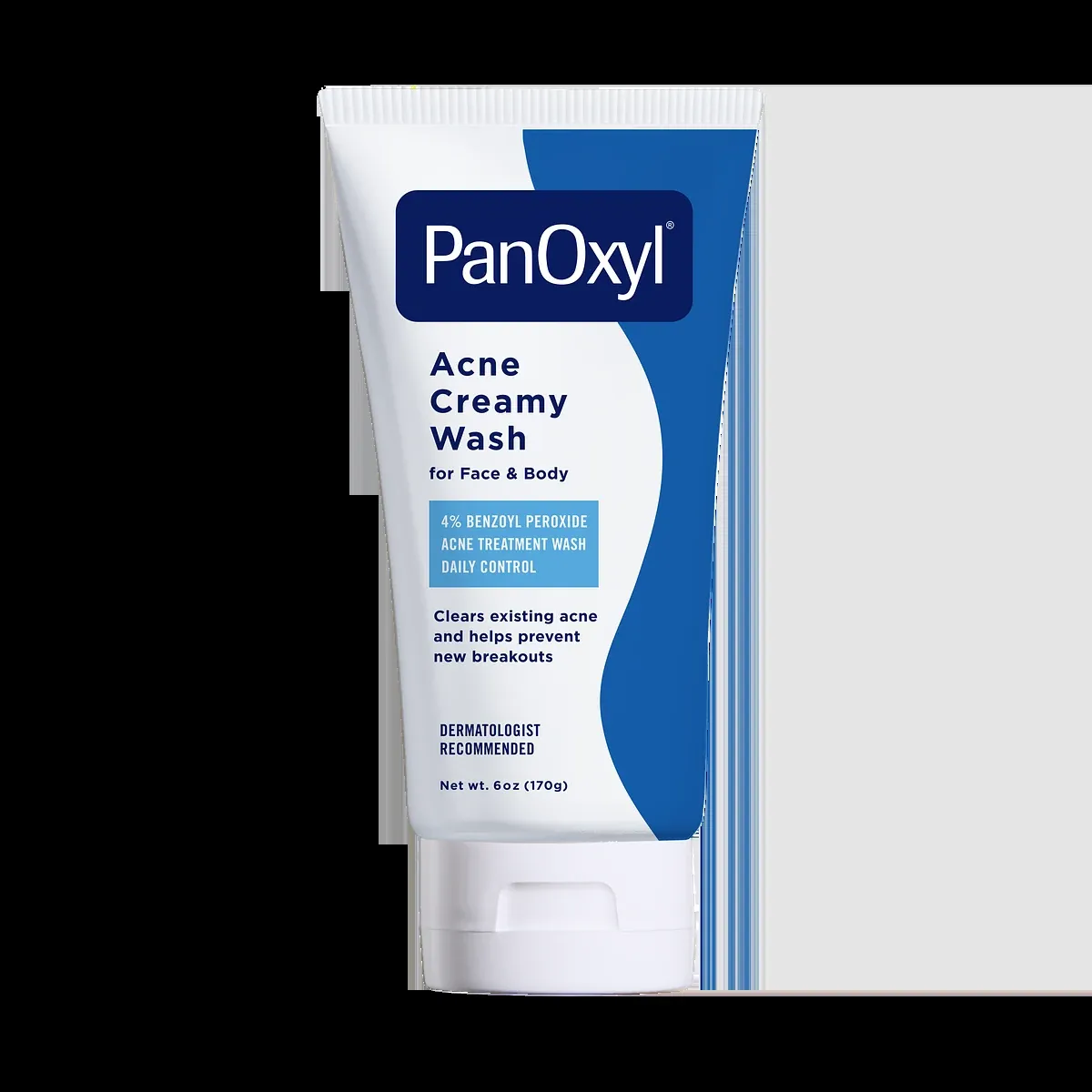
PanOxyl Acne Creamy Wash 4%
Buy it if: you want a verified, widely available 4% benzoyl peroxide wash for the back, chest, shoulders, or face.
Skip it if: benzoyl peroxide irritates your skin, you have an active eczema flare, or a clinician has told you to avoid it.
The 4% strength is a more conservative starting option than a maximum-strength 10% wash, but it can still dry skin and bleach fabrics. This is an exact-product listing, not a hands-on SkinOptimizer test.
Check current Amazon optionsAs an Amazon Associate, we earn from qualifying purchases.
The Shower Order That Makes Treatment More Reliable
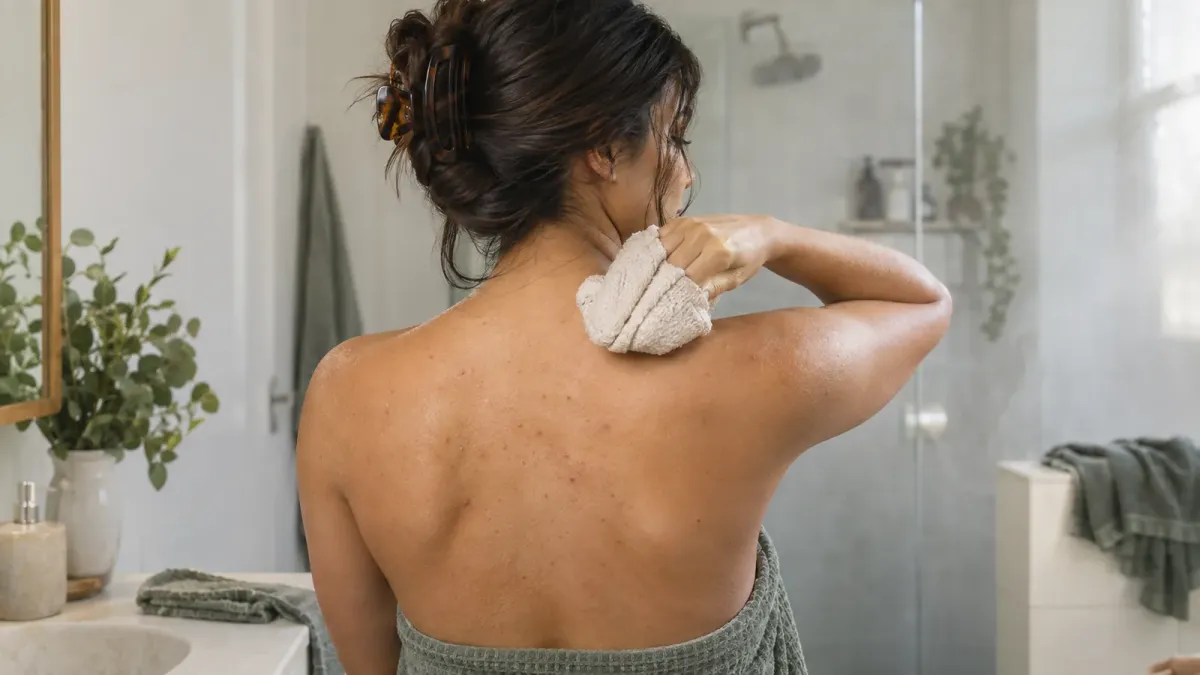
Wash and condition your hair first. Clip it up, rinse the shoulders and back thoroughly, then use the acne wash as the final cleansing step on the target area.
The American Academy of Dermatology's back-acne home-care guidance advises leaving benzoyl peroxide wash on the back for two to five minutes. Skin on the back is thicker than facial skin, and immediate rinsing may reduce useful contact.
Follow the label on your exact product and start near two minutes if you are sensitive. Rinse thoroughly, pat dry, and use white or benzoyl-peroxide-resistant towels because residue can bleach textiles.
You do not need a rough loofah or scrub brush. Clean hands, a soft cloth, or a long-handled silicone applicator can improve reach without turning treatment into friction.
Wash the tool after every use and allow it to dry. A damp applicator stored in the shower is not helpful simply because it can reach the area.

Reduce Friction Without Blaming Sweat
Sweat does not mean your skin is dirty, but prolonged moisture under tight, rubbing fabric can worsen an acne-prone environment. The fix is not to stop exercise; it is to reduce how long heat, residue, and friction stay against the same follicles.
Change out of damp clothing when practical, shower after workouts, and wash sports bras, compression tops, backpack straps, and protective pads regularly. Choose breathable clothing when performance and safety allow.
A backpack or gym bench can create a clear contact pattern. If lesions cluster under straps or seams, adjust fit, add a clean moisture-wicking layer, and avoid carrying extra weight against active inflammation.
Hair oils, leave-in conditioner, and heavy body products can also contact the upper back. Rinse hair products before the back-acne wash and keep styling products off the skin where possible.
A Six-Week Back Acne Reset
Six weeks is long enough to look for direction, not always full clearing. The back can improve slowly, and post-acne red or dark marks can remain after active lesions decrease.
Take three baseline photos in the same lighting: upper back, mid-back, and shoulders. Count only new inflamed lesions each week instead of judging every old mark as active acne.
| Time | What to do | Decision checkpoint |
|---|---|---|
| Week 0 | Choose one lead active, photograph the pattern, remove scrubs and duplicate exfoliants | Deep pain, scars, or uncertain diagnosis means professional care now |
| Weeks 1–2 | Use the product on schedule, protect fabric, moisturize if dry | Reduce frequency for persistent burning, peeling, or painful tightness |
| Weeks 3–4 | Keep shower order and friction controls stable | Look for fewer new lesions, not disappearance of every mark |
| Weeks 5–6 | Compare consistent photos and count new inflamed spots | Continue if clearly improving and tolerable; escalate if unchanged or worse |
| Weeks 6–8 | Decide on maintenance or dermatologist review | Do not keep escalating strength without a diagnosis |
Start a benzoyl peroxide wash every other day if daily use feels too aggressive, then increase only when skin is comfortable. On alternate days, use a fragrance-free gentle body wash rather than another medicated exfoliant.
Apply a lightweight fragrance-free moisturizer if the back feels tight or flaky. “Non-comedogenic” is useful label language but not a guarantee, so stop a new lotion if breakouts clearly cluster where it is used.
Use broad-spectrum sunscreen on exposed shoulders and back, especially when acne marks are a concern. Our guide to reapplying sunscreen explains how to handle outdoor days without treating sunscreen as an acne cure.
Common Reasons a Back Acne Routine Fails
The first failure is contact time. A medicated wash that touches the back for ten seconds and runs off may not be used the way the supporting guidance intends.
The second is irritation disguised as progress. Burning, glossy tightness, and widespread flaking do not prove that acne is “purging”; they often mean the routine needs less frequency or fewer actives.
The third is treating every mark as a live pimple. Flat red, purple, brown, or lighter spots can be post-inflammatory color change, while scars may be raised or indented.
Do not respond to persistent acne by adding a scrub, stronger wash, acid spray, retinoid, and spot treatment in the same week. When a simple well-used plan fails, diagnosis and prescription options are more useful than uncontrolled intensity.
Picking is another major setback because it increases inflammation and the chance of marks or scars. If reaching the back makes picking difficult to control, cover a mirror, trim nails, or use clothing as a physical reminder rather than chasing every bump.
Our guide to over-exfoliation and acne explains why more removal can create a second skin problem. For tender active lesions, the benzoyl peroxide treatment guide provides a broader safety overview.
When Back Acne Needs a Dermatologist
Home treatment fits mild acne and some moderate cases without deep pain or scarring. Dermatology care becomes a priority when lesions are nodular, widespread, painful, rapidly worsening, leaving scars, or affecting confidence and daily life.
The trunk has a meaningful risk of persistent marks and raised scars. A review of truncal acne notes that body-specific studies remain limited and that clinicians often adapt facial-acne treatments to the larger, harder-to-reach area.
Prescription options can include topical retinoids, oral antibiotics used within a resistance-conscious combination plan, hormonal therapy for suitable patients, or isotretinoin for severe disease. Those choices depend on health history, pregnancy potential, other medicines, lesion severity, and scarring risk.
Ask for help sooner if bumps are very itchy and uniform, because folliculitis may need a different approach. Treatment selection must also account for the size and inaccessibility of the affected area rather than copying a small facial spot routine.
What to Do About Marks and Scars
First control new acne. Treating pigment while fresh inflamed lesions continue is slower and often tempts people to stack irritating products across a large area.
Flat dark marks may fade gradually, with sunscreen helping protect exposed areas from further contrast. Azelaic acid can fit some acne-and-mark routines, while stronger peels or lasers require professional selection based on skin tone and scar type.
Raised keloid-like scars on the shoulders or back deserve early dermatology review because they can continue to grow beyond the original lesion. Do not microneedle or perform strong chemical peels over active back acne at home.
Our acne-scar treatment overview separates color change from structural scarring. If flat red marks are the main concern, the post-acne redness guide explains why patience and irritation control matter.
The Bottom Line
Clearing back acne is less about force and more about execution. Match the treatment to the lesion pattern, give rinse-off medicine enough contact time, prevent conditioner from becoming the final back product, and reduce repeated friction without giving up exercise.
A six-week routine should produce a useful signal. Continue a tolerable plan that clearly reduces new lesions, but move to dermatology care for pain, scars, uncertain itchy bumps, or a well-used routine that is not working.
Community question note: We reviewed discussions about stacking washes and conditioner order, benzoyl peroxide contact time, maintenance after improvement, and routines that fail despite scrubbing. These threads were used only to identify questions; clinical sources support the answers.
Frequently Asked Questions About How to Clear Back Acne
How long should benzoyl peroxide wash stay on your back?
The AAD advises leaving a benzoyl peroxide wash on the back for two to five minutes before rinsing. Start at the shorter end if your skin is sensitive, and follow the directions on your exact product.
Should you wash your back before or after conditioner?
Wash and rinse your back after shampoo and conditioner so hair-product residue is less likely to remain on acne-prone skin. Keep wet conditioned hair off the back while the acne wash has contact time.
How long does back acne take to clear?
Early improvement often takes six to eight weeks of consistent treatment, while fuller clearing can take several months. Deep, painful, scarring, or worsening acne should be assessed sooner rather than waiting out a home routine.
Why is my back acne not improving with scrubs?
Scrubbing does not correct follicular plugging and can add friction and irritation. Replace abrasive tools with gentle application, use one evidence-based treatment consistently, and seek a diagnosis if the bumps are itchy, very uniform, painful, or unchanged.
Can back acne be fungal acne?
Acne is not a fungal disease, but Malassezia folliculitis can create itchy, uniform bumps on the trunk that resemble acne. Because treatment differs, a clinician should assess persistent itchy or look-alike eruptions instead of relying on self-diagnosis.
This article is for informational purposes only and does not replace professional dermatological advice.