How to Moisturize Dehydrated Skin Without Overdoing It
A practical four-step reset for dehydrated skin that explains ingredient roles, product order, climate adjustments and when tightness is more than dehydration.

In this guide
Reduce stripping first, then apply moisturizer while skin is slightly damp. Humectants help hold water, emollients smooth the surface and occlusives slow water loss; one well-formulated moisturizer may already do all three jobs. Use the lightest texture that removes tightness, pause unnecessary exfoliation for two weeks and seek care when burning, rash, cracking or persistent symptoms suggest more than dehydration.
Quick Summary
- Dehydrated skin lacks water and can still be oily or acne-prone.
- Gentle cleansing and damp-skin moisturizer application come before another serum.
- Humectants, emollients and occlusives perform different but complementary jobs.
- Run a two-week simplified routine and assess persistent burning or rash professionally.
Dehydrated Skin Is a Condition, Not a Skin Type
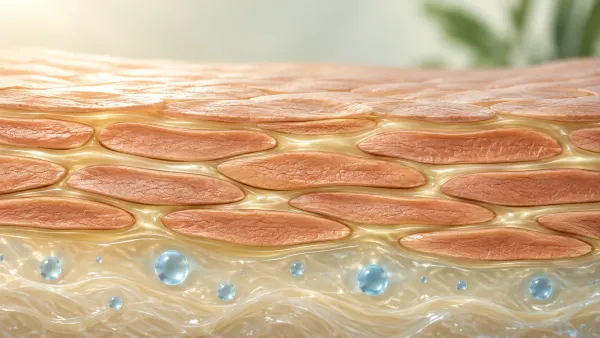
Dehydrated skin lacks water in the outer layer, while dry skin is a skin type that tends to produce less oil. Oily, combination and acne-prone skin can still feel dehydrated after over-cleansing, low humidity, irritating actives or an inadequate moisturizer. The labels can overlap, but they lead to different product and technique decisions.
Dehydrated skin often feels tight, looks temporarily dull or shows fine surface lines that improve with moisturization. Dry skin more often has a persistent tendency toward roughness, flaking and discomfort. Neither description diagnoses eczema, contact dermatitis, rosacea or another condition that can also cause dryness and burning.
| Signal | More consistent with dehydration | More consistent with dry or irritated skin |
|---|---|---|
| Oil level | Can be oily or combination | Often low, but irritation can occur in any type |
| Timing | Worse after cleansing, actives, travel or dry air | Persistent tendency across seasons |
| Appearance | Dullness and temporary fine surface lines | Flakes, rough patches or scaling |
| Sensation | Tightness that improves with moisturizer | Itch, burning or cracking may be stronger |
| Best first test | Gentler cleanse plus layered moisturizer | Richer cream and assessment if inflamed |
The pinch test promoted on social media is not a validated home diagnosis for facial dehydration. Skin recoil varies with age, body site, connective tissue and technique. A routine response over one to two weeks is more useful than pinching the cheek and assigning a percentage.
If basic moisturizer burns, the skin is swollen, or a rash is spreading, stop treating the problem as simple dehydration. The damaged skin barrier guide explains when stinging and raw shine call for fewer actives. Persistent symptoms deserve a clinician's assessment.
What Moisturizers Actually Do
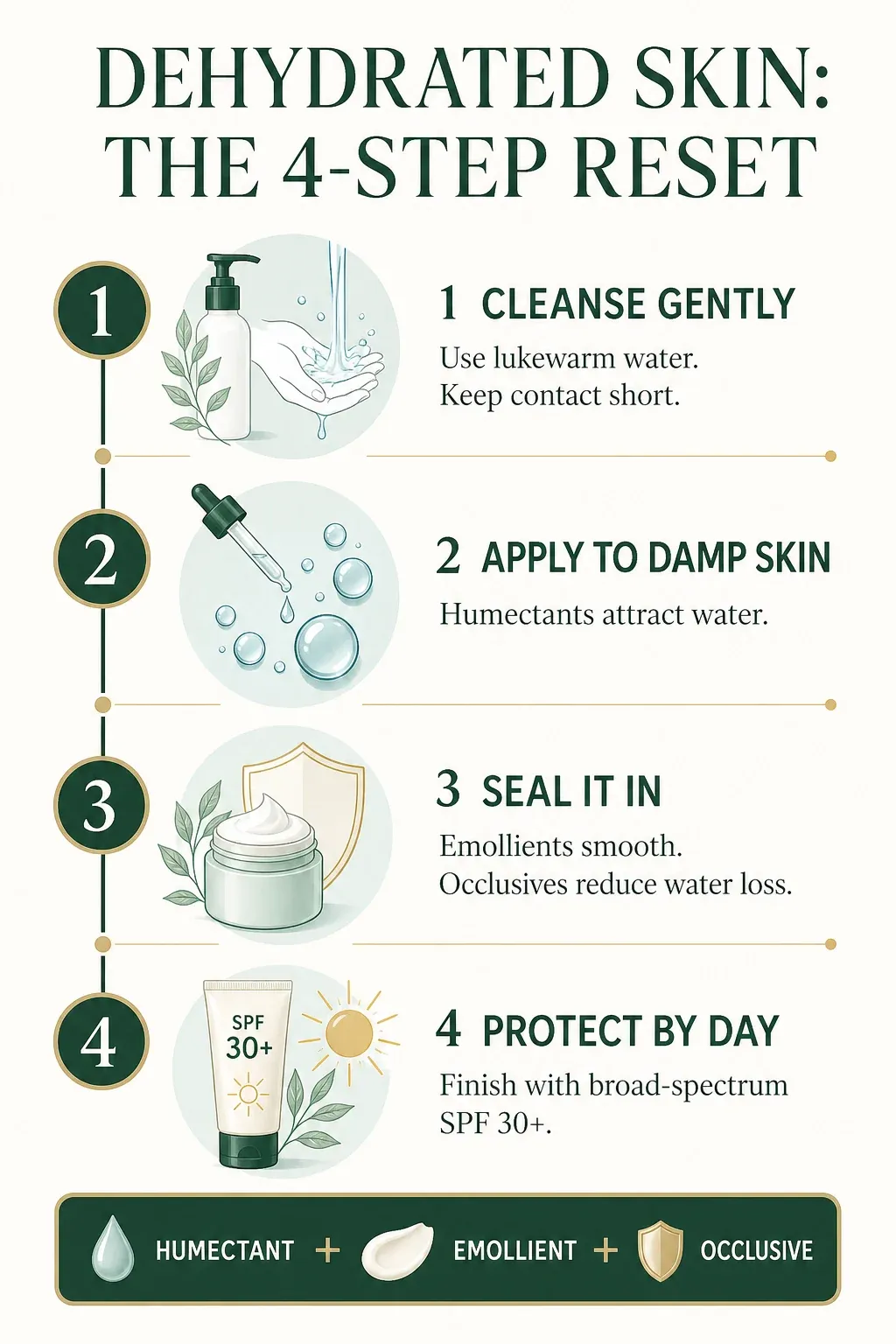
Moisturizers combine several ingredient jobs. Humectants help the outer skin hold water, emollients smooth spaces between surface cells, and occlusives reduce evaporation. A good formula may perform all three jobs without requiring a separate serum, oil and balm.
The American Academy of Dermatology recommends applying moisturizer while skin is still damp and choosing creams or ointments for very dry skin. Technique and texture can therefore solve more than adding another trendy ingredient.
Humectants attract and bind water
Glycerin, hyaluronic acid, urea, panthenol and sodium PCA are common humectants. A small study in 17 volunteers found glycerol affected hydration and barrier-related measures, supporting its long-standing use. Small mechanistic studies do not tell us that a dedicated glycerin serum is necessary for every routine.
For readers comparing urea as a moisturizing ingredient, our urea face-cream guide provides exact-product checks rather than assuming every urea-enriched body lotion is a facial substitute.
Hyaluronic acid can increase surface hydration in a suitable formula, but molecular weight, vehicle and concentration affect performance. A watery serum may feel tight if used alone in dry air or on a compromised barrier. Apply it to slightly damp skin and follow with moisturizer rather than waiting for a sticky layer to dry completely.
Emollients smooth rough surface cells
Squalane, fatty alcohols, ceramides, plant oils and esters can make skin feel softer and reduce rough texture. They do not add water by themselves, and a facial oil is not a complete substitute for moisturizer when dehydration is the main problem. The face oil guide explains when an oil makes sense as a final emollient layer.
Acne-prone skin does not need to avoid every emollient. Formula, amount and individual tolerance matter more than viral comedogenicity lists. Start with a light lotion or gel-cream and apply only enough to remove tightness.
Occlusives slow water loss
Petrolatum, dimethicone, waxes and heavier oils can reduce evaporation. A randomized crossover study in 51 people found a glycerol-and-petrolatum product improved hydration and reduced transepidermal water loss more than a glycerol-only comparator. The result supports combining water binding with occlusion, not covering every oily face in a thick layer.
Use richer occlusion on dry cheeks, mouth corners or flaky areas instead of applying the same amount everywhere. Do not seal a strong retinoid or acid under petrolatum simply to increase penetration. Occlusion can amplify irritation.
The Four-Step Dehydrated-Skin Reset
Step 1: Reduce water and cleanser stress
Wash with lukewarm rather than hot water and keep cleansing brief. If the face is not oily in the morning, a water rinse may be enough, while nighttime cleansing should remove sunscreen and makeup. The dry-skin cleanser guide compares non-stripping textures.
Do not cleanse until the skin squeaks. That sensation reflects aggressive removal of surface lipids, not superior pore cleaning. Pat lightly and move to moisturizer before all surface water evaporates.
Step 2: Add a humectant only when it solves a gap
A separate hydrating serum can help when a moisturizer feels rich enough but the skin still looks temporarily crinkled or tight. Use two or three drops on slightly damp skin and follow with moisturizer. If the serum pills, stings or adds no benefit, remove it.
The hyaluronic acid guide explains molecular-weight claims and layering. More forms of hyaluronic acid do not guarantee a better result, and a serum cannot compensate for daily over-exfoliation.
Step 3: Seal with the right texture
Gel-creams and light lotions suit oily or humid conditions, while creams fit colder air, dry skin or treatment-related flaking. Apply a thin even layer, then add more only to areas that remain tight. This targeted approach reduces heaviness without leaving the cheeks unsupported.
A 2002 randomized trial in 197 people with atopic dry skin compared glycerin, urea/saline and placebo creams. The glycerin cream improved several dryness-related outcomes, but the participants had atopic dry skin and the result should not be turned into a universal serum ranking.
Step 4: Protect the result by day
UV exposure can worsen inflammation and visible aging, while many dehydrated routines also contain sensitizing actives. Use broad-spectrum SPF 30 or higher and reapply with meaningful outdoor exposure. A comfortable moisturizer-sunscreen pairing is better than a rich base that makes the SPF pill.
The day versus night moisturizer guide helps decide whether two textures solve a real seasonal or sunscreen-layering problem. Separate jars are optional.
Two Products for Different Hydration Gaps
The serum supplies a light humectant layer, while the cream provides a more complete emollient-and-occlusive finish. Many readers need only the cream. Buy both only when a one-week side-by-side routine test shows that the serum adds comfort without pilling or irritation.
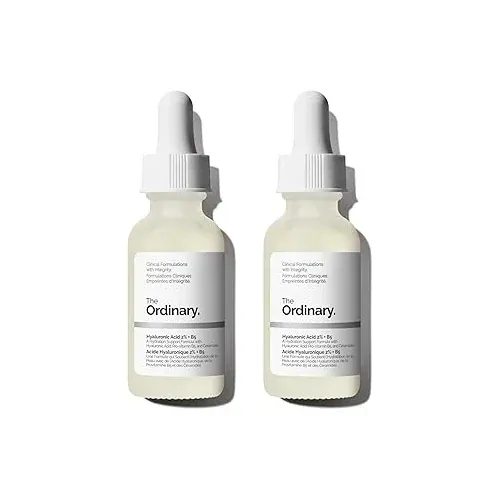
The Ordinary Hyaluronic Acid 2% + B5
Oily, combination or normal skin that wants a light hydrating step under moisturizer.
The current formula combines multiple hyaluronic-acid forms with panthenol, glycerin and ceramide-related lipids in a water-based serum.
Watch-out: It is not a replacement for moisturizer. Apply a small amount to damp skin and stop if it stings or pills.
View on AmazonAs an Amazon Associate, SkinOptimizer may earn from qualifying purchases. Prices, sellers and availability can change.
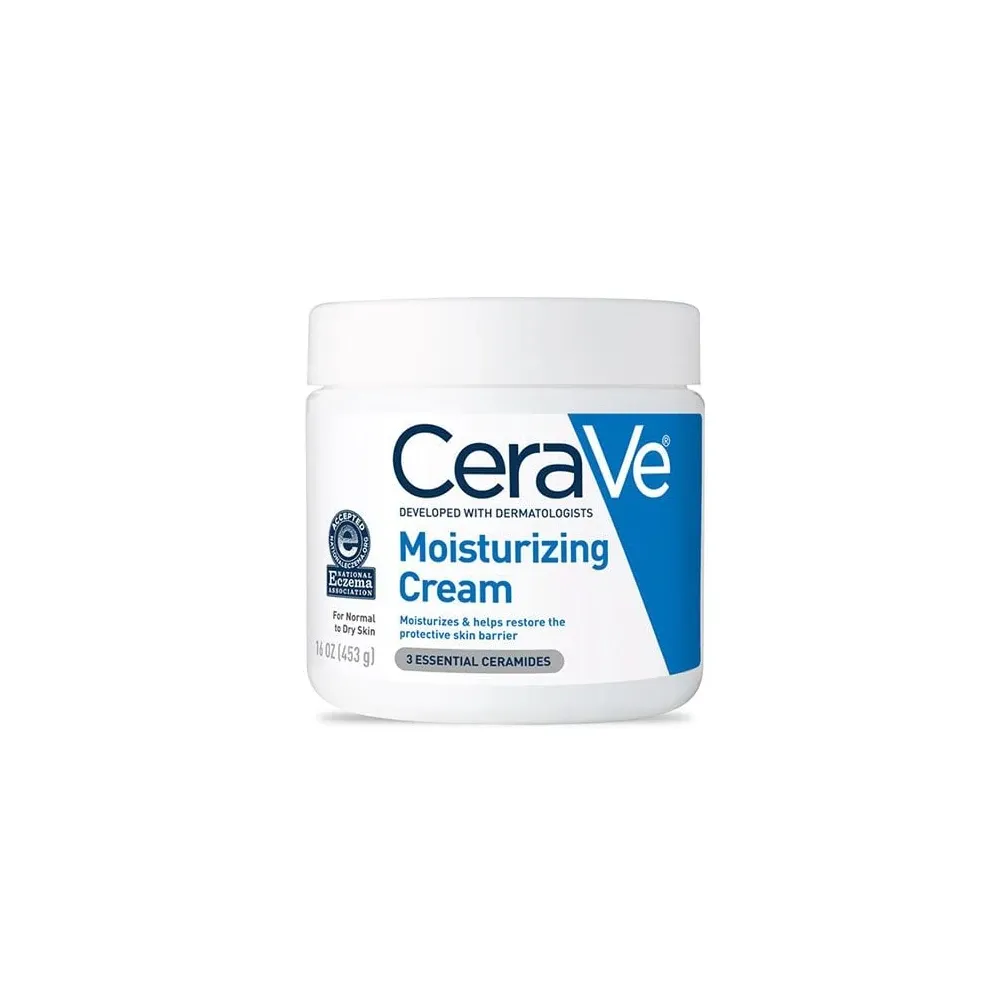
CeraVe Moisturizing Cream
Normal-to-dry skin, dry patches or a routine that needs more water-loss control than a gel provides.
CeraVe lists ceramides, hyaluronic acid, dimethicone and petrolatum in a fragrance-free face-and-body cream.
Watch-out: The rich texture can feel heavy on oily areas. Apply by zone or choose a lighter lotion when congestion or residue appears.
View on AmazonAs an Amazon Associate, SkinOptimizer may earn from qualifying purchases. Prices, sellers and availability can change.
The The Ordinary product page and CeraVe product page were used to verify current product roles and ingredient descriptions. Formulas and marketplace listings can change, so read the package and seller details before use.
Choose Texture by Skin Type and Climate
| Context | Start with | Adjust when |
|---|---|---|
| Oily skin in humidity | Light lotion or gel-cream | Tightness remains after gentle cleansing |
| Combination skin | Light base plus cream on dry zones | One area becomes greasy or flaky |
| Dry skin in winter | Cream on damp skin | Cracks or itch persist despite consistent use |
| Retinoid adjustment | Familiar cream and lower active frequency | Burning or painful peeling appears |
| Air travel or air conditioning | Usual moisturizer plus targeted occlusion | Temporary dryness resolves after the environment changes |
Humidity changes how a formula feels, but it does not make humectants inherently dangerous. In dry air, a humectant serum is usually more comfortable under an emollient or occlusive moisturizer. In humid weather, the same cream may feel too heavy.
For oily skin, reduce cleanser strength before assuming moisturizer is the problem. The daily oily-skin routine shows how to keep hydration without layering a greasy film. For sensitive skin, the sensitive-skin moisturizer guide emphasizes fragrance and irritation history.
A Two-Week Subtraction Test
Dehydrated routines often fail because too many actives continue while hydrating products are added on top. For two weeks, pause nonessential scrubs, peel pads, exfoliating toners and newly introduced actives. Keep a gentle cleanser, moisturizer and sunscreen, plus a prescribed treatment only as directed.
Record morning tightness, midday oil, flaking and stinging every few days. If the skin improves, reintroduce one product at a time rather than restoring the whole routine. The start skincare slowly guide provides timing for that process.
If nothing improves, revisit the diagnosis. Eczema, seborrheic dermatitis, contact allergy, rosacea, medication effects and climate exposure can resemble simple dehydration. A clinician can decide whether examination, allergy testing or treatment is needed.
Can Drinking More Water Fix Dehydrated Skin?
Severe whole-body dehydration affects health and requires appropriate fluid replacement, but ordinary facial tightness is not proof that someone is underhydrated. Drinking excessive water is not a targeted treatment for a stripped skin barrier. Meet normal hydration needs and focus on the products and exposures that touch the skin.
A small industry-linked study of a hyaluronic-acid-and-glycerin serum reported improvements in hydration measures and appearance. The study supports the possibility of topical hydration benefit, but its design and sponsorship limit broad conclusions. It does not compare the serum with drinking extra water.
Humidifiers can improve room comfort in very dry indoor air, but they need cleaning and sensible humidity control. They do not replace moisturizer or treat an inflammatory skin condition. Avoid positioning steam directly at the face as a hydration therapy.
How Dehydration Changes Makeup and Sunscreen
Foundation can catch on flakes when skincare layers are too dry, too thick or incompatible. Use a thin moisturizer, allow it to settle, then apply sunscreen evenly before makeup. Adding multiple sticky serums can increase pilling without improving the skin.
If sunscreen alone feels moisturizing, a separate morning cream may be unnecessary. If it leaves the cheeks tight, add a light moisturizer underneath only where needed. Product roles can overlap, and the shortest comfortable routine is often the most repeatable.
Common Hydration Mistakes
- Using hot water: heat and long washing can worsen tightness.
- Applying humectant serum alone: very dry skin may still need emollient and occlusive support.
- Layering every hydrating product: pilling and irritation can increase without added benefit.
- Scrubbing flakes: friction removes loose cells but can deepen inflammation.
- Using facial oil as the only moisturizer: oil softens but does not supply all moisturizer jobs.
- Keeping the same texture year-round: climate and treatment can change the needed finish.
Do not mist the face repeatedly and let the water evaporate without a moisturizer. The temporary cooling sensation is not durable hydration. Apply a useful product layer rather than turning water spray into an all-day dependency.
When to See a Dermatologist
Seek care for persistent itch, cracking, bleeding, widespread scaling, a new rash, eyelid involvement, swelling, pain or sleep-disrupting symptoms. Also get help when basic fragrance-free products burn or a two-week simplified routine does not improve the problem. These signs can point beyond routine dehydration.
Prescription retinoids, acne treatments and other medications can cause dryness that needs coordinated adjustment. Do not stop a prescribed medicine without discussing the problem with the prescriber. A clinician can reduce frequency, change the vehicle or add barrier support while preserving treatment benefit.
How to Know the Reset Is Working
Useful early outcomes are less post-cleansing tightness, fewer flakes and comfortable sunscreen application. Midday shine may not disappear because hydration and oil production are different variables. Judge the target problem instead of demanding a poreless finish.
Take one photograph at the start and another after two weeks in the same light. Record discomfort on a simple zero-to-ten scale and note active frequency. Stop adding products when the target has improved.
Once stable, decide whether each step earns its place. A serum that improves comfort can remain; one that only adds stickiness can go. A cream used only on winter cheeks can be seasonal rather than a permanent full-face rule.
The Bottom Line
Moisturizing dehydrated skin starts with reducing stripping, then combining water binding, surface smoothing and water-loss control in the lightest texture that keeps the skin comfortable. A separate hyaluronic-acid serum is optional; a well-formulated moisturizer may already do the work. Simplify for two weeks, judge the routine by tightness and flaking, and seek care when burning, rash or persistent symptoms suggest more than dehydration.
Frequently Asked Questions
Can oily skin be dehydrated?
Yes. Oil level and water content are different. Harsh cleansing, dry air and irritating actives can leave oily skin tight, so use a light moisturizer rather than scrubbing more.
Should hyaluronic acid go on damp skin?
A small amount is often most comfortable on slightly damp skin followed by moisturizer. Stop if the serum stings, pills or adds no benefit.
Is facial oil enough for dehydrated skin?
Usually not by itself. Oil can soften and reduce water loss, but it does not replace the water-binding and complete moisturizing jobs of a suitable lotion or cream.
How long does dehydrated skin take to improve?
Mild tightness can improve within days after gentler cleansing and consistent moisturizing. Give a simplified routine about two weeks, then seek care if burning, scaling or rash persists.
Does drinking more water fix dehydrated facial skin?
Normal fluid intake supports health, but ordinary facial tightness is not proof of whole-body dehydration. Topical routine, climate and irritation usually need direct attention.
For the full sequence around that moisturizer, use our dehydrated-skin routine, including how to choose a cleanser without confusing dehydration with a permanently dry skin type.