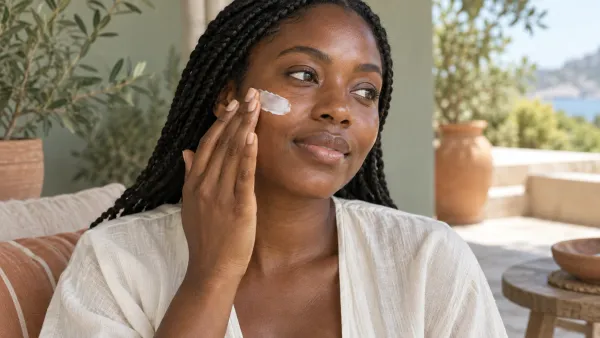
How to Stop Skincare Pilling: Essential Tips for a Flawless Finish
Learn how to stop skincare pilling with essential tips for a flawless finish and a smooth makeup application.

In this guide
Quick Answer
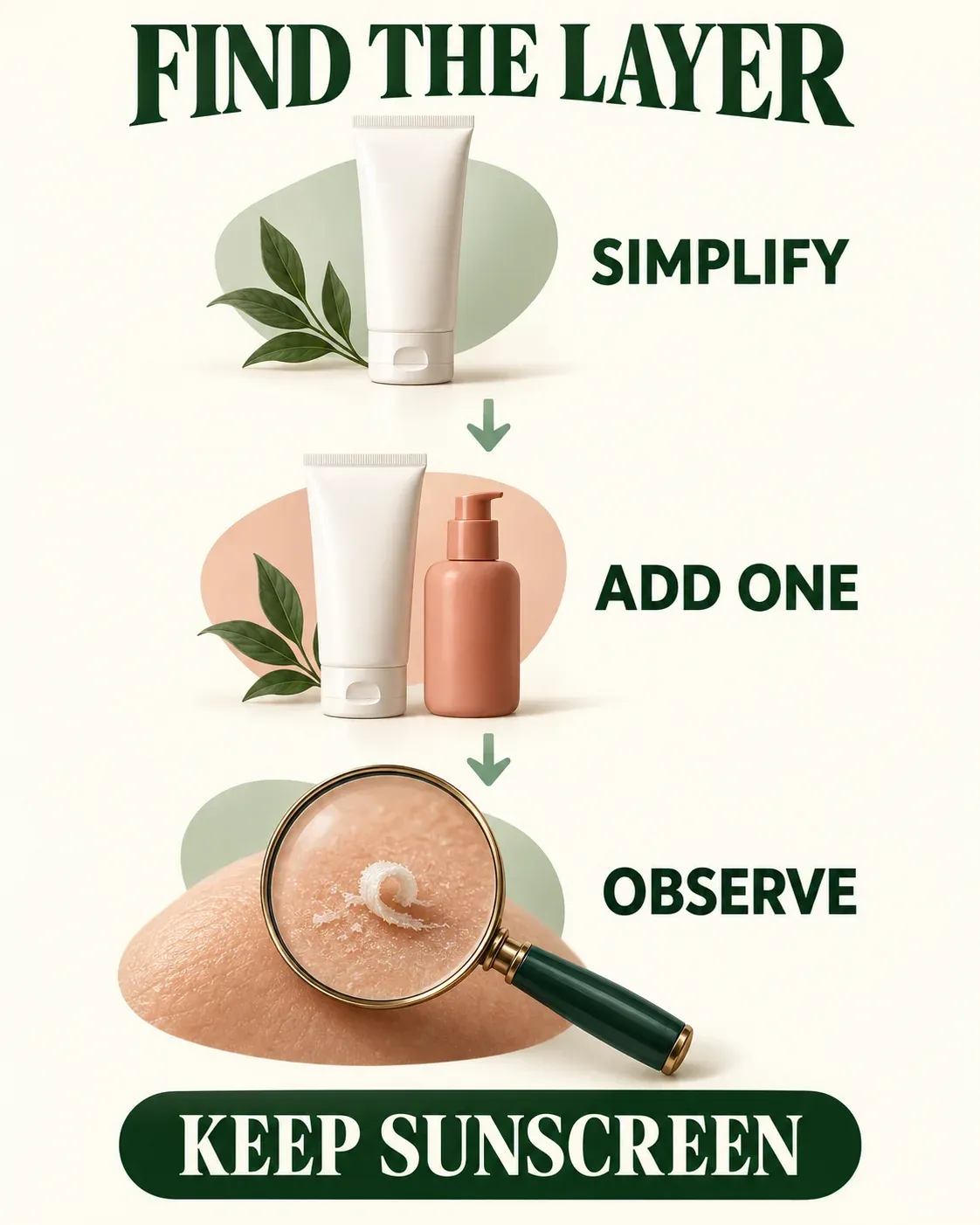
To stop skincare pilling, first find the step where product starts rolling into crumbs. Simplify optional layers, apply with less repeated rubbing, and test one change at a time before replacing your whole routine.
Keep your sunscreen amount and prescribed treatment directions unchanged. A smoother finish achieved by using too little sunscreen is not a successful fix.
If flakes are present before skincare, or your skin burns or stays red, do not assume you need more exfoliation. Address irritation separately; the troubleshooting plan below is for cosmetic residue on otherwise comfortable skin.
Quick Summary
- Locate the trigger: check after each step, not just after foundation.
- Change one variable: an optional serum, application technique, or a product pairing.
- Protect the sunscreen layer: do not dilute it, cut the dose, or mistake visible smoothness for measured protection.
- Separate pilling from peeling: persistent bare-skin flakes deserve a different response.
Editorial Note
Updated September 12, 2026. SkinOptimizer Editorial Team reviewed dermatology guidance, a published pilling study, and reader questions for this revision.
We have not clinically tested the products in your routine. The examples below are editorial troubleshooting scenarios, not diagnoses or guarantees of a particular finish.
How to stop skincare pilling is a practical question, not a reason to buy an entirely new bathroom shelf. The useful clue is often when the rolling begins: after moisturizer, while spreading sunscreen, or only when a brush crosses the finished base.
We suggest treating those moments as separate observations. If five products change together, a better result tells you very little about which change mattered or whether an expensive replacement was necessary.
This guide focuses on finding a repeatable routine while keeping sun protection and skin comfort intact. If your routine already feels complicated, our beginner skincare guide helps separate basic care from optional extras.
Is it skincare pilling, dry skin, or makeup separation?
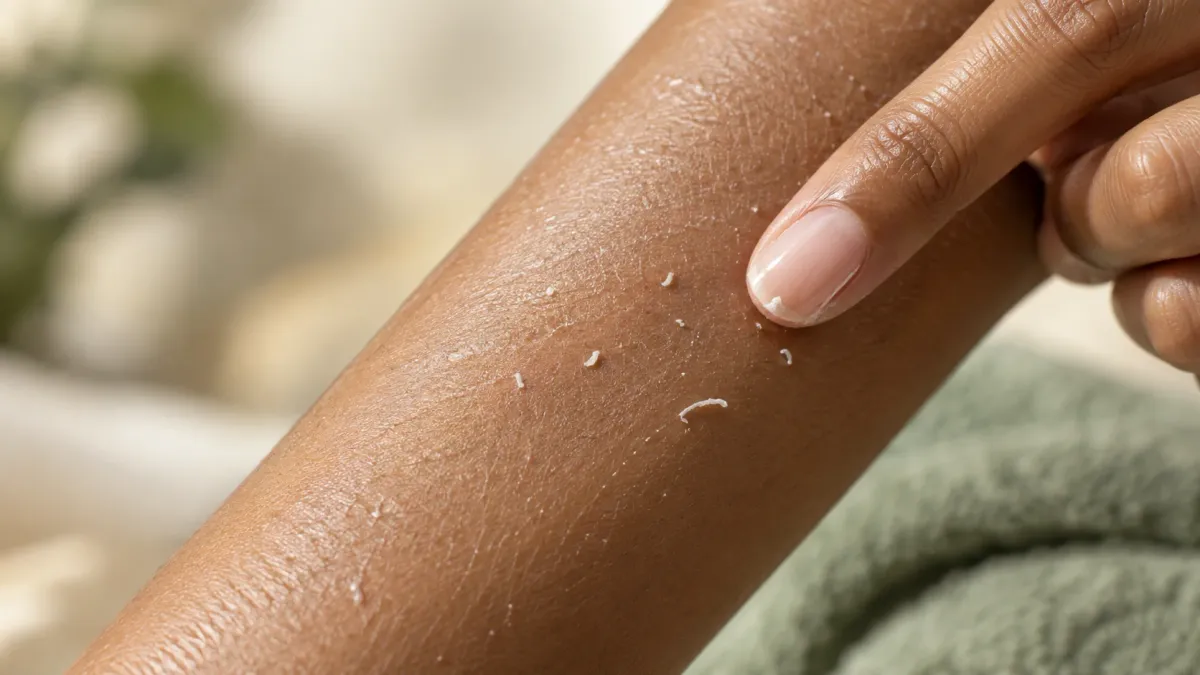
Product pilling usually appears as small rolled pieces that develop during or after application. Dry flakes can be visible before any product goes on, while makeup separation may look like uneven patches rather than loose crumbs.
Those are observation clues, not a home diagnosis. If it is difficult to tell, avoid repeated rubbing to prove your theory; that creates more friction and makes the next observation less useful.
| What you notice | Useful first check | What not to assume |
|---|---|---|
| Rolls after a layer | Record the first step that produced loose crumbs. | The newest bottle is necessarily defective. |
| Flakes before skincare | Look for dryness, stinging, or persistent irritation. | A scrub is the missing step. |
| Patchy foundation | Compare the base before and after makeup. | All patchiness is pilling. |
| Redness or burning | Stop experimenting and consider professional advice. | A cosmetic finish fix addresses the skin problem. |
Take your first look in ordinary daylight after cleansing, before leave-on products. Note whether the flakes are already there, but do not scrub the area clean just to get a more dramatic comparison photograph.
If your face feels tight and rough even without makeup, start with comfort. The American Academy of Dermatology's dry-skin guidance favors gentle, fragrance-free care and moisturizing rather than harsh cleansing.
Our daily routine for dry skin offers a broader routine framework. Do not remove a moisturizer you need simply because an online tip says that fewer layers always solve everything.
What research can—and cannot—tell us
A 2024 study of skincare product pilling examined 528 women aged 20–49 in Guangzhou. It found links between pilling, skin characteristics, and application methods; circular and linear rubbing produced the most pilling events among the methods studied.
The authors had Clarins and Eurofins affiliations. This is useful direct research, but the population and tested combinations do not represent every face, sunscreen, serum, or makeup routine.
The study also reported that foundation often improved visible sunscreen pilling in its setup. That finding is not proof that applying makeup repairs sunscreen protection, nor a reason to cover disturbed sunscreen instead of addressing it.
- Useful takeaway: application method is worth examining.
- Important limit: a visible finish is not an SPF test.
- Not established: a universal waiting interval or a guaranteed ingredient-matching rule.
For your routine, the manageable question is narrower: does the same combination behave differently when one optional layer or one application habit changes? The plan below makes that comparison easier without pretending to reproduce a laboratory study.
How to stop skincare pilling with a one-change test
Choose an ordinary morning when you are not rushing to an event. Keep your usual gentle cleansing method, sunscreen directions, and prescribed care stable; select one optional cosmetic step to investigate.
Do not conduct repeated full-face wash-and-reapply trials in a single sitting. A simple observation on separate routine occasions is more useful than a marathon of rubbing, cleansing, and reapplying.
- Write the order: include toner, serum, cream, sunscreen, primer, foundation, and setting products.
- Mark the first change: note when crumbs appear, where they collect, and whether they worsen with makeup.
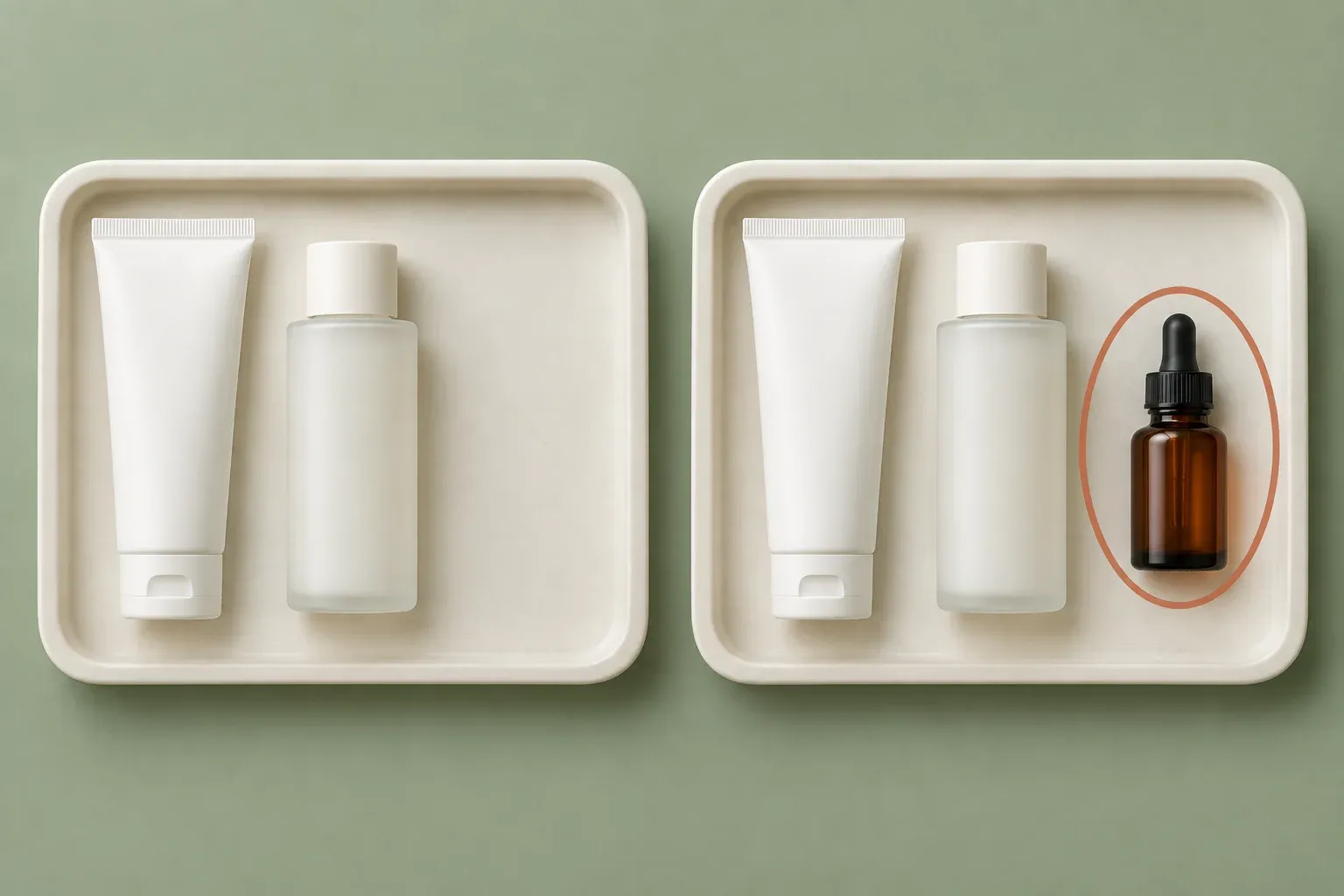
- Remove one optional layer: keep everything else as similar as reasonably possible.
- Repeat the comparison: if the improvement is consistent, decide whether that step needs a different time or formula.
For example, suppose sunscreen sits smoothly over moisturizer, but rolls when a particular serum goes underneath. That points toward the combination, amount, or application sequence; it does not prove the serum's headline ingredient is unsuitable for your skin.
If pilling starts before sunscreen, do not blame sunscreen merely because the crumbs become more visible afterward. Record the earlier stage and investigate that optional layer first.
| First problem | One comparison | Keep unchanged |
|---|---|---|
| After serum | Omit that optional serum on a comparable occasion. | Cleanser and remaining routine. |
| After sunscreen | Try without an optional layer underneath. | Sunscreen amount and label directions. |
| After primer | Compare the same base without primer. | Moisturizer, sunscreen, and foundation. |
| During makeup | Use less repeated buffing over the same base. | The products and their order. |
This is a practical comparison, not a perfect experiment. Weather, skin condition, and application can still vary, so describe a result as a clue rather than a final verdict after one good morning.
Keep a short log, not a complicated skincare diary
A useful entry can fit on one line: “Moisturizer plus sunscreen: smooth before makeup; crumbs appeared after repeated brush strokes around nose.” That is more actionable than “everything pills,” because it identifies a stage, area, and movement.
Add the exact product name and version when you can. Two bottles from the same range may have different textures, and a replacement bought months later may not be identical to the one you remember.
- Routine: exact names in application order.
- Application: usual amount and whether the previous layer still felt wet.
- Observation: first location and first step with residue.
- Decision: keep, repeat, move an optional step, or compare a replacement.
Keep photographs private if you take them, and use consistent lighting. You are looking for a repeatable application pattern, not trying to grade your skin or create a dramatic before-and-after story.
Amounts, waiting, and rubbing: change the right variable
For optional cosmetics, follow the label and avoid automatically adding another layer when the first feels tacky. More of a serum is not necessarily helpful simply because it spreads across a larger area.
Keep this advice separate from sunscreen and prescribed treatments. Do not halve every amount in your routine, and do not alter a prescription dose to improve makeup appearance without asking the prescriber.
There is no single waiting time established for every combination. If the previous layer remains wet and moves under your fingers, a longer pause is a reasonable comparison, but it should not become a promise that exactly ninety seconds prevents pilling.
Try reducing repeated passes once the product is evenly spread. A gentle finishing motion may be worth comparing with vigorous buffing; patting alone, however, is not a substitute for covering all required areas with sunscreen.
Our hyaluronic acid hydration guide explains that ingredient's role. If a hydrating serum fills no clear gap, adding it solely to fix another product's finish may complicate the test.
If sunscreen pills, protect coverage first
The AAD recommends broad-spectrum, water-resistant SPF 30 or higher, applied generously before outdoor exposure and reapplied as directed. Follow the label rather than reducing the amount until the finish looks better.
Apply sunscreen about fifteen minutes before going outdoors. When outside, reapply every two hours and after swimming or sweating; also use shade and protective clothing.
If substantial sunscreen residue rolls away, you cannot determine the remaining protection by looking. Our conservative editorial recommendation is to gently remove the affected application and reapply evenly according to the label before exposure.
Do not mix sunscreen with moisturizer, facial oil, foundation, or a mist to make the texture easier. Cosmetic smoothing does not verify the protection of a disturbed layer.
- Keep: the labeled amount, coverage, and reapplication instructions.
- Compare: fewer optional products underneath, not a thinner sunscreen dose.
- Reconsider: a formula that repeatedly rolls even in a simple, correctly applied routine.
- Do not infer: that cooler weather makes a reduced dose appropriate.
If the problem occurs during a midday top-up, note whether makeup, sweat, or rubbing was involved. Our sunscreen reapplication guide covers that separate situation, while common sunscreen mistakes explains protection-related habits.
When makeup triggers the rolling
First examine the base before primer or foundation. If it is already rolling, makeup technique is not the only issue; if it remains smooth, introduce the next cosmetic step and watch for the first change.
Compare a primer-free application before assuming primer is essential. You may prefer primer's finish, but its value should be visible in your routine rather than assumed from a generic list of mandatory steps.
Use clean tools and avoid repeatedly polishing the same patch. If the base starts lifting, adding more foundation can hide the clue while making it harder to see which layer moved.
Do not use an ingredient-list shortcut as a compatibility guarantee. “Water-based” and “silicone-based” are broad descriptions; keep the actual combination and your application result at the center of the decision.
Once you know which step needs replacing, our sunscreen-under-makeup comparison can help narrow texture preferences. It is not a promise that every listed formula will suit your own moisturizer and foundation.
The video above is retained from the earlier guide as supplementary viewing. Use the written sunscreen safeguards here whenever a general application tip could be interpreted as reducing or disturbing your protection.
When to replace a product—and when not to
Replacement becomes more reasonable when a problem repeats under similar conditions and you have identified the stage involved. It is less informative when you change cleanser, moisturizer, sunscreen, and makeup in the same week.
| Situation | Reasonable next step | Avoid |
|---|---|---|
| Optional serum conflicts | Omit it or consider another time if directions allow. | Replacing every basic product. |
| Primer adds rolling | Compare without primer before shopping. | Assuming a more expensive primer fixes it. |
| Sunscreen repeatedly pills | Compare another suitable formula at its full labeled amount. | Accepting an under-applied smooth layer. |
| Skin stings or flakes | Prioritize comfort and seek advice if persistent. | Adding stronger exfoliation as a default. |
You do not need a premium anti-pilling kit to make this decision. This is an informational troubleshooting guide, so there are no direct Amazon product recommendations; the first useful action is usually observation, not a purchase.
If moving an optional cosmetic step to evening, keep the change modest. Our nighttime skincare routine can help organize the sequence, but individual product and prescription instructions take priority.
Do not exfoliate product crumbs away
Pilling alone is not a reason to start acids, scrubs, or peeling gels. The AAD warns that exfoliation can worsen irritation, particularly alongside products that already make skin sensitive or prone to peeling.
Persistent burning, redness, cracks, or bare-skin flaking should change the priority from a smooth finish to skin comfort. Stop adding new experiments, and ask a qualified clinician for advice if symptoms persist or worsen.
If you use a prescribed acne treatment, ask about its application and tolerability rather than quietly reducing it. Bring your product list and a description of when the problem begins; those details are more useful than a claim that all skincare disagrees with you.
Frequently Asked Questions About How to Stop Skincare Pilling
Questions were informed by discussions about pilling despite waiting and serum underneath sunscreen. Community posts identify uncertainties; they are not evidence for safety or product performance.
How do I stop skincare pilling if waiting longer does not help?
Investigate another variable rather than extending the pause indefinitely. Remove one optional layer or compare gentler application while keeping the rest stable; waiting is not a universal solution for every formula combination.
Why does a serum seem fine until I add sunscreen?
The combination or the next application step may reveal the problem. Compare the same moisturizer and sunscreen without that optional serum; one better result is a clue, not proof that the serum's main ingredient is always incompatible.
What if sunscreen pills even when I use it alone?
Check its directions, your application method, and whether your skin already has flakes. If it repeatedly rolls despite correct use, consider a different suitable formula rather than cutting the amount to improve the finish.
Does pilling mean my sunscreen has stopped working?
You cannot calculate remaining protection from crumbs or appearance. If substantial product rolls off, restore an even application according to the label before exposure; do not assume foundation or mist repairs the sunscreen layer.
Should I exfoliate to stop moisturizer rolling off?
Not automatically. First distinguish product residue from existing skin flakes; exfoliation can aggravate sensitive or irritated skin, so persistent peeling or stinging deserves a comfort-focused review rather than more scrubbing.
The useful finish is one you can repeat
The aim is a comfortable routine that works on an ordinary morning, not a perfect result produced by under-applying sunscreen or constantly replacing products. Identify the stage, make one manageable change, and keep the result in context.
This article is for informational purposes only and does not replace professional dermatological advice.