How to Treat Age Spots Safely: What Actually Works
A diagnosis-first guide to age spots, gradual fading options, faster procedures, sunscreen and the warning signs that should not be self-treated.

In this guide

Confirm that a brown mark is a harmless age spot before trying to fade it. Broad-spectrum sunscreen helps prevent darkening and new spots, while retinoids and other topicals work gradually; cryotherapy, lasers, IPL and peels can work faster but carry cost and pigment-change risk. A changing, irregular, bleeding, painful or uncertain lesion belongs with a dermatologist, not under a stronger serum.
Quick Summary
- Diagnosis comes before cosmetic fading because other lesions can resemble age spots.
- Sunscreen prevents fresh UV damage but does not instantly erase established pigment.
- Use one gradual topical at a time and stop when irritation becomes persistent.
- Procedures may be faster, but setting, skin tone, downtime and recurrence matter.
Check the Spot Before You Try to Fade It
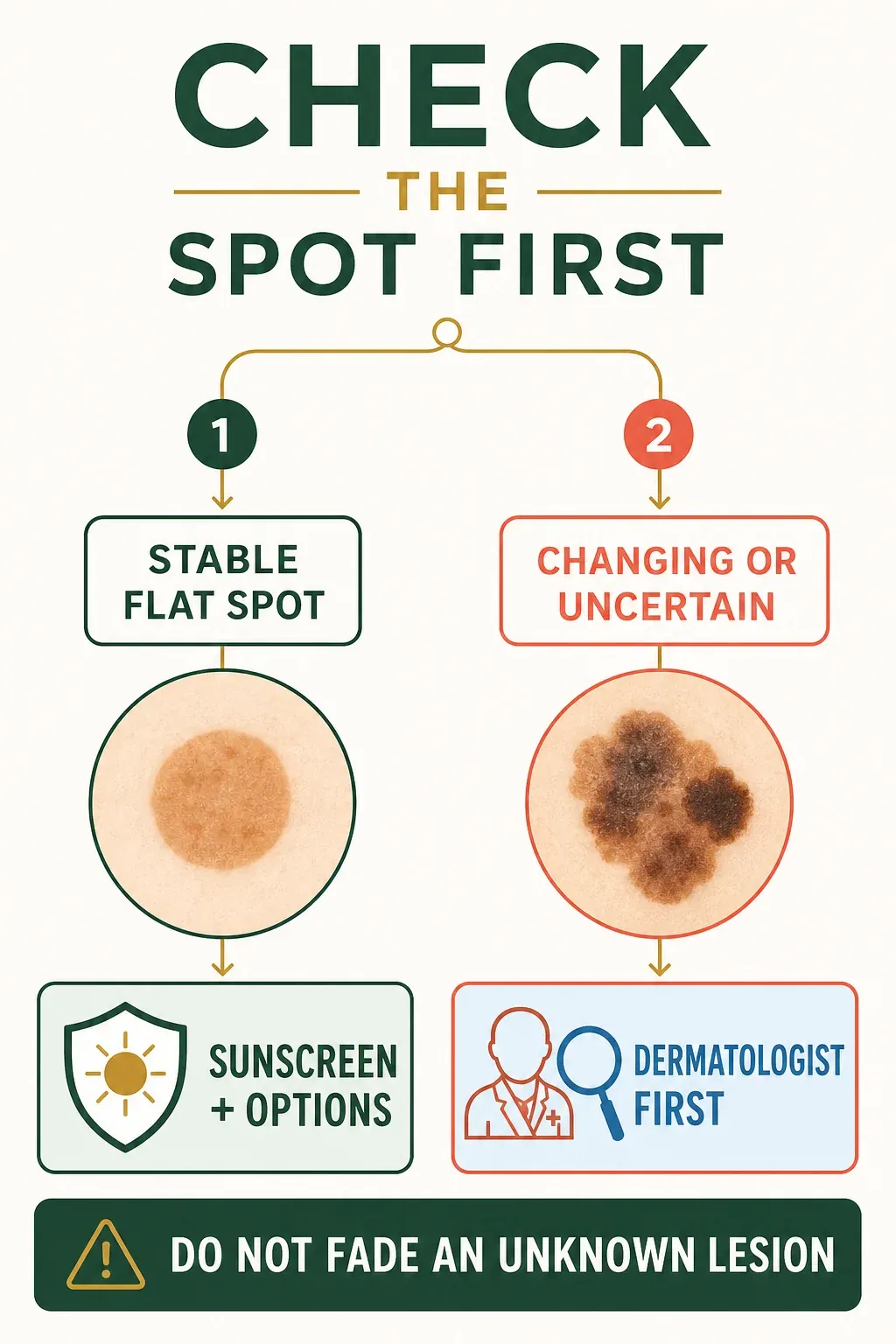
A true age spot, also called a solar lentigo, is usually a flat tan-to-brown patch on skin that has received years of ultraviolet exposure. The first step is not choosing a brightening serum. It is deciding whether the mark is sufficiently typical and stable to treat cosmetically at home.
The American Academy of Dermatology advises having age spots diagnosed before treatment because skin cancer and other growths can resemble them. A dermatologist can examine the lesion and, when necessary, use dermoscopy or a biopsy rather than relying on a photograph or marketing quiz.
| What you notice | Possible category | Best next step |
|---|---|---|
| Flat, evenly colored spot that has stayed stable | Possible solar lentigo | Photoprotection and gradual cosmetic options may fit |
| Dark mark exactly where acne or irritation healed | Post-inflammatory hyperpigmentation | Control the trigger and avoid re-irritation |
| Symmetrical brown facial patches | Possible melasma | Use strict sun protection and seek a tailored plan |
| Rough, scaly or tender sun-exposed patch | Possible actinic keratosis or another lesion | Arrange a dermatology assessment |
| Changing, irregular, bleeding or multicolored mark | Needs diagnosis | Do not try to fade it at home |
Home rules such as ABCDE can remind you to notice asymmetry, border, color, diameter and evolution, but they are not diagnostic tools. A new lesion after midlife, a spot that changes, or a mark that looks unlike the others deserves professional review. Bleeding, crusting, rapid growth, pain and persistent itch are additional reasons not to self-treat.
Take one clear photograph in the same light and note the date. Repeated daily inspection can make normal lighting changes look alarming, while a dated comparison gives a clinician more useful information. Do not apply acids, retinoids or bleaching agents to an unknown lesion simply to see whether it responds.
Why Age Spots Form
Ultraviolet radiation stimulates pigment production and creates cumulative changes in exposed skin. Solar lentigines commonly appear on the face, backs of the hands, shoulders, chest and other areas that have received repeated sun. They can become more numerous with age because exposure accumulates, not because birthdays alone manufacture pigment.
Skin tone influences how pigmentation looks and how treatment behaves. Darker skin can develop long-lasting pigment after irritation, while procedures or aggressive acids may create new post-inflammatory hyperpigmentation. Lighter skin can also develop persistent lentigines and sun-related precancerous changes.
The AAD explains that sun protection helps prevent additional damage, while treatment targets changes that are already visible. Sunscreen is therefore the foundation of a fading plan, but it is not an eraser for an established spot.
Hormonal shifts, inflammation, medications and heat can affect other forms of hyperpigmentation. If pigment appeared after pregnancy, a medication change, acne, eczema, waxing or a burn, the plan may differ from treatment for a classic solar lentigo. Our damaged skin barrier guide is a better starting point when burning and peeling accompany the color change.
Which Treatments Actually Have Evidence?
A 2023 systematic review of 48 studies involving 1,763 patients found benefit across several topical, laser, light and procedural approaches for solar lentigines. The evidence was heterogeneous, which means no single treatment is a universal winner and study results cannot guarantee an individual outcome.
| Option | Best fit | Main limitation |
|---|---|---|
| Daily broad-spectrum sunscreen | Every fading or prevention plan | Prevents darkening better than it removes an established spot |
| Retinoid or retinol | Gradual texture and tone support | Slow; dryness and irritation can worsen pigment |
| Vitamin C or other brightening topical | Mild uneven tone | Formula stability and evidence vary |
| Prescription hydroquinone or combination therapy | Diagnosed pigment under supervision | Not appropriate for every lesion or indefinite unsupervised use |
| Cryotherapy, laser, IPL or chemical peel | Faster treatment of confirmed lesions | Cost, downtime, recurrence and pigment-change risk |
Photoprotection keeps treatment from fighting fresh exposure
Choose broad-spectrum SPF 30 or higher and apply enough to exposed skin. Reapply during ongoing outdoor exposure, after swimming, sweating or towel drying. The sunscreen reapplication guide translates label rules into real-life timing.
Hands need deliberate protection because washing and driving can remove or challenge coverage. Keep sunscreen near the exit, wear gloves for prolonged driving when practical, and use shade or clothing. Our anti-aging sunscreen guide compares textures that people are more likely to apply consistently.
Retinoids work gradually and can irritate
Retinoids influence cell turnover and can improve mottled pigmentation as part of broader photoaging treatment. An over-the-counter retinol is gentler and less predictable than prescription tretinoin, but it can still cause dryness, peeling and stinging. Start on two nonconsecutive nights weekly and increase only when the whole face remains comfortable.
Do not spot-treat an unexamined lesion with a strong retinoid. Apply a thin layer according to the product directions and moisturize rather than stacking exfoliating acids. The retinol versus bakuchiol comparison explains tolerability differences without presenting either as a melanoma screen.
Brightening ingredients are not interchangeable
Vitamin C, azelaic acid, niacinamide, alpha hydroxy acids and other ingredients can support uneven tone, but their evidence, concentrations and irritation profiles differ. A label that says “dark spot corrector” does not reveal whether the formula fits solar lentigines, melasma or post-acne marks.
Use one new active at a time for at least several weeks. If the skin becomes shiny-raw, persistently red or painful, stop the new active and let the barrier recover. The slow skincare framework prevents a fading routine from becoming an irritation experiment.
Procedures can be faster, not risk-free
Cryotherapy, lasers, intense pulsed light and chemical peels can treat confirmed lesions more quickly than cosmetic topicals. A 2025 randomized split-body trial in 42 participants found improvement with two laser approaches, but one small trial does not settle which device, setting or patient is best.
Procedure choice should account for skin tone, lesion depth, prior pigment reactions, medication and clinician experience. Darker skin can be more vulnerable to post-inflammatory hyperpigmentation or light spots after overly aggressive treatment. Ask how the clinician adjusts settings and manages pigment risk for skin like yours.
Two Routine Products That Support a Careful Plan
Neither product diagnoses or removes a suspicious lesion. The retinol supports a gradual nighttime routine for confirmed cosmetic concerns, while the sunscreen reduces further UV exposure. Buy only after the role is clear and verify the current seller, size, ingredient list and directions.
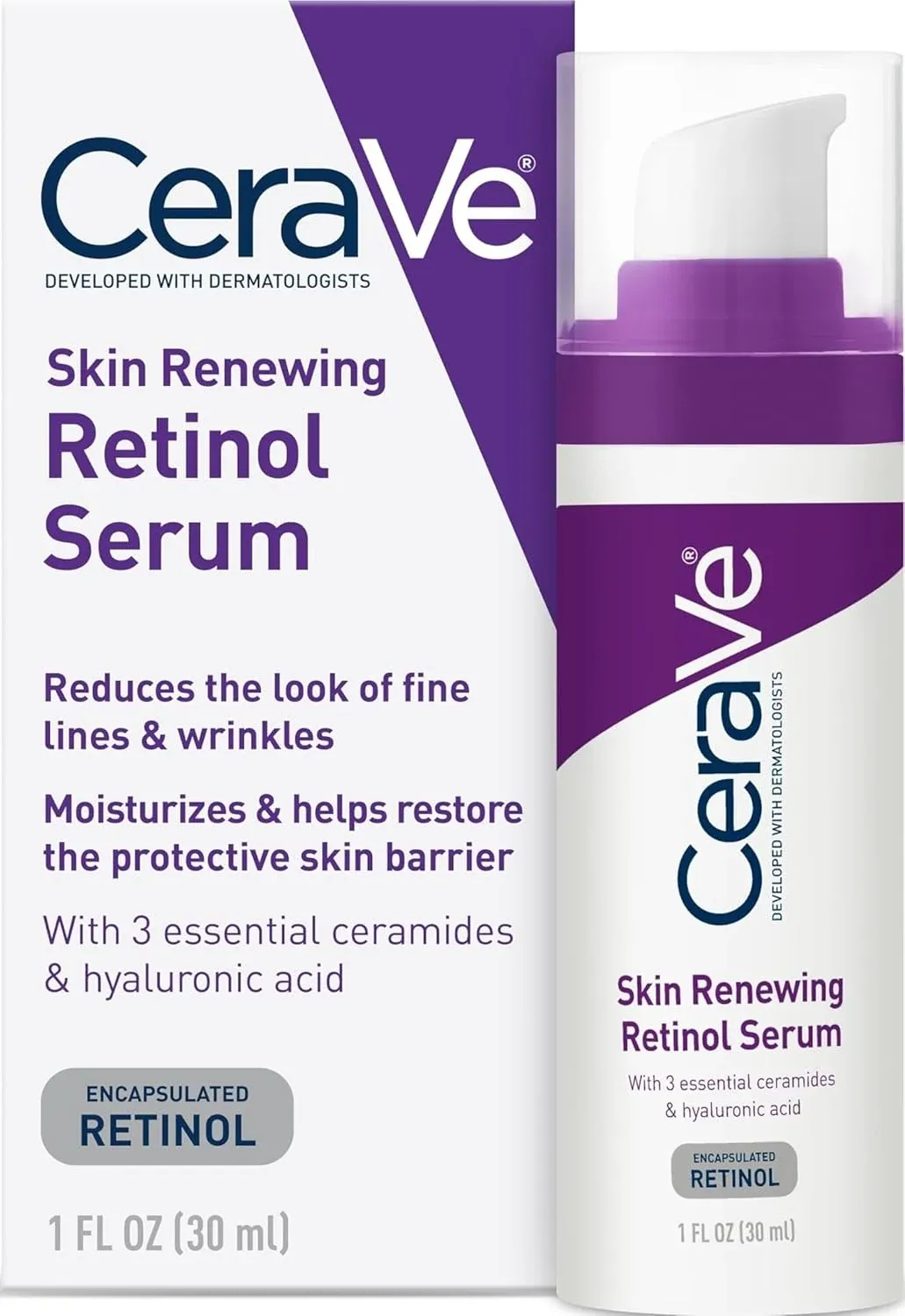
CeraVe Skin Renewing Retinol Serum
Readers who want a slow, whole-face retinol step for visible photoaging after uncertain lesions have been assessed.
CeraVe positions this PM serum for fine lines, texture and radiance and combines encapsulated retinol with niacinamide, hyaluronic acid and ceramides.
Watch-out: Retinol can irritate and increase sun sensitivity. Start slowly, moisturize and use daytime sunscreen; stop for persistent irritation.
View on AmazonAs an Amazon Associate, SkinOptimizer may earn from qualifying purchases. Prices, sellers and availability can change.
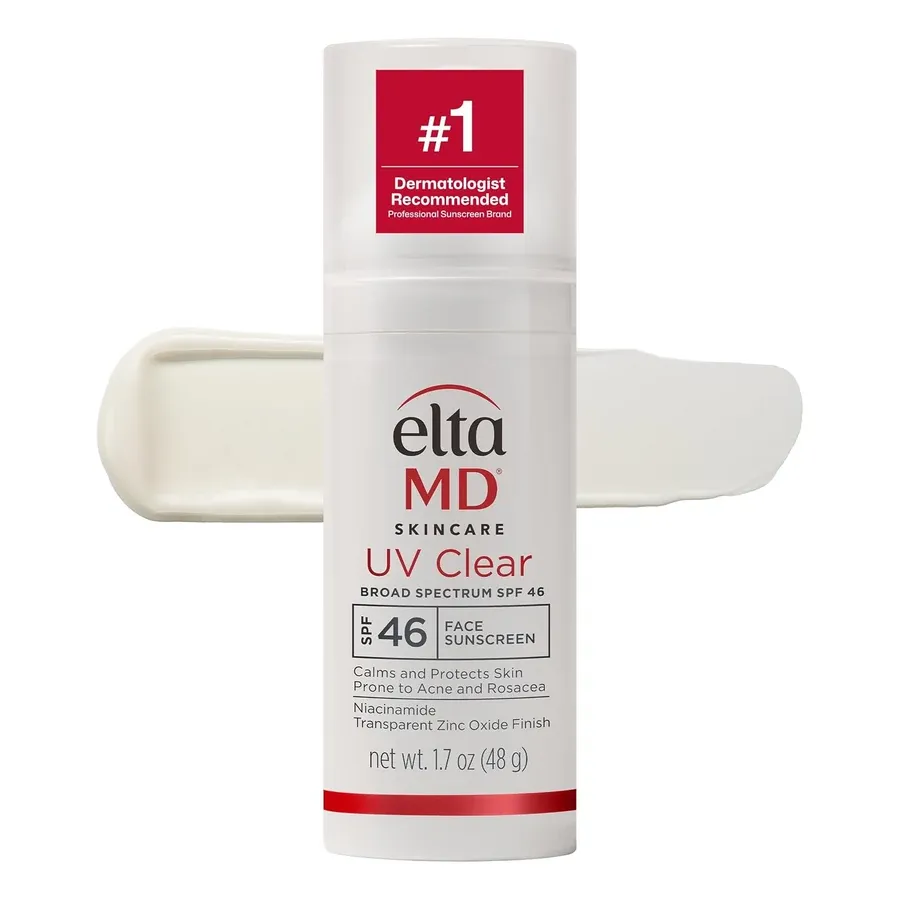
EltaMD UV Clear Broad-Spectrum SPF 46
Face and neck protection for readers who prefer a lightweight mineral-and-organic-filter sunscreen.
The formula uses zinc oxide and octinoxate in the current U.S. version and is designed for daily facial wear under a broader sun-protection plan.
Watch-out: It is not water resistant. Reapply for continued exposure and choose a labeled water-resistant product for swimming or heavy sweating.
View on AmazonAs an Amazon Associate, SkinOptimizer may earn from qualifying purchases. Prices, sellers and availability can change.
The current CeraVe product directions specify evening use and gradual introduction. The EltaMD product page provides the current active ingredients and water-resistance status. Marketplace formulas and sellers can change, so compare the listing with the package.
A Low-Irritation Age-Spot Routine
Begin with two retinol nights weekly. Use moisturizer before or after the serum when dryness develops, and keep exfoliating acids off those nights. If the skin stays calm for several weeks, increase frequency according to the product directions rather than forcing nightly use.
On non-retinol nights, moisturizer alone is enough. A complicated rotation of acid toner, vitamin C, retinol, peel pads and spot cream makes irritation harder to trace. Our moisturizers for aging skin guide helps choose a supportive texture without turning hydration into another treatment step.
Morning sunscreen must cover the surrounding skin, not just the visible spots. Pigment contrast can increase when untreated skin tans around a lesion. Hats, shade and protective clothing reduce the amount of work the sunscreen film must do.
Do not use lemon juice, undiluted vinegar, baking soda or abrasive tools. Chemical burns and inflammation can leave darker marks, particularly in skin that pigments easily. “Natural” describes origin, not safety or evidence.
How Long Does Fading Take?
Topical treatment usually requires months, not days. Surface smoothness can change sooner than pigment, and photographs can look different with lighting, hydration or tanning. Set a twelve-week review point for tolerability and trend rather than expecting a visibly erased spot after one bottle.
Procedures may produce faster visible change, but healing and pigment stabilization also take time. A treated lesion can crust or darken before it fades, and recurrence is possible when UV exposure continues. Follow the clinician's wound-care and sun-protection directions exactly.
The AAD's guidance for fading dark spots in darker skin emphasizes stopping the trigger and using products that do not irritate. This principle applies broadly: inflammation can undermine the cosmetic goal even when the active ingredient has evidence.
Common Age-Spot Treatment Mistakes
- Treating before diagnosis: a product response cannot prove that a lesion is harmless.
- Using sunscreen as an eraser: it helps prevent darkening and new damage but does not instantly remove pigment.
- Stacking actives: irritation can deepen discoloration and obscure which product caused it.
- Spot-applying prescription-strength products without guidance: stronger is not automatically safer or more precise.
- Ignoring the hands and chest: exposed areas need the same photoprotection logic as the face.
- Comparing daily photographs: lighting variation can look like treatment failure or dramatic improvement.
Another common mistake is assuming every brown mark should disappear. A dermatologist may recommend monitoring a benign lesion rather than treating it, especially when procedure risk outweighs cosmetic benefit. The best outcome can be diagnostic certainty and prevention of further damage, not perfectly uniform skin.
When to See a Dermatologist
Arrange an appointment for a new, evolving, irregular, multicolored, bleeding, crusting, painful or persistently itchy lesion. Also seek evaluation when a spot looks different from the rest or when you are uncertain whether it is an age spot. Do not wait for a cosmetic product trial to finish.
A dermatologist is also useful when confirmed age spots do not respond to a reasonable routine or when faster treatment matters. Ask what diagnosis is being treated, what evidence supports the procedure, what downtime to expect and how pigment-change risk differs for your skin tone.
Build a Prevention Plan You Can Repeat
Choose a sunscreen texture that you will apply generously, then place it where the routine happens. Add a hat or gloves for activities with sustained exposure and schedule a monthly skin check rather than constant inspection. Consistency matters more than buying the highest number of brightening products.
Review medications and treatments with a clinician when photosensitivity is possible. Protect healing acne, eczema and procedure sites because inflammation plus UV can create long-lasting pigment. The acne-prone sunscreen guide offers options when breakouts make daily use difficult.
If facial pigment is symmetrical, recurrent or linked to hormones, ask whether melasma is more likely than isolated lentigines. If marks follow pimples, prioritize acne control and gentle care. One label cannot replace these different pathways.
The Bottom Line
Age spots can often be lightened, but diagnosis comes first. Use daily photoprotection, introduce one gradual topical treatment only when the skin is comfortable, and consider procedures for confirmed lesions when speed justifies cost and risk. A changing or uncertain mark belongs with a dermatologist, not under a stronger dark-spot serum.
Frequently Asked Questions
Can age spots be removed completely?
Some confirmed age spots can fade substantially with procedures or topical treatment, but complete clearance is not guaranteed and recurrence is possible. Ongoing sun protection remains necessary.
What is the fastest treatment for age spots?
In-office procedures such as laser, IPL, cryotherapy or a chemical peel can work faster than cosmetic topicals. A dermatologist should confirm the diagnosis and choose the method for the lesion and skin tone.
Does retinol remove age spots?
Retinol may gradually improve mottled tone and photoaging, but it is slower and less predictable than a procedure. It should never be used to diagnose or self-treat a changing lesion.
Can sunscreen fade existing age spots?
Sunscreen mainly prevents additional UV darkening and new damage. It supports every fading plan but usually does not erase an established spot by itself.
When should a brown spot be checked by a dermatologist?
Arrange assessment when a spot is new, changing, irregular, multicolored, bleeding, crusting, painful, persistently itchy or simply unlike your other spots.