How to Treat Blackheads: A Safe Step-by-Step Plan
A practical blackhead plan covering pore-focused ingredients, realistic timelines, extraction limits and common irritation traps.

In this guide

Quick Answer
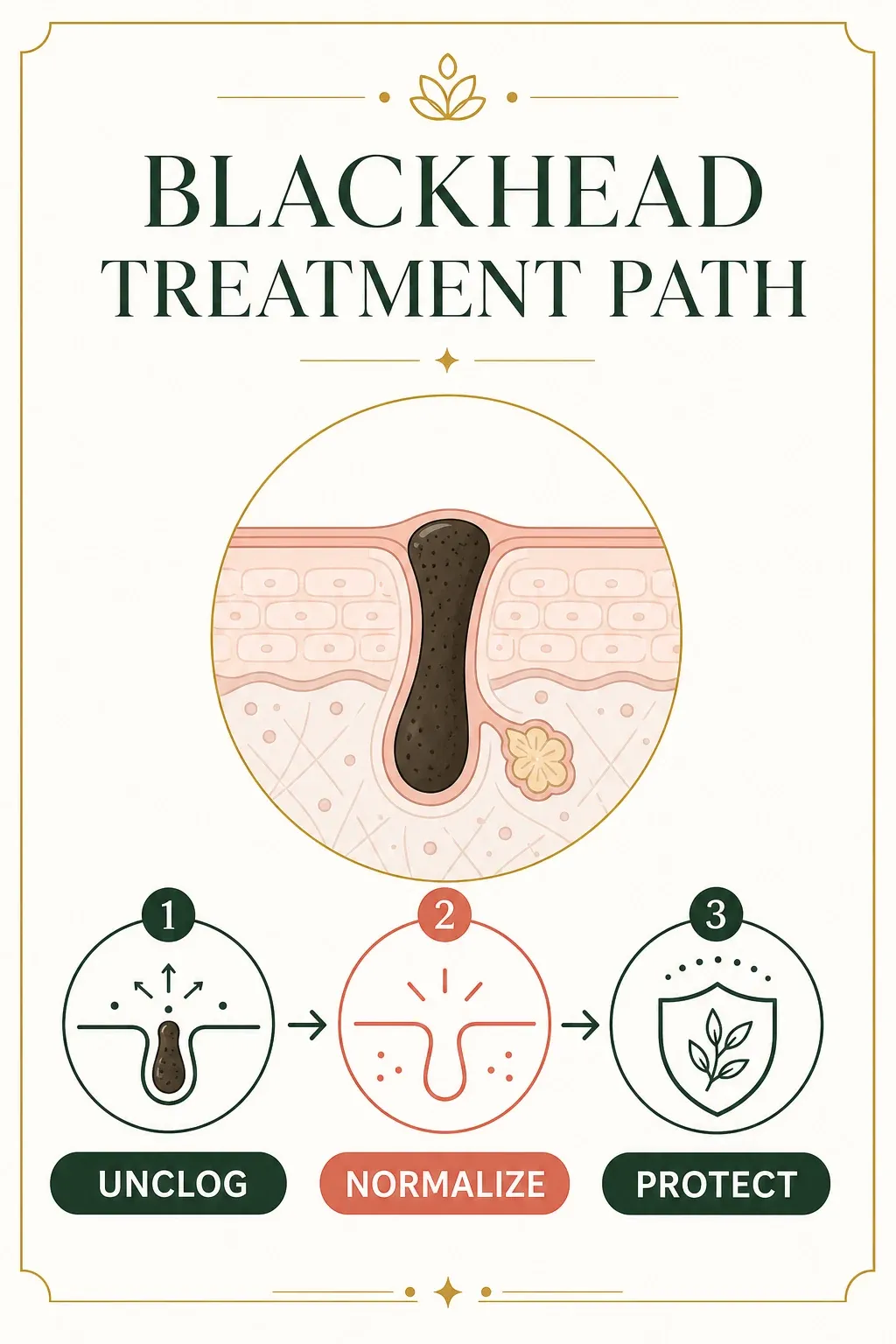
Treat blackheads by keeping the pore lining clear over time, not by repeatedly squeezing the visible plug. Start with a gentle base, add either salicylic acid or a retinoid when appropriate, moisturize, use SPF, and reassess after several consistent weeks.
Quick Summary
- Blackheads are open comedones, not trapped dirt.
- Salicylic acid helps loosen oil and cells inside pores.
- Retinoids help normalize clogging and prevent new comedones.
- Extraction can remove a plug temporarily but does not prevent recurrence.
Blackheads are a common skin issue that many people face.
They occur when pores get clogged with oil and dead skin cells, leading to small dark spots on the skin. While they are not harmful, they can be frustrating and affect your confidence.

Hey there! Just a heads up that if you decide to make a purchase through this link, I might earn a small commission at no extra cost to you.
Advanced Skin Lightener
Flawless Complexion Without Harmful Chemicals
- Reduces Moles: Minimizes the appearance of moles for a smoother complexion.
- Fades Freckles: Lightens freckles, giving your skin a more even tone.
- Eliminates Birth Marks: Helps reduce the visibility of birth marks effectively.
- Lightens Age Spots: Decreases the appearance of age spots for younger-looking skin.
- Removes Acne Scars: Smooths out acne scars, promoting clear and flawless skin.
- And More: Addresses various other dark spots and blemishes for comprehensive skin lightening.
Luckily, there are effective methods to treat and prevent blackheads, ranging from daily skincare routines to professional treatments.
In this article, we will explore various strategies that can help you achieve clearer skin and keep those pesky blackheads at bay.
Key Takeaways
- Blackheads form when pores are clogged with oil and dead skin cells.
- Daily cleansing with salicylic acid can help prevent blackheads.
- Home remedies, like clay masks and natural ingredients, can be effective for treatment.
- Professional options, such as chemical peels and laser therapy, can tackle stubborn blackheads.
- Lifestyle choices, including a healthy diet and stress management, play a key role in maintaining clear skin.
Evidence and safety boundaries
Acne is a medical condition with different lesion types and causes. The American Academy of Dermatology acne-care guidance supports gentle cleansing, avoiding picking and giving treatment time to work. Its diagnosis and treatment overview explains why treatment is not one-size-fits-all.
Introduce one active at a time and follow the product or prescription label. Stop and seek professional care for severe burning, swelling or rash.
Painful deep acne, spreading inflammation, scarring, sudden onset or acne that persists after a consistent over-the-counter trial deserves assessment by a qualified clinician. Prescription retinoids, antibiotics and hormonal therapy require individualized guidance.
Understanding Blackheads and Their Causes

What Are Blackheads?
Blackheads are a type of acne that shows up as small, dark bumps on our skin.
They form when our pores get clogged with a mix of dead skin cells and excess oil.
They’re not the same as pimples, which are caused by bacteria. Instead, blackheads are open comedones, meaning they stay open to the air, which causes them to oxidize and turn dark.
Common Causes of Blackheads
So, what makes blackheads pop up? Here are some common culprits:
- Hormonal changes: Things like puberty or menstrual cycles can ramp up oil production.
- Oily skin: If our skin is naturally oily, we’re more likely to get blackheads.
- Cosmetics: Heavy makeup can clog our pores, leading to blackheads.
How Blackheads Form
Blackheads form when our hair follicles get blocked. Here’s a quick breakdown:
- Excess oil is produced by sebaceous glands.
- Dead skin cells accumulate in the pores.
- The combination of oil and dead skin creates a blockage.
- When exposed to air, the top of the blockage oxidizes, turning it black.
Remember, blackheads can appear anywhere on our body, but they’re most common on the face, especially the nose and chin. Let’s keep our skin clean and clear!
Daily Skincare Routine to Prevent Blackheads

Choosing the Right Cleanser
When it comes to keeping our skin clear, choosing the right cleanser is key. We should look for a gentle cleanser that contains salicylic acid, as it helps break down the oil and dead skin that can clog our pores. Here’s a quick list of what to consider:
If a rinse-off BHA is the better fit, our salicylic acid cleanser comparison compares strengths for oily, sensitive and acne-prone skin and shows when daily use is too much.
- Gentle formula: Avoid harsh scrubs that can irritate our skin.
- Salicylic acid: This ingredient is great for preventing blackheads.
- Non-comedogenic: Make sure it won’t clog our pores.
Importance of Exfoliation
Exfoliating is super important for keeping our skin fresh! We should aim to exfoliate 1-2 times a week to remove dead skin cells. Here’s how we can do it:
- Choose a mild exfoliant: Look for something gentle that won’t irritate.
- Use it regularly: Consistency is key to seeing results.
- Follow up with moisturizer: This helps keep our skin hydrated.
Moisturizing Without Clogging Pores
Moisturizing is essential, even if we have oily skin. We should pick a lightweight, non-comedogenic moisturizer. Here’s what to keep in mind:
- Hydration is crucial: It helps our skin stay balanced.
- Lightweight formulas: These won’t clog our pores.
- Look for key ingredients: Ingredients like hyaluronic acid can be super beneficial.
Using Sunscreen Daily
Never skip sunscreen! It’s our best friend in protecting our skin from harmful UV rays. Here’s a quick checklist for sunscreen:
- Broad-spectrum SPF 30 or higher: This protects against both UVA and UVB rays.
- Apply every day: Even on cloudy days, we should make it a habit.
- Reapply regularly: Especially if we’re sweating or swimming.
Remember, taking care of our skin is a journey, not a sprint. Let’s embrace it together!
Effective Home Remedies for Treating Blackheads
DIY Face Masks
When it comes to tackling blackheads, we can whip up some awesome DIY face masks right at home!
Here are a few favorites:
- Honey and Cinnamon Mask: Mix one tablespoon of honey with half a teaspoon of cinnamon. Apply it to your face and leave it on for about 10-15 minutes before rinsing off. This combo can help fight bacteria and reduce inflammation.
- Baking Soda Scrub: Combine two tablespoons of baking soda with water to form a paste. Gently scrub it on your face for a minute or two, then rinse. This can help exfoliate and clear out those pesky blackheads.
- Egg White Mask: Whip up an egg white and apply it to your face. Once it dries, peel it off for a satisfying clean! This can help tighten pores and remove impurities.
Natural Ingredients to Use
We can also explore some natural ingredients that work wonders for blackheads:
- Tea Tree Oil: Known for its antibacterial properties, it can help keep our skin clear. Just mix a few drops with a carrier oil and apply it to the affected areas.
- Green Tea: Brew some green tea, let it cool, and apply it to your face with a cotton ball. It’s soothing and packed with antioxidants.
- Activated Charcoal: This ingredient is great for drawing out impurities from our pores. Look for masks that contain it for a deep clean.
How to Apply Home Treatments
Here’s a quick guide on how to use these home remedies effectively:
- Cleanse: Start with a clean face to remove dirt and oil.
- Apply: Use your chosen mask or treatment and let it sit for the recommended time.
- Rinse: Wash it off with warm water and follow up with a gentle moisturizer.
Remember, everyone’s skin is different, and what works for one person might not work for another. It’s all about finding what suits us best!
Over-the-Counter Products for Blackhead Removal

When it comes to tackling those pesky blackheads, we’ve got a bunch of over-the-counter options that can really help!
Let’s dive into some of the best products we can grab at the store.
Best Cleansers for Blackheads
- Salicylic Acid Cleanser: This is a superstar ingredient that helps break down dead skin cells and excess oil. Look for cleansers with 0.5% to 2% salicylic acid to start. It’s gentle enough for most of us, but we should always test it out first!
- Charcoal Cleanser: Great for drawing out impurities and excess oil. It works like a magnet for gunk!
- Oil-Free Gel Cleanser: Perfect for those of us with oily skin, as it won’t clog our pores.
Topical Treatments to Try
- Retinoid Creams: These help unclog pores and promote new skin cell growth. They can be a bit strong, so we might want to start with a lower concentration.
- BHA Exfoliants: Beta Hydroxy Acids (like salicylic acid) are fantastic for keeping our pores clear.
- Pore Strips: While they can be fun and give quick results, we should use them sparingly to avoid irritation.
How to Use Pore Strips Safely
- Frequency: Use them once a week to avoid overdoing it.
- Prep: Always cleanse our face before applying a pore strip.
- Post-Care: After using a strip, apply a soothing toner or moisturizer to calm our skin.
Remember, while these products can help, they’re not a one-size-fits-all solution. Let’s keep experimenting to find what works best for us!
Professional Treatments for Stubborn Blackheads
When it comes to tackling those stubborn blackheads, sometimes we need to call in the pros! Here are some treatments that can really help us out:
Chemical Peels
Chemical peels are a fantastic option. They use a special solution to remove the top layer of dead skin, which can help clear out those pesky blackheads. This treatment can lead to smoother skin and a fresh look!
Microneedling
Microneedling is another great choice. This treatment uses tiny needles to create micro-injuries in the skin, which boosts collagen production. It can help reduce the appearance of blackheads and improve overall skin texture.
Laser Treatments
Laser treatments are also effective. They target deeper skin issues and can help minimize the appearance of blackheads over time. We’ve heard that these treatments can be a bit pricey, but they often deliver great results!
Remember, while these treatments can be effective, they often require a commitment in terms of time and money. Let’s consult with a dermatologist to find the best fit for our skin!
So, if we’re serious about getting rid of those stubborn blackheads, these professional treatments can be a solid option!
Lifestyle Changes for Clearer Skin

Diet Tips for Healthy Skin
Eating well is super important for our skin! Here are some tips we can follow:
- Fresh fruits and veggies: They’re packed with vitamins and antioxidants that help fight skin damage.
- Foods rich in omega-3, like fish: These can help reduce inflammation.
- Stay away from processed snacks and sugary drinks: A balanced diet can make a big difference!
Managing Stress
Stress can really mess with our skin, so let’s keep it in check. Here are some ways:
- Take breaks when we need them.
- Try out yoga or meditation.
- Spend time with friends or pets.
Importance of Sleep
Getting enough sleep is crucial for our skin.
Here’s how we can improve our sleep:
- Establish a bedtime routine: This signals our body that it’s time to wind down.
- Limit screen time before bed: The blue light can interfere with our sleep cycle.
- Create a comfortable sleep environment: A cool, dark room can help us sleep better.
Remember, taking care of our skin is a journey, not a race! By making these lifestyle changes, we can support our skin health and feel great about ourselves!
Wrapping It Up: Your Path to Clearer Skin
Taking care of blackheads doesn’t have to be a hassle.
By sticking to a simple routine that includes cleansing, exfoliating, and moisturizing, you can keep your skin looking fresh and clear.
Remember to be patient and give your skin some time to adjust. With the right products and a little care, you’ll be well on your way to a smoother complexion. Let’s keep shining and enjoy the journey to clear skin together!
This article is for informational purposes only and does not replace professional dermatological advice.
How we research and correct content: Editorial Policy.
Build a Blackhead Plan That Can Be Judged
Use location and lesion type to confirm the problem. Nose dots may include sebaceous filaments, while persistent dark plugs with a defined opening are more consistent with blackheads.
A leave-on product usually offers more treatment contact than a rinse-off cleanser. The trade-off is irritation, so frequency and moisturizer matter more than chasing the highest percentage.
- Mild nose congestion: start with a gentle base and low-frequency salicylic acid.
- Widespread comedones: consider a retinoid plan with label or clinician guidance.
- One stubborn plug: professional extraction may be safer than repeated squeezing.
- Painful, inflamed or scarring acne: treat the broader acne pattern.
Compare the Options Before Changing the Routine
Use this table to match the intervention to the visible pattern and to identify the limit that should stop unnecessary escalation.
| Skin pattern or option | Best next step | Important limit |
|---|---|---|
| Salicylic acid | Oil-soluble pore exfoliation | Dryness or stinging if overused |
| Adapalene or another retinoid | Prevention of new comedones | Gradual start and sun protection |
| Professional extraction | Immediate removal of selected plugs | Temporary result; technique matters |
| Scrubs and pore strips | Surface smoothing or temporary removal | Irritation and quick recurrence |
Adjust the Plan to Real Teen Life
School mornings reward a short routine that works even when time is limited. Keep the required products visible and in order, and move optional steps out of the way until the base routine is automatic.
Sports, helmets and heavy sweating change the exposure, not the biology of the skin. Rinse or cleanse gently after activity, clean reusable contact surfaces, and avoid compensating with rough cloths or extra exfoliation.
Cold weather, indoor heating and air conditioning can lower tolerance even when the underlying concern has not changed. Reduce active frequency when tightness appears instead of assuming the treatment has stopped working.
Makeup and shaving should be treated as separate routine variables. Remove makeup completely without repeated rubbing, and review shaving technique before applying stronger acne products to irritated follicles.
Budget also affects treatment quality because an unaffordable routine will not be repeated. Prioritize cleanser, moisturizer, sunscreen and one evidence-based treatment before spending on masks, mists or overlapping serums.
Travel and weekends should not require a second routine. Use the same essentials in smaller containers and keep the treatment schedule unchanged unless the environment affects tolerance.
Stress about appearance can also drive picking and constant mirror checking. Use neutral weekly photos, reduce magnifying-mirror time and involve a trusted adult or professional when skin concerns affect school, sleep or confidence.
Finally, build a stop rule before starting. Persistent burning, swelling, rash, painful cracking or a rapid increase in deep lesions is a reason to pause the newest product and seek qualified advice when appropriate. Clear rules protect both skin and consistency.
How to Test the Routine Without Losing the Signal
Keep cleanser, moisturizer and sunscreen stable while testing one treatment variable. When several products change together, a breakout, sting or improvement cannot be assigned confidently.
Use the same amount and schedule unless the label or a qualified professional says otherwise. More product or more frequent application can increase irritation without shortening the biological treatment timeline.
Set the Baseline
Record the main concern, current products and two photos in consistent light.
Protect Tolerance
Track tightness, burning, peeling and whether the routine is easy enough to repeat.
Judge the Trend
Compare new lesions and comfort over weeks, not the appearance of one day.
| Check point | What to assess | Decision |
|---|---|---|
| First 48 hours | Burning, swelling, rash or painful cracking | Stop the newest product and get advice when symptoms are significant |
| Weeks 1-2 | Comfort, dryness and whether the schedule is realistic | Reduce frequency before adding another active |
| Weeks 6-8 | Fewer new lesions, calmer texture or a clearer pattern | Continue, adjust one variable or seek professional help |
| Any time | Deep pain, scars, rapid worsening or major distress | Escalate care rather than waiting for a retail product to solve it |
A routine is not successful merely because it feels active. The useful outcome is a gradual improvement that the skin can tolerate and the teenager can sustain.
Do not measure success by tingling, dryness or how many steps were completed. Those sensations can reflect irritation, while the meaningful measures are fewer new lesions, better comfort, less picking and a routine that remains consistent.
Use weekly rather than daily comparisons because acne and oil fluctuate. A single stressful day, sports session or menstrual-cycle shift should not trigger a complete product change.
Write the planned review date on a calendar before starting. That simple boundary reduces impulsive switching and makes the final decision more evidence-based.
Do not wait through deep pain, scarring, rapid worsening or significant emotional distress. Those are reasons to seek professional care even when the planned test period is not complete.
Frequently Asked Questions About How to Treat Blackheads
Can blackheads be removed permanently?
No single extraction permanently changes the tendency to clog. Consistent pore-focused treatment can reduce new blackheads and make them less visible.
Is salicylic acid or retinol better for blackheads?
Both can help through different mechanisms. Salicylic acid works inside oily pores, while retinoids help normalize cell turnover and prevent new clogs.
Should I squeeze blackheads?
Repeated squeezing can cause inflammation, broken skin and marks. A trained professional can assess whether extraction is appropriate.
How long do blackhead treatments take?
Surface texture may change within several weeks, but prevention takes consistent use. Reassess around six to eight weeks if the routine is tolerated.
Why do blackheads keep returning on the nose?
The nose has active sebaceous glands and visible follicles. Some recurring dots are sebaceous filaments rather than acne lesions.