Unlocking Youthful Skin: The Transformative Power of Microneedling for Skin Rejuvenation
Discover how microneedling can rejuvenate your skin, boost collagen, and tackle fine lines for a youthful glow!

In this guide
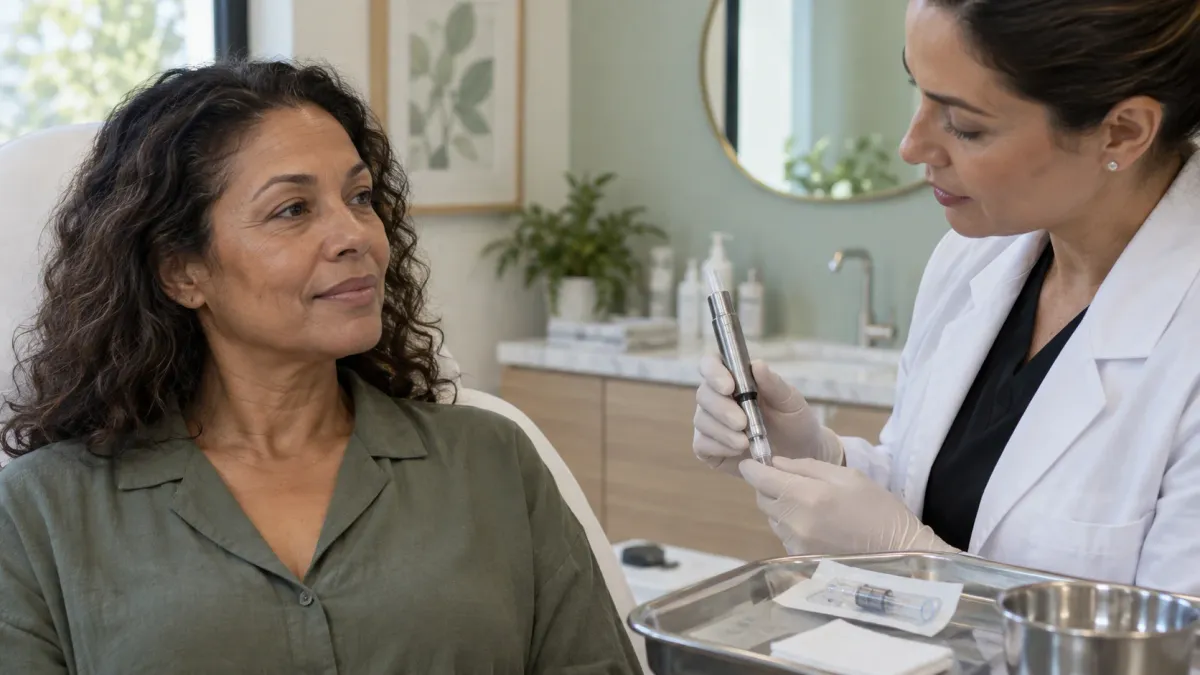
Microneedling for skin rejuvenation may improve selected fine lines, uneven texture and acne scars by triggering a controlled repair response. It is a medical procedure, not a guaranteed reset for aging skin. Results depend on the concern, device, treatment plan and how your skin heals.
Start with a qualified clinician who can name the target and explain alternatives. Conventional microneedling and radiofrequency microneedling are different procedures: RF adds heat and has a separate safety warning. Do not judge success by bleeding, peeling or a temporary post-treatment glow.
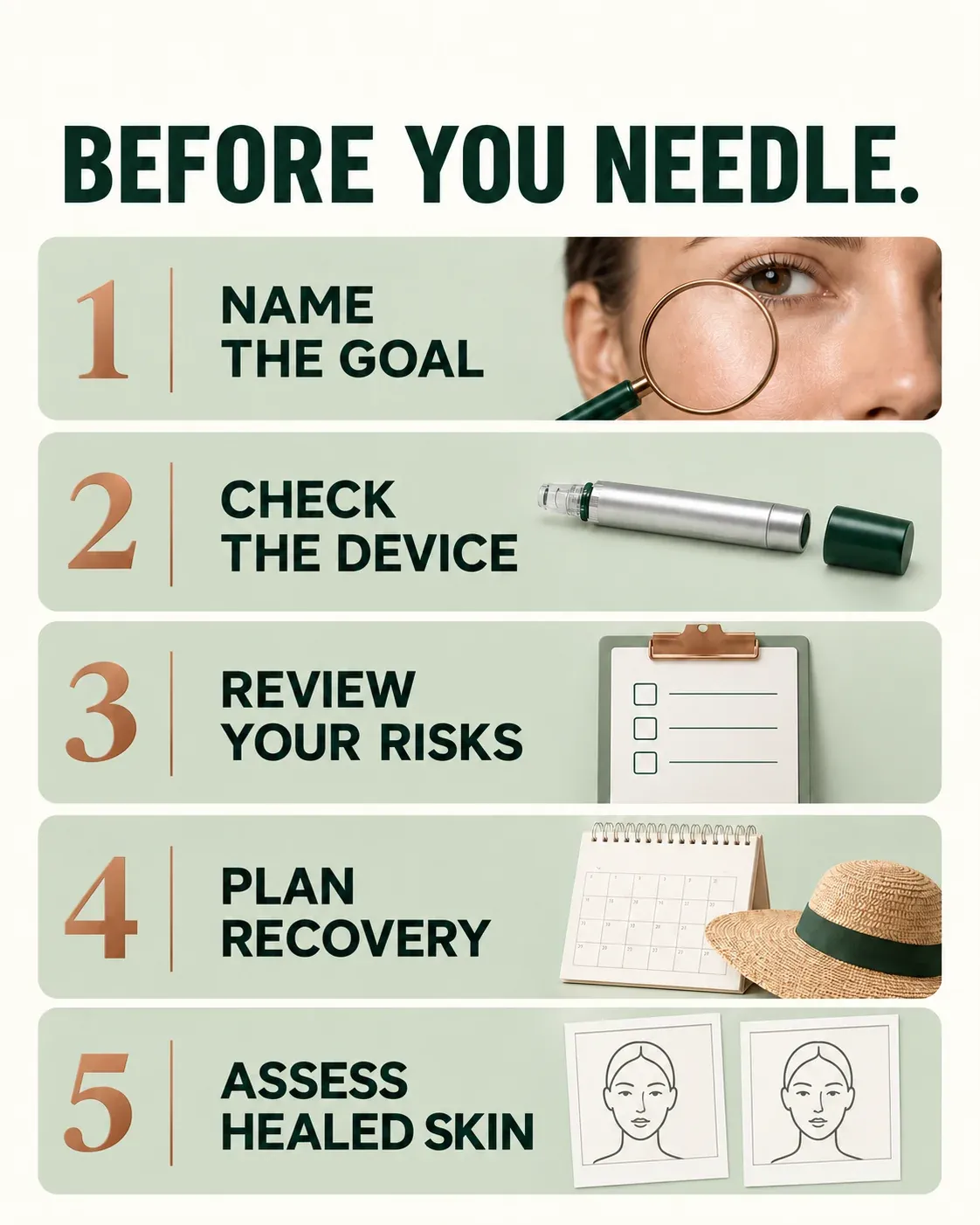
- Name the goal: fine lines, dented scars, pigment and loose skin are not interchangeable problems.
- Identify the device: ask whether treatment uses mechanical needles alone or added radiofrequency energy.
- Plan the whole course: include recovery, follow-up and a review point before paying for more sessions.
- Keep aftercare specific: a familiar serum is not automatically suitable for freshly treated skin.
- Assess healed skin: use consistent photographs and the agreed target, not the intensity of redness.
SkinOptimizer is an editorial resource, not a medical practice. We reviewed dermatology guidance, FDA information and a systematic review. Our decision examples explain questions to ask; they do not diagnose your skin or prescribe treatment settings.
The useful question is not whether microneedling can make skin look younger in general. It is whether the proposed procedure matches the specific change you want, at a level of risk and recovery you can accept.
Someone concerned about shallow texture needs a different discussion from someone concerned about facial volume loss. A package called “rejuvenation” can hide that distinction. Ask the provider to describe the job of the treatment in ordinary language before discussing upgrades.
This guide separates the clinical facts from a practical booking framework. You will find questions for comparing proposals, planning time away from normal activities and deciding whether another session makes sense. Choosing not to have an elective procedure is also a valid outcome.
Ask: “What will we measure when the skin has healed?” If the answer is only “glow,” request a more specific target. A clear goal makes both the potential benefit and the limits easier to discuss.
Match Microneedling to the Actual Skin Concern
Bring one main concern to the consultation rather than a list of every visible sign of aging. Point to the area in a mirror and explain when it bothers you: at rest, during expression, in side lighting or only in a magnified photograph.
That description is not a diagnosis, but it gives the clinician a starting point. If you say “scars,” ask whether the concern is a depressed scar, a raised scar or a flat post-acne mark. Do not assume one device addresses all three.
| Your concern | Question to ask | Decision boundary |
|---|---|---|
| Fine lines and rough texture | Which visible feature is likely to change? | Do not translate texture improvement into a promise of a facelift effect. |
| Depressed acne scars | What scar types are present? | Some scars need a combined or different structural treatment. |
| Brown marks or uneven color | Is pigment the primary diagnosis? | Ask whether a non-procedural approach should come first. |
| Active inflamed acne or a rash | Should treatment be delayed? | Have the active problem assessed before an elective procedure. |
| Loose skin or volume loss | What degree of change is realistic? | Do not buy a package based on an undefined “tightening” claim. |
Our acne-scar treatment map helps organize scar terminology. For flat brown marks, start with the cause-first dark-spot guide instead of assuming that a needle procedure is necessary.
A useful written goal might be “assess whether shallow cheek texture becomes less noticeable in consistent side lighting.” That is an editorial example, not a validated medical outcome scale. Your clinician may use a formal scale appropriate to the concern.
What Collagen Induction Therapy Means
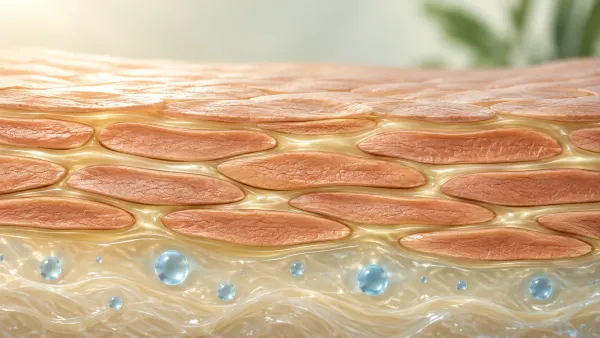
DermNet describes skin needling as controlled injury intended to stimulate repair and collagen remodeling. Conventional microneedling makes small punctures; it does not simply polish away the surface. Remodeling and visible improvement are related ideas, not identical measurements.
The fact that a treatment has a plausible mechanism does not establish how much it will change your face. Ask the provider to separate the biological explanation from the expected visible outcome. Neither a needle-depth number nor a dramatic procedure photograph answers that second question.
- Mechanism: what the device does to tissue.
- Outcome: what change can reasonably be assessed afterward.
- Trade-off: the risks, discomfort, recovery and expense involved.
A 2025 systematic review of facial rejuvenation included 21 studies and 723 patients. Most studies involved repeated sessions, but schedules and outcome measures varied. The authors identified a need for more standardized aesthetic measures.
The reported satisfaction findings should not be read as a percentage reduction in wrinkles. Likewise, a study counting how often researchers measured skin texture is not measuring how much texture improved. Ask for evidence relevant to your actual concern and the proposed device.
For example, a clinic discussing acne-scar research to support a promise about jawline lifting has changed the outcome being discussed. Request the connection explicitly. If the evidence is indirect, the uncertainty should be part of the conversation rather than hidden behind a general collagen claim.
Conventional Microneedling Is Not RF Microneedling
The word “microneedling” can describe treatments with different mechanisms. Ask for the device name and whether it delivers energy as well as creating punctures. A quotation that lists only a brand nickname is not enough to compare two proposals reliably.
| Procedure | Main distinction | Before choosing |
|---|---|---|
| Conventional microneedling | Mechanical punctures without added RF heat | Ask about indication, sterile technique and recovery. |
| RF microneedling | Needles also deliver radiofrequency energy | Discuss the FDA safety warning and device-specific experience. |
| Chemical peel | Chemical injury at a selected depth | Compare the targeted pigment or texture concern, not just price. |
| Laser procedure | Light-based treatment with device-specific effects | Identify the laser type, target and individual risk assessment. |
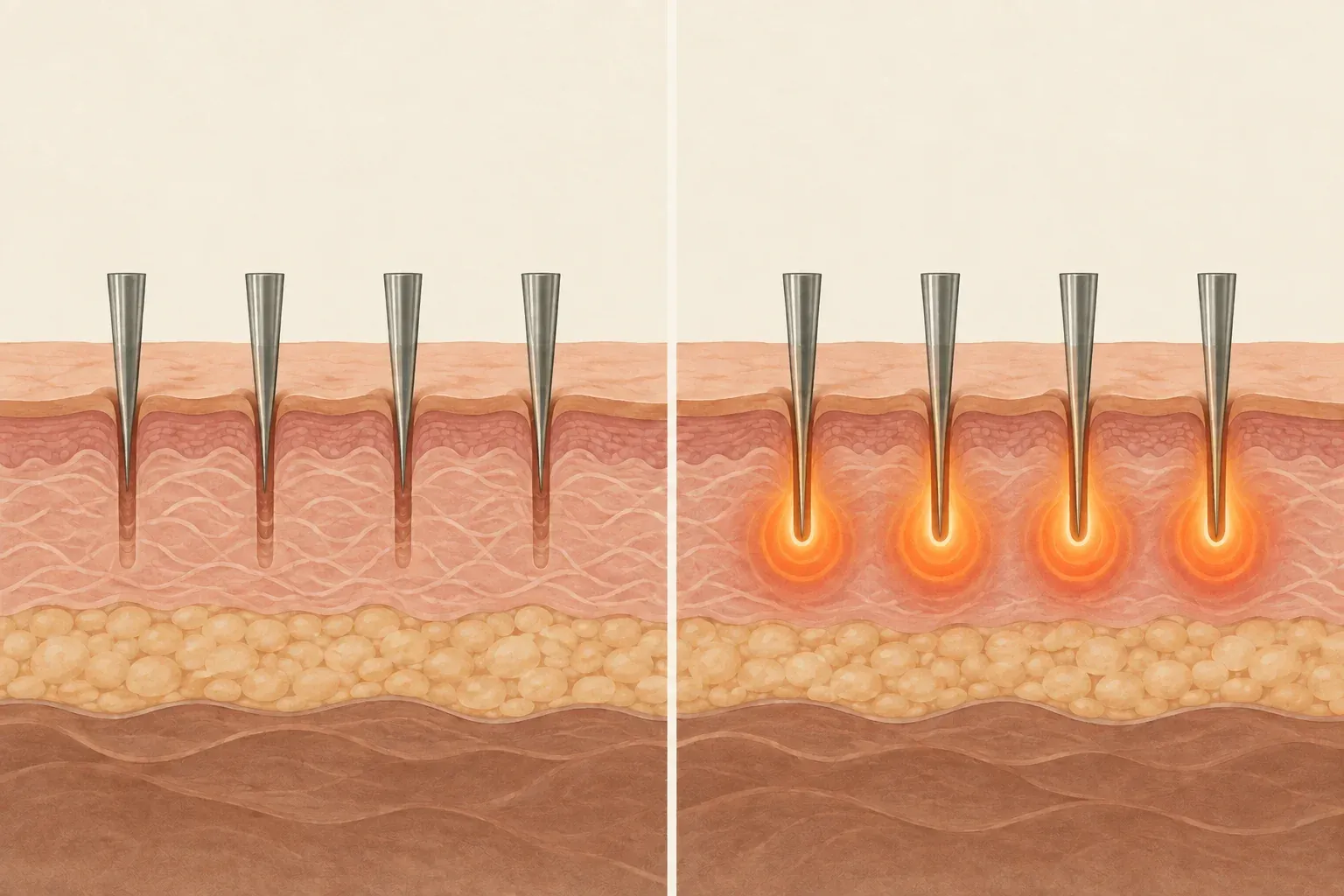
On October 15, 2025, the FDA warned about serious complications reported with certain uses of RF microneedling. Reports include burns, scarring, fat loss, disfigurement and nerve damage, sometimes requiring medical or surgical treatment.
The communication describes an ongoing evaluation, not an incidence rate or a universal ban. Its practical message is to discuss benefits and risks with a licensed, trained provider. RF microneedling should not be performed at home.
Read our device-specific RF guide when heat is part of the proposal. The chemical-peel decision guide and fractional laser overview explain why the alternative also needs a specific treatment description.
Compare two written proposals using the same five headings: target, device, expected benefit, recovery and total cost. If one omits the device or follow-up plan, ask for clarification before treating its lower price as better value.
Screen Your Risks Before Choosing a Date
The American Academy of Dermatology emphasizes assessment by a doctor experienced in skin procedures. Poor healing, keloid history, immune suppression, infection and active inflammatory acne can affect suitability. Current or previous isotretinoin use also belongs in the assessment.
Do not stop prescribed medication using a schedule from this article. Tell the clinician what you take, what you apply and when your last procedure occurred. Ask them to give any preparation changes in writing and coordinate with the prescribing clinician where needed.
- Bring medication, supplement and skincare names, not only descriptions such as “an acne cream.”
- Report previous unusual healing, pigment changes, cold sores and reactions to numbing products.
- Discuss pregnancy, breastfeeding, bleeding conditions and any relevant medical treatment.
- Mention upcoming travel, sun exposure and work obligations before selecting a date.
Skin tone should be part of the discussion, not a one-word assurance that a treatment is suitable for everyone. Ask about experience with people whose skin and concern resemble yours. Request an explanation of how the plan accounts for pigment changes after inflammation.
If the clinician recommends postponement, ask what needs to change before reassessment. A clear delay criterion is more useful than a vague instruction to return when your skin is “better.” Do not pressure the provider to proceed simply because you have arranged time off.
Check the Device and the Hygiene Plan
The FDA microneedling device guidance describes authorization for specific devices, indications and body areas. “FDA-cleared” is not a blanket endorsement of every use or combination. Ask to see the patient information for the actual device.
The FDA also says a new needle cartridge is needed for each session, including another session for the same patient. Cleaning an old cartridge does not make reuse acceptable. Ask how the rest of the equipment is cleaned between patients.
These are reasonable questions, not a demand to supervise the procedure. You should understand who will treat you, what their relevant training is and who handles complications. An attractive room or a large social-media following cannot answer those questions.
- Write down the device name and whether RF energy is involved.
- Confirm the clinician has training with that device and the intended treatment area.
- Ask how single-use components and equipment cleaning are managed.
- Know the contact route for unexpected symptoms after leaving the clinic.
Plan Recovery Around Your Life, Not a Marketing Label
Recovery is not the same as being able to leave the clinic. You may be physically able to work yet uncomfortable appearing on camera or wearing your normal products. Explain those constraints before accepting a description such as “little downtime.”
AAD describes temporary redness or darkening, swelling and discomfort that often settle over days to a week. That is background guidance, not a promise for your procedure. Your provider should describe the expected course and the signs that require review.
| Stage | Plan ahead | Ask the provider |
|---|---|---|
| Before treatment | Arrange the products and contact details in the written plan. | Which medicines or actives need a specific adjustment? |
| Immediately afterward | Keep the care sheet accessible; avoid adding improvised products. | What appearance and sensations are expected for this procedure? |
| Return to routine | Account for work, makeup, exercise and outdoor exposure. | When can each activity or product restart? |
| Unexpected symptoms | Contact the treating clinician promptly rather than booking another session. | What needs same-day assessment or urgent care? |
| Result review | Use comparable photographs after the agreed healing interval. | Did the intended target improve enough to justify another treatment? |
Do not wait for a routine follow-up if pain or swelling is worsening, there is pus, fever, spreading redness, new blistering or another concerning change. Seek prompt medical assessment. Breathing difficulty or rapidly progressing severe swelling requires emergency care.
After RF treatment, report new contour changes or altered sensation as well as surface changes. Describe when the symptom started and how it is progressing. A photograph can help document a concern, but it does not replace examination.
If you have a wedding, important presentation or outdoor holiday coming up, say so at the consultation. Build flexibility into the schedule instead of asking for stronger treatment followed by faster recovery. An elective procedure can be rescheduled; the healing response cannot be guaranteed to fit an event.
Why More Serum Absorption Is Not Automatically Better
The FDA states that microneedling devices are not approved to deliver cosmetics, topical medicines, vitamin solutions, drugs or blood products such as PRP into skin. A product tolerated on intact skin is not automatically appropriate immediately after needling.
Ask for the exact name and role of anything applied during or after the procedure. “Healing serum” and “growth-factor upgrade” are marketing descriptions, not complete explanations. The clinician should distinguish routine aftercare from an additional intervention with its own evidence and risks.
- Do not introduce vitamin C, retinoids, acids or an unfamiliar serum without clearance.
- Do not assume an exosome add-on is necessary for a successful treatment.
- Follow the individualized plan for cleansing, moisturizer, sun protection and makeup.
- Ask when to restart each usual product instead of restarting the whole routine together.
Our PRP facial evidence and safety guide separates combination treatment from needling alone. For broader expectations, the guide to anti-aging facials helps distinguish an ordinary facial from a medical procedure.
We are not recommending a shopping kit here. The useful action is obtaining a written, individualized aftercare plan before the appointment. A universal product list would imply more certainty about your procedure and skin than an informational article can provide.
Decide Whether the Next Session Is Worth It
AAD notes that results develop gradually, over weeks to months. Avoid using immediate swelling or fresh exfoliation as the final comparison. Agree on a review point with your clinician and keep your baseline photographs consistent.
For a practical comparison, keep the camera, distance, lighting and facial expression similar. Avoid filters and sharply different exposure settings. You are trying to make a change easier to judge, not produce a dramatic before-and-after image for social media.
Record recovery alongside appearance. Note the days you could not follow your usual routine, any unexpected symptoms and additional appointments or products. Those details belong in the decision about another treatment even if you liked part of the cosmetic result.
- Benefit: did the named concern change at the agreed review point?
- Burden: was recovery acceptable in practice, not only on paper?
- Next step: what is the specific reason to repeat, adjust, switch or stop?
Ask for the total proposed cost, including consultation, sessions, aftercare and follow-up. Check whether an unused package can be refunded or transferred before paying. A per-session discount is not useful if it commits you to treatment before the initial response can be assessed.
Our editorial rule is simple: do not buy the next session solely because it is the next slot in a package. Ask the clinician to connect the recommendation to your response and remaining goal. A maintenance plan should have a reason, not just a recurring payment date.
Existing Video: Use It as Background, Not Instructions
The embedded video from the earlier version is retained below. A video cannot establish your candidacy, select a device or replace the written care plan. Use the current safety discussion above when evaluating any technique or product combination it mentions.
- Name one priority concern and ask for the diagnosis behind it.
- Confirm the device, whether RF is involved and the relevant risks.
- Review medical history, sterile technique and the after-hours contact route.
- Get preparation, recovery, restart instructions and total cost in writing.
- Review healed results before committing to further sessions.
The Bottom Line
Microneedling can be a reasonable option for selected concerns, but “rejuvenation” is too broad to be the entire treatment plan. A useful consultation connects a defined target to a specific procedure, realistic expectations and an individualized recovery plan.
Do not use redness as a score, RF as an automatic upgrade or product absorption as an automatic benefit. The strongest next step is a clearer clinical discussion, not a stronger device purchased online.
Community question note: Reviewed discussions about downtime across repeat visits and recovery around work informed the questions below. Community experiences are question-discovery material, not evidence of safety or effectiveness.
Frequently Asked Questions About Microneedling for Skin Rejuvenation
Does less redness mean microneedling did not work?
No. Redness alone cannot tell you whether the intended outcome was achieved. Ask your clinician to assess healed skin against the original goal rather than requesting more aggressive treatment just to produce a stronger reaction.
When should I judge results, and will downtime get shorter?
Visible changes can develop over weeks to months, so agree on a review date with your clinician. Repeated sessions do not guarantee shorter recovery. Discuss your previous response before each treatment, especially if recovery interfered with work or normal activities.
Is RF microneedling simply a better version?
No. It adds energy and has different risks, including the serious complications described in the FDA warning. Ask why that specific device is being proposed for your concern and what alternatives are available.
Can a home roller replace professional microneedling?
Do not assume it can. Home needling can cause injury, infection or scarring, and a device listing cannot assess your skin. Discuss alternatives with a qualified clinician rather than copying needle settings or treatment schedules from videos.
When can I restart my usual skincare products?
Use the treating clinician's written schedule for each product. Do not infer that a product is suitable because it was comfortable before treatment or because deeper absorption sounds beneficial. Ask for clarification if the instructions do not name your usual actives.
This article is for informational purposes only and does not replace professional dermatological advice.