Ceramide Moisturizers: Choose the Right Barrier Cream
Choose a ceramide moisturizer by texture and complete formula, then use it correctly for dry, sensitive or treatment-stressed skin.

In this guide
Ceramide moisturizers can support dry, sensitive or treatment-stressed skin, but the complete formula matters more than the ceramide count. Choose a face or body texture that also includes humectants, emollients and occlusives, apply it to slightly damp skin and reduce overlapping irritants. Persistent pain, weeping, rash or cracking needs professional care.
Quick Summary
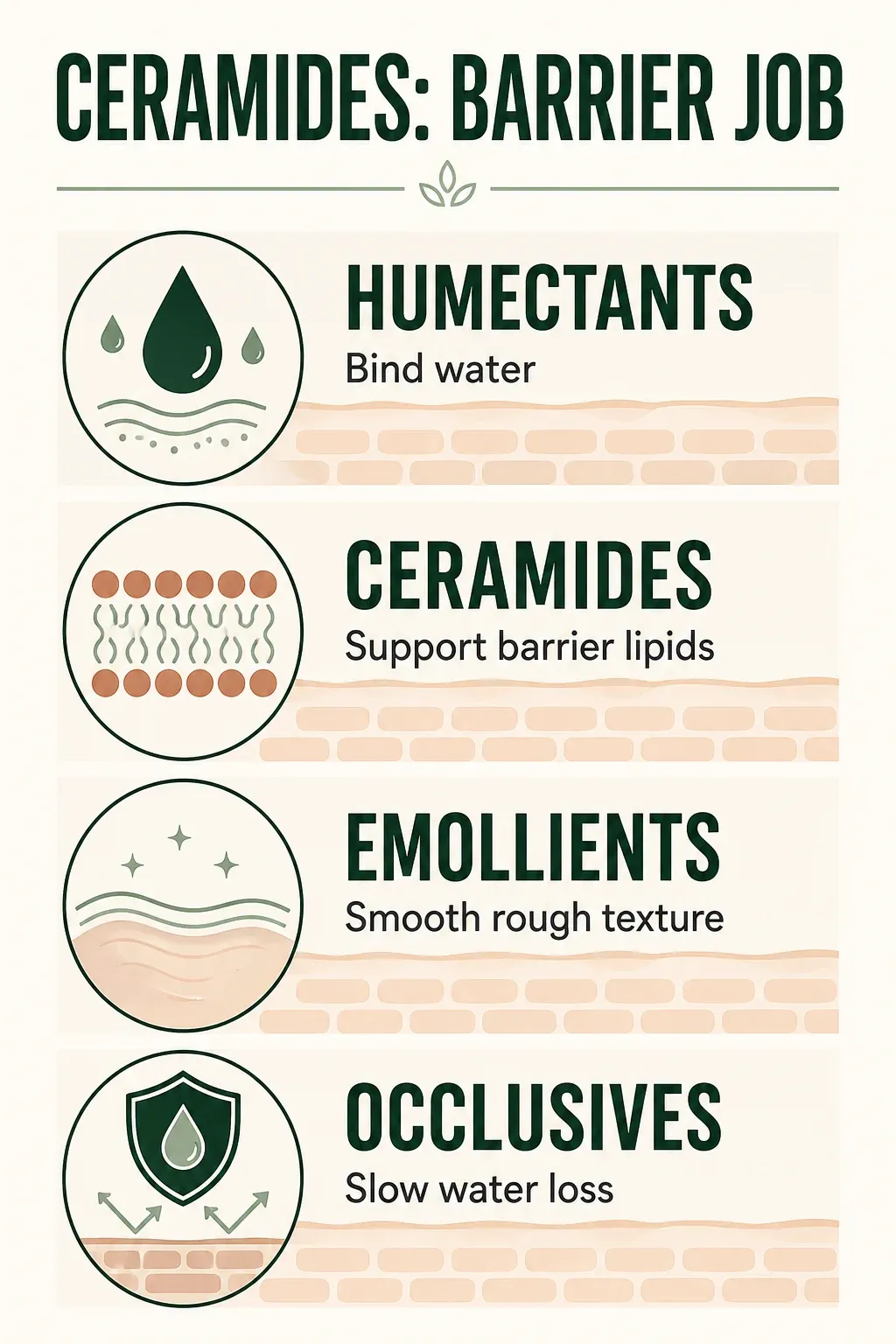
- Ceramides support barrier lipids; humectants and occlusives do other essential jobs.
- Choose texture by face, body area, dryness and tolerance.
- CeraVe, The INKEY List and SkinCeuticals fill different price and texture roles.
- Moisturizer supports treatment but does not diagnose or cure eczema.
Choose a Ceramide Moisturizer by Texture, Not by Ceramide Count
Ceramides are lipids naturally found in the outer skin barrier. A ceramide moisturizer can support dry, irritated or treatment-stressed skin, but the label word alone does not make a formula superior. Choose the texture and complete ingredient system that keep the skin comfortable.
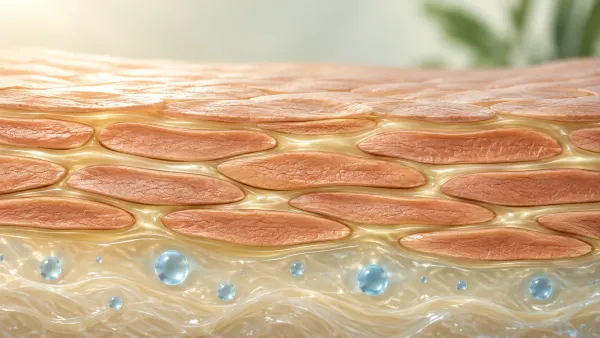
The barrier works through organized skin cells and lipids that limit water loss and block irritants. Ceramides are an important part of that lipid matrix, alongside cholesterol and fatty acids. Humectants, emollients and occlusives still matter because a useful moisturizer must add or bind water, smooth roughness and reduce evaporation.
| Skin situation | Best starting texture | Useful formula roles |
|---|---|---|
| Dry face with tightness | Fragrance-free cream | Ceramides plus glycerin and occlusives |
| Oily but treatment-dry | Lighter facial cream | Humectants, ceramides and moderate emollience |
| Very dry body skin | Rich face-and-body cream | Petrolatum or dimethicone plus ceramides |
| Active eczema or painful rash | Clinician-guided emollient plan | Diagnosis and anti-inflammatory care may be needed |
| Mature, persistently dry face | Richer lipid cream | Ceramides, cholesterol, fatty acids and humectants |
A qualitative review of ceramide-containing formulations found clinical support for water retention and barrier-related benefits, while also showing that studies use different products and populations. That makes the complete formulation more important than a universal claim about every ceramide cream.
The American Academy of Dermatology recommends creams or ointments for dry skin and includes ceramides among useful label ingredients. It does not say that the largest ceramide count or highest-priced cream is automatically best.
What Ceramides Do and What They Do Not Do
Ceramides support barrier lipids
Ceramides help form the layered lipid structures between cells in the stratum corneum. Dryness, age and inflammatory skin disease can be associated with changes in ceramide amount or profile. A topical moisturizer can supply barrier-supportive lipids at the surface and improve hydration conditions.
That does not mean a retail cream permanently restores every barrier abnormality or treats an inflammatory condition by itself. Atopic dermatitis, psoriasis, allergic contact dermatitis and infection can all need diagnosis and medication beyond moisturization.
Humectants bind water
Glycerin, hyaluronic acid and urea can attract or hold water in the outer skin. They complement ceramides but do a different job. A thin hyaluronic acid serum may make skin feel damp, yet it can still leave persistent tightness if no cream slows water loss.
Our hydration versus moisturization guide explains this difference. The hyaluronic acid serum guide helps choose a water-binding layer without treating it as a substitute for moisturizer.
Emollients smooth rough texture
Fatty alcohols, squalane, shea butter and many plant-derived lipids can fill gaps between rough surface cells and improve flexibility. The word alcohol is not automatically a warning: cetyl and cetearyl alcohol are fatty emollients, unlike fast-evaporating denatured alcohol.
Rich emollients can feel heavy on oily skin but are not automatically comedogenic in every finished formula. Apply a smaller amount, observe the full routine and stop when a consistent breakout pattern appears.
Occlusives slow water loss
Petrolatum and dimethicone reduce transepidermal water loss. They can make a ceramide cream more useful for cracked, winter-dry or retinoid-stressed skin. A lighter lotion may feel elegant but fail when the environment is cold and dry.
Occlusion can also intensify an irritating active trapped underneath. Do not apply a thick ointment over a strong retinoid or acid on the first night unless the product directions or a clinician support that approach.
How to Use Ceramide Moisturizer in a Real Routine
| Step | Morning | Evening |
|---|---|---|
| Cleanse | Water rinse or gentle cleanser | Remove sunscreen and makeup gently |
| Treat | Optional antioxidant or none | One scheduled active when tolerated |
| Moisturize | Ceramide texture that layers under SPF | Enough cream to prevent tightness |
| Protect | Broad-spectrum SPF 30+ | No sunscreen needed during sleep |
Apply while skin is slightly damp
After cleansing, pat rather than rub and apply moisturizer before the face becomes completely tight. There is no medically important sixty-second countdown. The useful principle is simply to trap some water while avoiding a dripping-wet surface that dilutes or spreads treatment into sensitive creases.
Use enough for comfort, not a visible mask
Start with a pea-size amount for the face and add more to dry areas. Hands, arms and legs need more product because the surface area is larger. Reapply after handwashing or when weather and indoor heating increase water loss.
Pair with actives carefully
Ceramide moisturizers can fit alongside retinoids, benzoyl peroxide, vitamin C and exfoliating acids. They do not cancel irritation or make unlimited active stacking safe. Reduce treatment frequency when the skin becomes raw, painful or persistently flaky.
The slow skincare introduction method keeps one active variable at a time. The sensitive-skin barrier reset provides a temporary simple routine when even basic products sting.
Three Ceramide Moisturizers With Distinct Jobs
These choices are deliberately different. CeraVe is the all-purpose face-and-body value option. The INKEY List is a facial cream for someone who wants a more treatment-like cosmetic texture.
SkinCeuticals is a premium lipid cream for dry or mature skin. Its higher price is not proof that it repairs the barrier better for everyone.
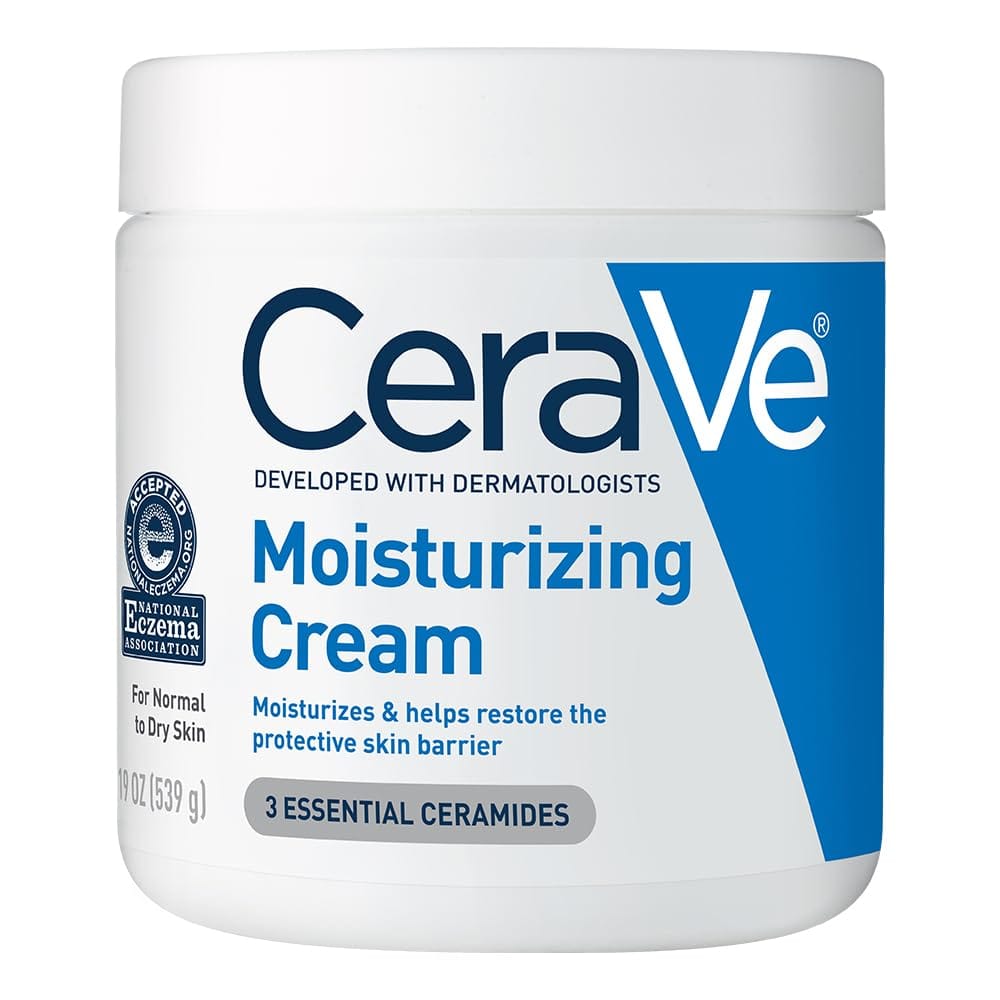
CeraVe Moisturizing Cream
Dry face or body skin that needs a fragrance-free cream with ceramides, glycerin, hyaluronic acid and occlusive support.
It combines several moisturizer jobs in one widely available face-and-body texture rather than relying on a ceramide label alone.
Watch-out: The rich finish and jar format may not suit every acne-prone face. Verify the current seller, size and ingredient list.
View on AmazonAs an Amazon Associate, SkinOptimizer may earn from qualifying purchases. Prices, sellers and availability can change.
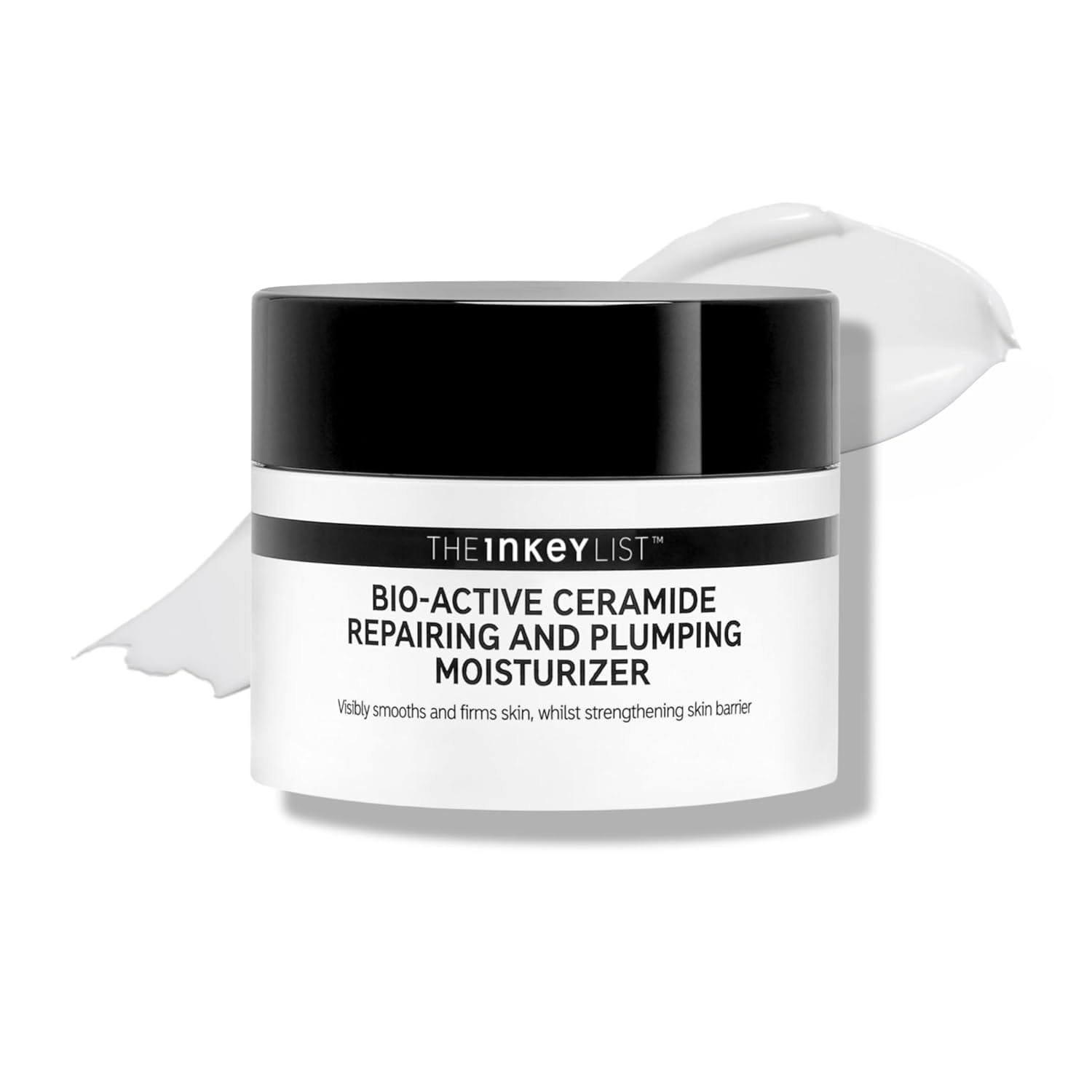
The INKEY List Bio-Active Ceramide Moisturizer
Normal-to-dry facial skin seeking a dedicated cream with ceramides, peptides and a richer anti-aging positioning.
It offers a face-specific texture and barrier-focused formula at a mid-range price, creating a real alternative to a large body cream tub.
Watch-out: Brand clinical claims describe this finished formula and should not be generalized to every ceramide cream. Patch test if reactive.
View on AmazonAs an Amazon Associate, SkinOptimizer may earn from qualifying purchases. Prices, sellers and availability can change.
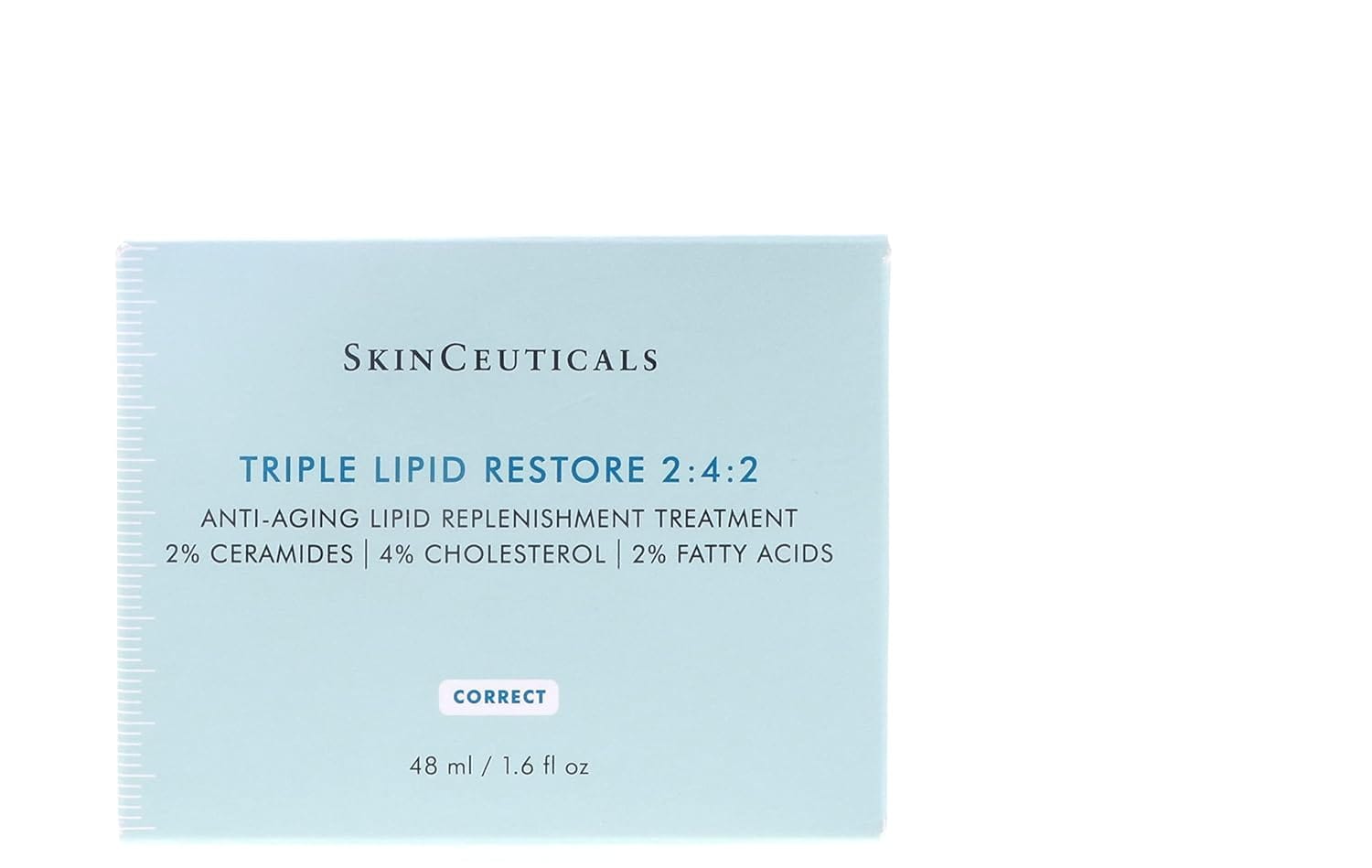
SkinCeuticals Triple Lipid Restore 2:4:2
Persistently dry or mature facial skin where a rich lipid cream and premium sensory finish justify the cost.
The brand discloses a 2% ceramide, 4% cholesterol and 2% fatty-acid lipid system, which creates a clear formula rationale.
Watch-out: It is expensive and fragranced. A lower-cost fragrance-free cream may provide adequate barrier comfort without the premium positioning.
View on AmazonAs an Amazon Associate, SkinOptimizer may earn from qualifying purchases. Prices, sellers and availability can change.
Official pages confirm the current positioning and ingredient roles for CeraVe Moisturizing Cream, The INKEY List Bio-Active Ceramide Moisturizer and SkinCeuticals Triple Lipid Restore 2:4:2. Verify package ingredients because formulas and marketplace listings can change.
What Research on Ceramide Moisturizers Actually Shows
A randomized trial in adults with moderate eczema found that a ceramide-dominant moisturizer and cleanser regimen improved barrier-related outcomes. That is relevant support for barrier care, but it does not prove that every cosmetic ceramide cream treats eczema.
A trial in age-related dry skin reported improved hydration and barrier measures with a ceramide-containing cream compared with a hydrophilic cream. The population, formula and comparator matter when applying the result to another product.
A systematic review and meta-analysis in atopic dermatitis found improvements with ceramide moisturizers but did not establish a simple winner for every outcome. Vehicles, co-ingredients, adherence and study quality differ. This supports a practical conclusion: ceramides can help, but the full moisturizer and regular use decide much of the real-world result.
Do Ceramide Ratios Matter?
Skin lipids exist in organized proportions, and research formulations sometimes investigate particular ceramide, cholesterol and fatty-acid ratios. It is too strong to tell shoppers that every effective retail product must disclose a universal 3:1:1 ratio. Concentration, molecular species, delivery and the condition being treated all affect interpretation.
A brand that publishes exact percentages gives more formula transparency, but those numbers are not a direct effectiveness score. A lower-cost cream can still reduce dryness through glycerin, petrolatum, dimethicone and ceramides even when the label does not disclose a lipid ratio.
Use comfort and adherence as primary decision signals. A product that burns, pills under sunscreen or feels so heavy that it is skipped cannot deliver consistent benefit. The right cream is the one that supports the routine twice daily.
Ceramide Moisturizers by Skin Type
Dry or mature
Choose a cream with glycerin, emollients and meaningful occlusion. A cholesterol-fatty-acid system may be a useful extra, but fragrance can still limit tolerance.
Oily or acne-prone
Use a lighter facial cream or a smaller amount. Keep one acne active and avoid assuming that rich texture automatically causes every breakout.
Sensitive or eczema-prone
Prefer fragrance-free formulas and fewer botanical variables. Moisturizer supports the barrier but does not replace diagnosis or prescribed treatment.
If acne treatment causes dryness, use moisturizer before or after the active according to directions and tolerance. Do not add a second acid cleanser simply because the skin still looks textured. The dry-skin moisturizer guide compares cream, ointment and body-treatment roles.
For mature skin, expect better comfort and temporary surface plumping rather than a lift. The anti-aging moisturizer guide separates hydration from collagen and firming claims.
How Long Does Barrier Improvement Take?
Comfort can improve after one application because water loss is reduced and the surface is softened. More stable improvement in dryness and barrier measures is usually evaluated over days or weeks. A single night cannot prove complete barrier repair.
Track tightness after cleansing, midday flaking, stinging with basic products and the need to reapply. Photograph rough patches in the same light once weekly rather than inspecting the face repeatedly. Reduce active frequency if symptoms worsen despite adequate cream.
If pain, weeping, crusting, spreading redness or sleep-disrupting itch persists, see a dermatologist. Infection, eczema, psoriasis and allergy are not problems to solve by buying a fourth moisturizer.
Make the Cleanser Support the Ceramide Cream
A harsh cleanser can remove surface lipids twice daily and leave the moisturizer compensating for repeated damage. Use lukewarm water, short contact time and enough cleanser to remove sunscreen or makeup without scrubbing. Morning cleansing may be unnecessary for dry skin.
Foam level is not a quality score. A low-foam gel can cleanse effectively, while a creamy cleanser can still irritate when it contains a personal fragrance trigger. Judge the result by comfort after rinsing rather than a squeaky finish.
Our dry-skin cleanser guide compares gentle formats. Changing cleanser and moisturizer on the same day can make it harder to know which step solved the tightness, so replace one variable at a time.
Common Ceramide Moisturizer Mistakes
- Buying by ceramide count: more names on the label do not reveal concentration or delivery.
- Ignoring humectants and occlusives: barrier comfort requires more than one lipid story.
- Applying to completely dry skin: slightly damp application helps trap water after cleansing.
- Expecting an overnight cure: comfort can be fast, while stable improvement takes consistent use.
- Using fragrance during a flare: a pleasant formula can still irritate reactive skin.
- Stacking actives underneath: moisturizer cannot neutralize unlimited retinoid or acid exposure.
- Self-treating a persistent rash: inflammatory and infectious conditions need proper assessment.
The Bottom Line
Ceramide moisturizers can support hydration and the outer skin barrier, especially when dryness, age or active treatments have reduced comfort. Choose by complete formula and texture, not by the largest ceramide count. Apply consistently to slightly damp skin, reduce overlapping irritants and seek care when a rash, pain or cracking persists.
Frequently Asked Questions
Do ceramide moisturizers repair a damaged skin barrier?
They can support hydration and barrier recovery conditions, especially when the complete formula also binds water and reduces water loss. They do not diagnose or cure every cause of a damaged barrier.
Can I use ceramide moisturizer with retinol?
Yes. Apply it before or after retinol according to tolerance and product directions. The moisturizer may improve comfort, but it does not make excessive retinoid frequency irritation-proof.
Are ceramide moisturizers good for acne-prone skin?
They can be, especially when acne treatment causes dryness. Choose a comfortable facial texture, use a moderate amount and observe the finished formula rather than assuming all rich creams clog pores.
How long does a ceramide moisturizer take to work?
Surface comfort can improve after one application, while more stable dryness and barrier-related improvement usually takes consistent use over days or weeks. Stop and seek advice if symptoms worsen.
Do I need ceramides, cholesterol and fatty acids in one cream?
That combination has a clear barrier-lipid rationale, but a retail product does not need to publish a universal ratio to moisturize well. Glycerin, petrolatum, dimethicone and other supportive ingredients also matter.