10 Herbs and Spices for Radiant Skin: A Food-First Guide
A food-first guide to ten useful herbs and spices, realistic skin expectations, practical meal ideas, and the safety limits that glow lists often skip.
In this guide
Quick Answer
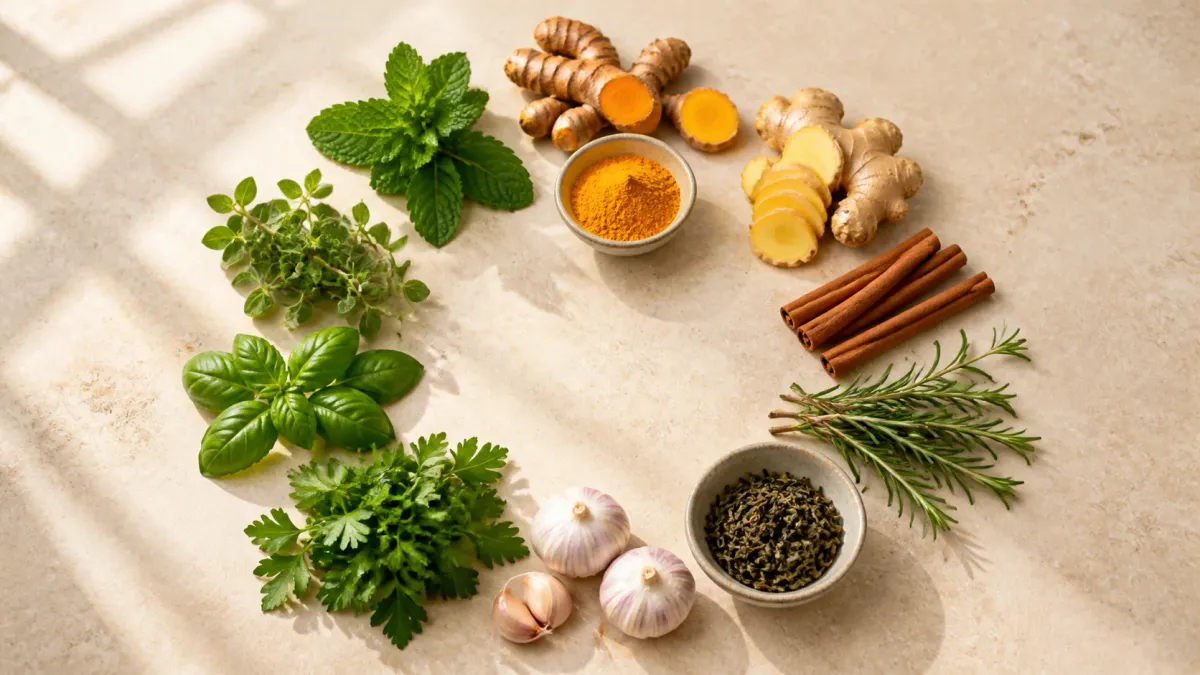
Herbs and spices can support a varied, nutrient-dense eating pattern, but no single seasoning creates radiant skin. Use turmeric, ginger, cinnamon, rosemary, green tea, garlic, parsley, basil, mint, and oregano as foods—not as substitute treatments. Their strongest practical value is helping vegetables, beans, whole grains, fish, and other nourishing foods taste better. Culinary use is different from taking concentrated extracts or putting raw spices on your face.
Quick Summary
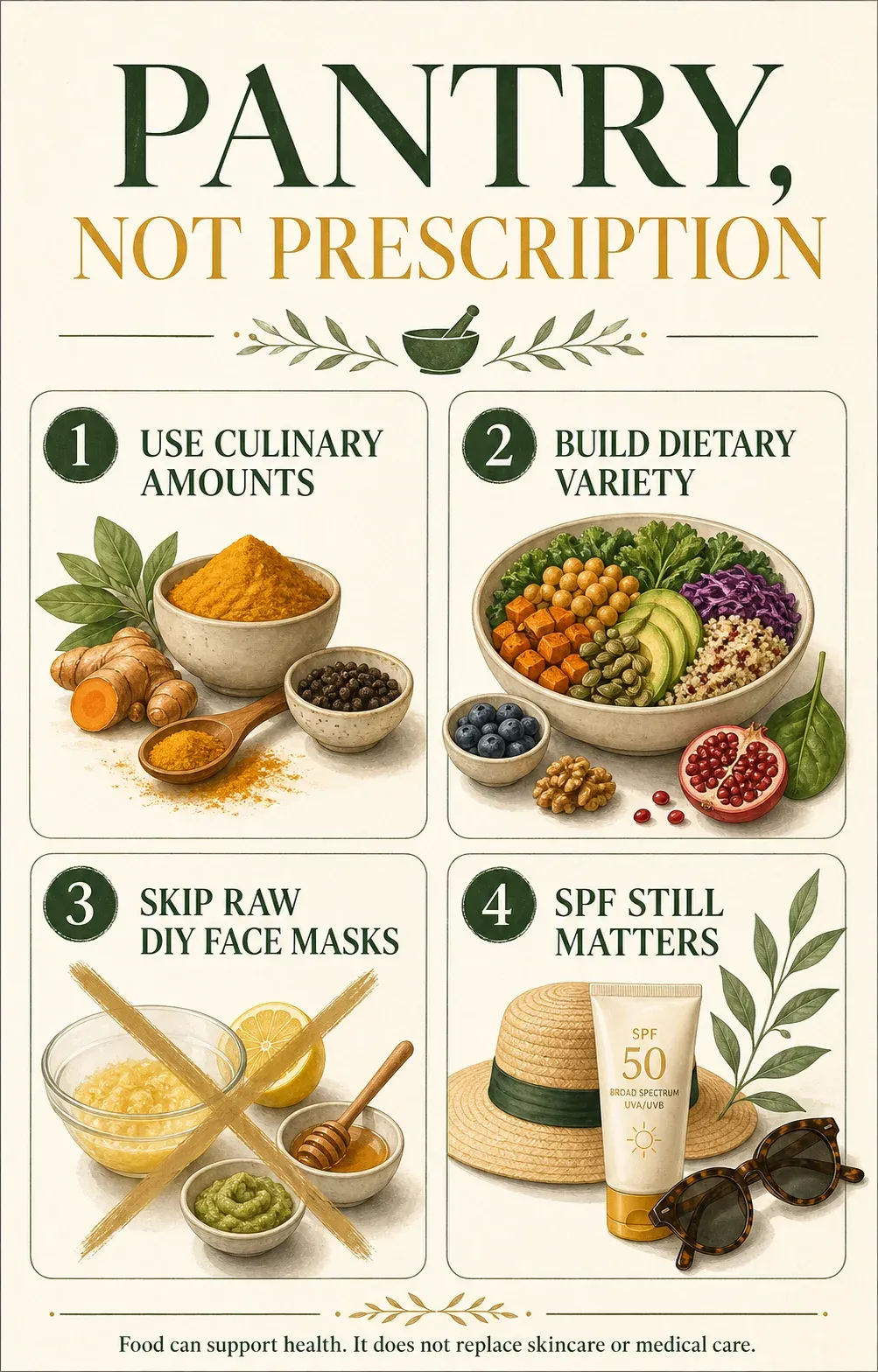
- Think pattern, not miracle ingredient: herbs and spices add flavor and plant compounds, but your overall diet, sleep, skincare, health, and sun exposure matter more.
- Food first: use modest culinary amounts in meals and drinks. Supplements can deliver much larger doses and create different risks.
- Keep DIY off the face: raw garlic, cinnamon, chili, undiluted essential oils, and acidic kitchen mixtures can irritate or burn skin.
- Protect what food cannot: a balanced diet does not replace moisturizer, evidence-based treatment, or broad-spectrum sunscreen.
Editorial Note
SkinOptimizer is an editorial skincare resource. This guide compares culinary use with the safety information for concentrated products from the National Center for Complementary and Integrative Health. We do not claim that eating a herb treats acne, pigmentation, eczema, or another skin condition. We also do not claim hands-on product testing.
The phrase “eat for glowing skin” sounds precise, but it often hides a weak promise. Skin appearance changes for many reasons: hydration at the surface, irritation, pigment, oil production, hormones, medication, sleep, illness, and ultraviolet exposure can all matter.
A spoonful of turmeric cannot control that entire system. Neither can green tea, garlic, or parsley.
That does not make herbs and spices pointless. It gives them a more honest job. They make minimally processed foods interesting, contribute small amounts of diverse plant compounds, and can help you rely less on excess salt or sugary sauces for flavor.
Our guide to antioxidant-rich foods for skin reaches the same practical conclusion: variety matters more than chasing one “superfood.” If acne is your concern, use the more specific evidence overview in diet and acne rather than assuming every breakout came from a missing spice.
What “radiant skin” can realistically mean
Radiance is not a medical diagnosis. In beauty writing, it usually describes skin that looks even, comfortable, hydrated, and less dull. Food may support general health, but the visible result is indirect and highly individual.
A useful eating pattern provides enough energy, protein, essential fats, vitamins, minerals, fiber, and fluids. Herbs and spices are additions to that foundation. They are not replacements for it.
| Claim | Reasonable interpretation | What it does not prove |
|---|---|---|
| “Rich in plant compounds” | The ingredient adds phytochemicals and flavor to a mixed diet | That one serving will visibly change your skin |
| “Antioxidant activity” | Compounds can interact with oxidation in a measured setting | That the spice reverses wrinkles or replaces SPF |
| “Anti-inflammatory” | Some preparations have been studied for specific health endpoints | That a kitchen mask safely treats inflamed skin |
| “Natural” | The ingredient comes from a plant | That every dose, extract, or topical use is safe |
This distinction protects you from two common errors: expecting too much from a meal and treating a pantry ingredient as if it were a formulated cosmetic.
10 herbs and spices worth using—without the glow hype
The list below prioritizes familiar culinary ingredients. “Worth using” means easy to incorporate into a varied diet, not clinically proven to transform skin.
Turmeric
Best use: lentils, soups, roasted vegetables, rice, or eggs. Curcumin is widely studied, but turmeric powder in dinner is not equivalent to a high-bioavailability supplement. Expect color and earthy flavor—not a cure for acne or pigmentation.
Ginger
Best use: stir-fries, soups, oatmeal, tea, or marinades. Ginger has human evidence for some forms of nausea, yet that does not establish a skin-glow outcome. Fresh or ground ginger is an enjoyable way to vary flavor.
Cinnamon
Best use: oats, yogurt, apples, coffee, or savory stews. Choose Ceylon cinnamon if you use it frequently and want a lower-coumarin option. Cinnamon does not “balance” every reader's blood sugar or clear acne.
Rosemary
Best use: beans, potatoes, fish, poultry, or roasted vegetables. Its aroma can make simple foods satisfying without a heavy sauce. Evidence about isolated rosemary compounds should not be translated into anti-aging promises for a normal serving.
Green tea
Best use: an unsweetened drink or cooking liquid. Tea contains catechins and caffeine. Drinking it is different from applying a green-tea skincare formula, and neither route replaces sunscreen. See our green tea and skin evidence guide for that distinction.
Garlic
Best use: tomato sauces, bean dishes, vegetables, dressings, or marinades. Crush or chop it for flavor, then cook as the recipe requires. Never place raw garlic on a blemish; it can irritate and has caused burns.
Parsley
Best use: salads, grain bowls, soups, fish, or a fresh herb sauce. It contributes flavor and nutrients, including vitamin K. That does not mean parsley juice erases dark spots or “detoxes” skin.
Basil
Best use: tomatoes, beans, salads, soups, pesto, or eggs. Fresh basil makes plant-forward meals more appealing. Claims about holy basil extracts should not be transferred to ordinary culinary basil or to acne treatment.
Mint
Best use: yogurt sauces, fruit, salads, peas, grain bowls, or tea. Mint adds brightness without sugar. Peppermint oil capsules have been studied for specific digestive uses, but undiluted mint oil is not a safe DIY facial.
Oregano
Best use: tomato dishes, beans, roasted vegetables, fish, or vinaigrettes. Dried oregano is concentrated in flavor, so a small amount works well. Oregano oil is a different, more concentrated product and should not be treated like the dried herb.
These ten are not a ranking. If you dislike one, skip it. A sustainable eating pattern you enjoy is more useful than forcing down a daily “beauty shot.” The broader skin-supportive foods guide can help you build the plate around protein, plants, and fats rather than seasoning alone.
A quick pantry decision table
| Ingredient | Easy food pairing | Important limit |
|---|---|---|
| Turmeric + ginger | Lentils, soup, rice, roasted vegetables | Food use is not the same as a curcumin or ginger supplement |
| Cinnamon | Oats, yogurt, apples, coffee | Frequent large cassia intake raises coumarin concerns |
| Rosemary + oregano | Beans, fish, potatoes, vegetables | Do not apply essential oils undiluted |
| Green tea + mint | Unsweetened drinks, grain salads, yogurt sauce | Tea can contain caffeine; extracts carry different risks |
| Garlic + parsley + basil | Tomato dishes, soups, salads, herb sauce | Raw garlic is not a blemish treatment |
How to use more herbs and spices without creating a wellness chore
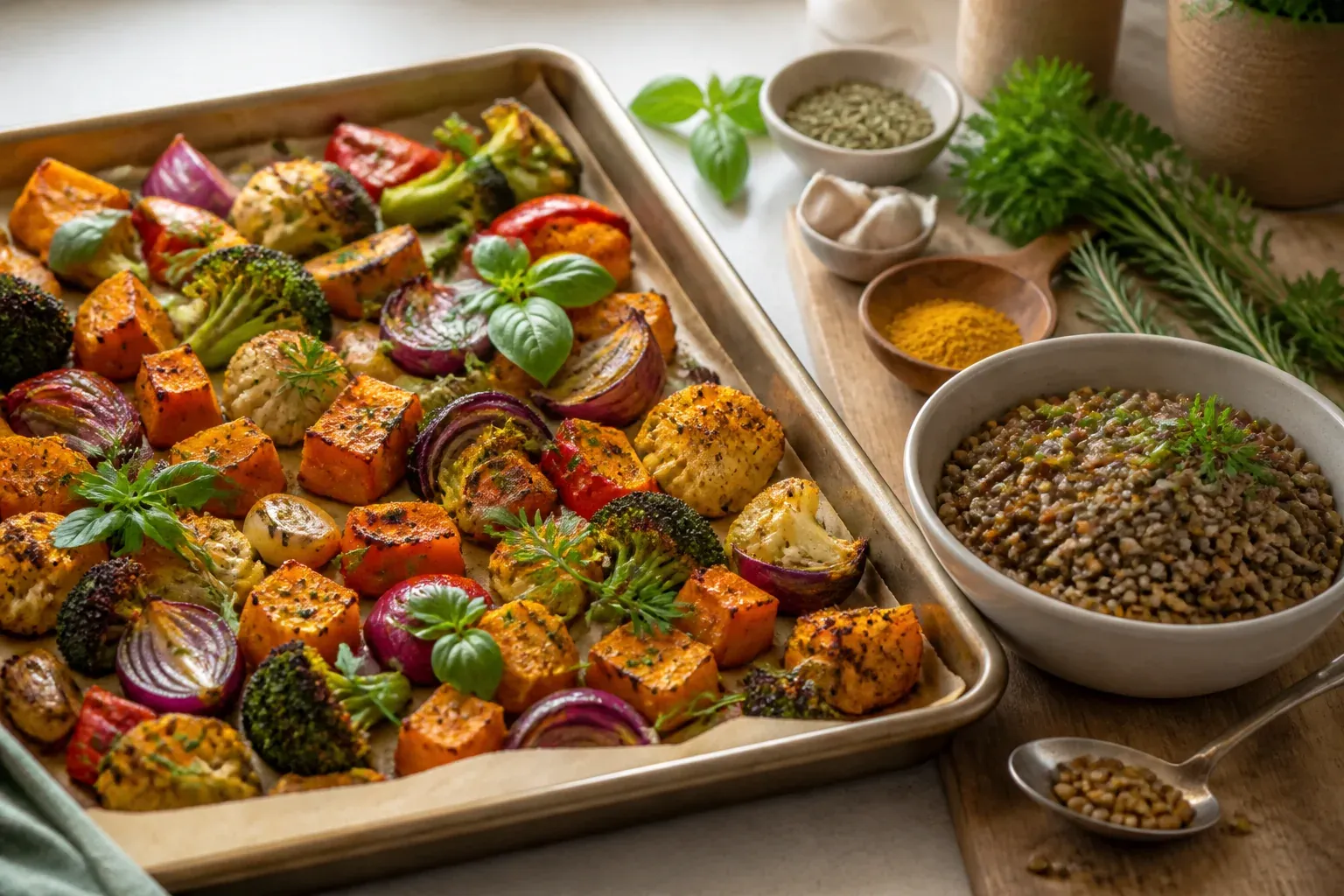
The easiest method is to attach a seasoning to a food you already eat. You do not need ten new recipes or a complicated daily tonic.
Five low-effort starting points
Start with flavor, not a target dose. Culinary seasoning is rarely measured like medicine. If a recipe tastes bitter, harsh, or dominated by one spice, more is not automatically healthier.
Hydration also deserves perspective. Drinking enough fluid supports normal physiology, but dry or dehydrated-looking skin often needs topical barrier support too. Our guide to hydration versus moisturization explains why a cup of tea and a moisturizer solve different problems.
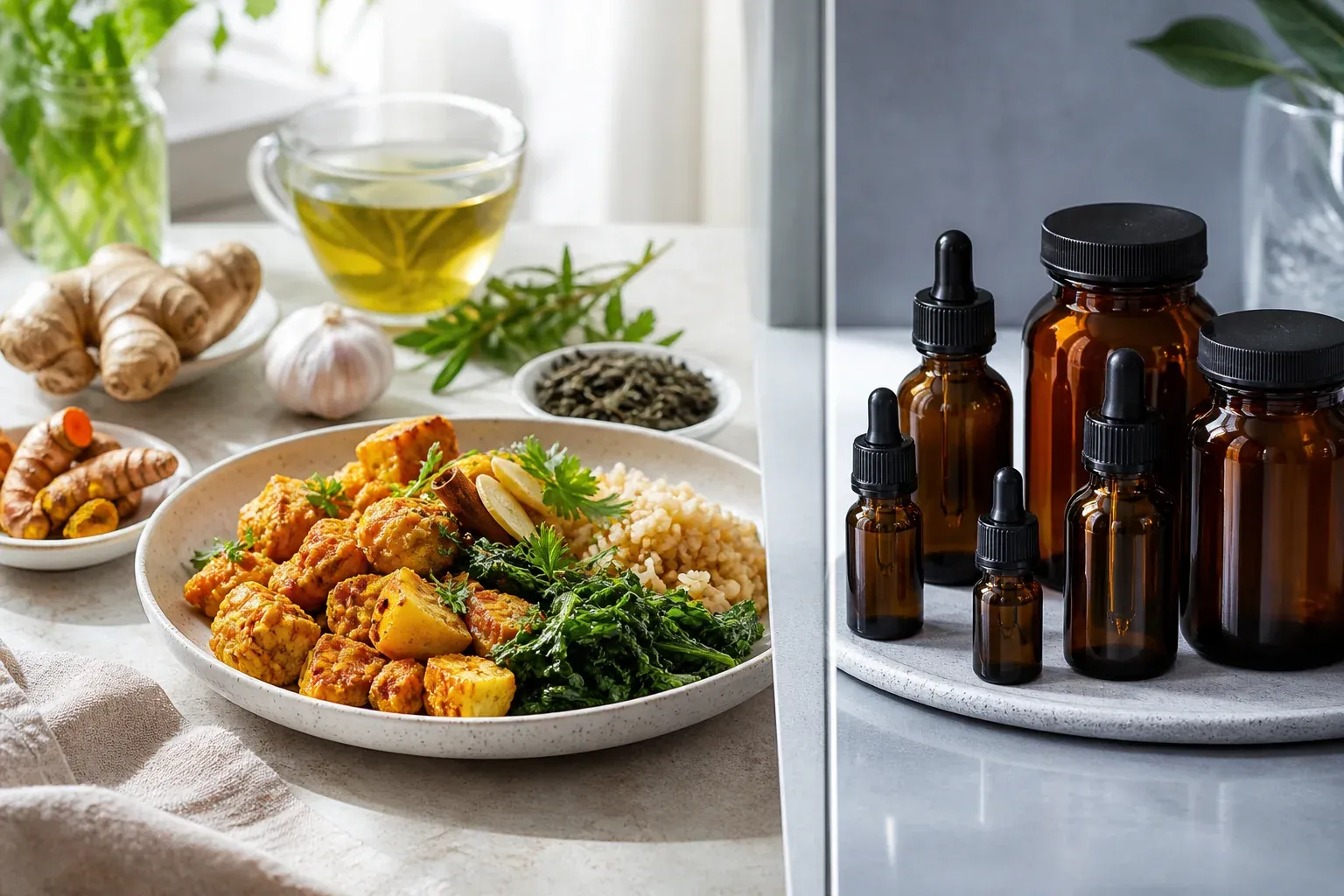
Food, supplement, tea, and topical product are not interchangeable
“Turmeric” can mean a fraction of a teaspoon in soup, a capsule with concentrated curcuminoids and absorption enhancers, or a homemade paste on the face. Those exposures differ in dose, route, formulation, and risk.
The same problem appears with green tea. A brewed cup is not a concentrated green-tea extract capsule. A skincare formula containing a standardized ingredient is not the same as pressing a wet tea bag against irritated skin.
| Form | What it is good for | What to check |
|---|---|---|
| Culinary herb or spice | Flavor, dietary variety, enjoyable meals | Allergy, tolerance, and medication-specific food advice |
| Brewed tea | A beverage that may replace a sugary drink | Caffeine, timing, and individual sensitivity |
| Concentrated supplement | A specific purpose discussed with a qualified clinician | Dose, interactions, pregnancy, liver risk, surgery, and product quality |
| Topical cosmetic | A formulated skin product with labeled directions | Complete ingredient list, patch testing, and irritation |
| Raw DIY paste or essential oil | No necessary role in a safe skincare routine | Burns, dermatitis, staining, eye exposure, and unstable mixtures |
The NCCIH turmeric review notes that evidence is not definitive for most health purposes and warns that highly bioavailable curcumin formulations may harm the liver. That warning is about concentrated products, not a reason to fear normal culinary turmeric.
Likewise, the NCCIH green tea overview distinguishes the beverage from extract products. Green tea as a drink has no reported safety concerns for adults in normal amounts, though it contains caffeine; extracts can cause side effects, interactions, and rare liver injury.
A practical Ceylon cinnamon option
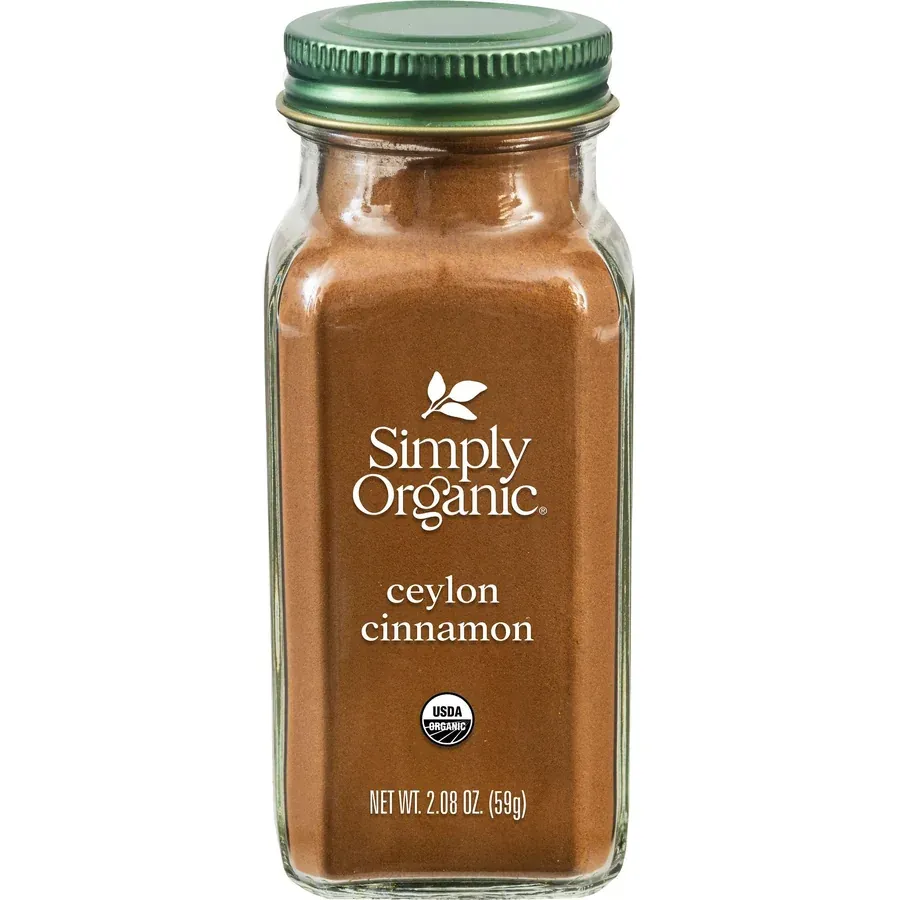
Simply Organic Ground Ceylon Cinnamon, 2.08 oz
Who it is for: people who use cinnamon frequently in oats, yogurt, fruit, coffee, or savory food and prefer a Ceylon variety.
Why it fits this guide: it is a single-ingredient culinary spice, not a skin supplement or a “detox” blend. Ceylon cinnamon generally contains less coumarin than cassia varieties.
Watch out: it is still food, not acne or wrinkle treatment. Packaging, seller, stock, and labels can change; verify the exact listing before purchase.
Product image: Amazon/Whole Foods Market. As an Amazon Associate, we earn from qualifying purchases.
We selected one ordinary pantry example rather than filling a nutrition article with supplement recommendations. The product is optional; any properly labeled culinary Ceylon cinnamon can serve the same kitchen role.
Safety limits that “natural beauty” lists often skip
Normal food amounts are usually a different proposition from repeated large doses. Still, individual allergies, gastrointestinal symptoms, pregnancy, medical conditions, and medicines can change what is appropriate.
- Do not apply raw garlic to blemishes. Crushing garlic releases reactive compounds that can irritate or burn skin.
- Do not make cinnamon or chili face masks. Tingling is not proof that a mixture is working. It can be irritation.
- Never use essential oils undiluted. Rosemary, oregano, peppermint, and other essential oils are far more concentrated than the culinary herb.
- Do not swallow essential oils. A product being edible as a leaf does not make its concentrated oil food-safe.
- Treat supplements as a separate decision. Tell your clinician and pharmacist what you take, especially before surgery or when using prescription medicine.
- Keep SPF in the routine. No tea, herb, spice, or antioxidant meal provides reliable broad-spectrum protection against ultraviolet radiation.
The NCCIH cinnamon safety page explains that cassia cinnamon can contain enough coumarin to be a concern with prolonged use, particularly for sensitive people such as those with liver disease. It also emphasizes that larger amounts or long-term use may cause gastrointestinal or allergic effects.
For garlic, NCCIH notes that garlic supplements may increase bleeding risk and may interact with medicines. Topical raw garlic can cause severe skin irritation and chemical burns. This is why “eat it” and “spot-treat with it” are not interchangeable advice.
If you take warfarin, do not make abrupt dietary changes without professional guidance. Parsley is rich in vitamin K, and consistency can matter. If you are pregnant, breastfeeding, preparing for surgery, have liver disease, or take regular medication, discuss concentrated herbal products with a qualified clinician.
What about turmeric face masks?
Turmeric can stain skin, nails, towels, and surfaces. Raw powder mixtures can also irritate, especially when combined with lemon, baking soda, cinnamon, or essential oils.
A cosmetic formulated with a turmeric-derived ingredient is a different product: it has a defined formula, preservative system, intended contact time, and directions. Even then, patch testing and tolerance matter. For a closer evidence review, see turmeric for skin: benefits and safety limits.
What about “detox” teas and powders?
Your liver and kidneys already perform detoxification. A tea can be a pleasant beverage, but “detox” is not a measurable skin outcome. Products marketed for cleansing may contain laxative herbs, high caffeine, or multiple extracts that are unrelated to your complexion.
Choose tea because you enjoy it, not because a label implies that normal blemishes are toxins leaving the body.
How to judge whether your diet is helping your skin
Do not assess a new spice after one breakfast. Skin changes slowly, and many variables move at once. A better experiment is to improve the broader eating pattern for several weeks while keeping skincare stable.
A cleaner self-check
For teenagers in particular, restrictive food rules can create more harm than clarity. Our guide to how diet affects teenage skin explains how to test a plausible pattern without turning normal eating into fear.
If you have persistent acne, eczema, hives, a sudden rash, or unexplained skin change, seek appropriate medical care. A spice cabinet is not a diagnostic tool.
A one-week flavor plan
You do not have to use all ten ingredients daily. Rotate them in ways that fit your meals and culture.
- Monday: oats with cinnamon and ginger; parsley in lunch.
- Tuesday: tomato-and-bean dinner with garlic, basil, and oregano.
- Wednesday: lentils with turmeric and ginger; mint tea if caffeine-free is preferred.
- Thursday: roasted potatoes and vegetables with rosemary and garlic.
- Friday: fish, tofu, or beans with a parsley-mint sauce.
- Weekend: repeat the meals you enjoyed and freeze extra herbs before they wilt.
That plan is intentionally ordinary. The goal is not to turn food into another demanding skincare routine. It is to make a balanced diet easier to repeat.
The bottom line
The best herbs and spices for radiant skin are the ones that help you eat a varied, satisfying diet consistently. Turmeric, ginger, cinnamon, rosemary, green tea, garlic, parsley, basil, mint, and oregano are practical choices, but none is a stand-alone skin treatment.
Use them in meals. Enjoy their flavor. Keep supplements and extracts in a separate, more cautious category. Leave harsh kitchen DIY recipes off your face, and keep evidence-based skincare—including sunscreen—doing the job food cannot do.
Frequently Asked Questions About Herbs and Spices for Skin
Which herb is best for glowing skin?
No herb has been proven to create glowing skin by itself. Choose a variety you enjoy—such as parsley, basil, rosemary, or mint—and use it to make nutrient-dense meals easier to repeat. Overall dietary pattern and skincare matter more than a single herb.
Can turmeric clear acne?
Eating turmeric has not been proven to clear acne. Some curcumin research is interesting, but formulations and outcomes vary. Do not replace acne treatment with turmeric, and avoid harsh homemade masks that combine turmeric with irritating ingredients.
Is it safe to put cinnamon or garlic on the face?
No. Raw cinnamon and garlic can cause significant irritation, contact dermatitis, or burns. Culinary ingredients are not automatically safe topical cosmetics. Use properly formulated skincare and stop any product that causes burning, swelling, or marked redness.
Is green tea better to drink or apply to skin?
They are different uses. Unsweetened green tea is a beverage with catechins and caffeine; a formulated topical product has its own concentration and directions. Evidence for one route cannot automatically be transferred to the other, and neither replaces sunscreen.
Should I take herb or spice supplements for better skin?
Not routinely. Concentrated supplements can interact with medicines and may carry risks that normal food amounts do not. Discuss a specific supplement, dose, and reason with a qualified clinician or pharmacist rather than taking a multi-herb “glow” blend on marketing claims alone.
This article is for informational purposes only and does not replace professional dermatological advice.