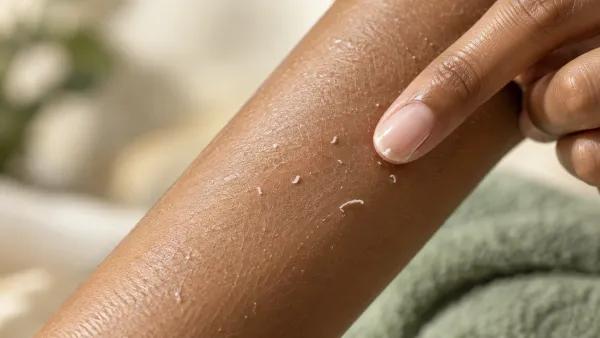
What is the Skin Barrier and Why Is It Important?
Discover the secrets to a healthy skin barrier! Learn what it is, why it's crucial, and how to protect and repair it for radiant, youthful skin.

In this guide
Quick Answer
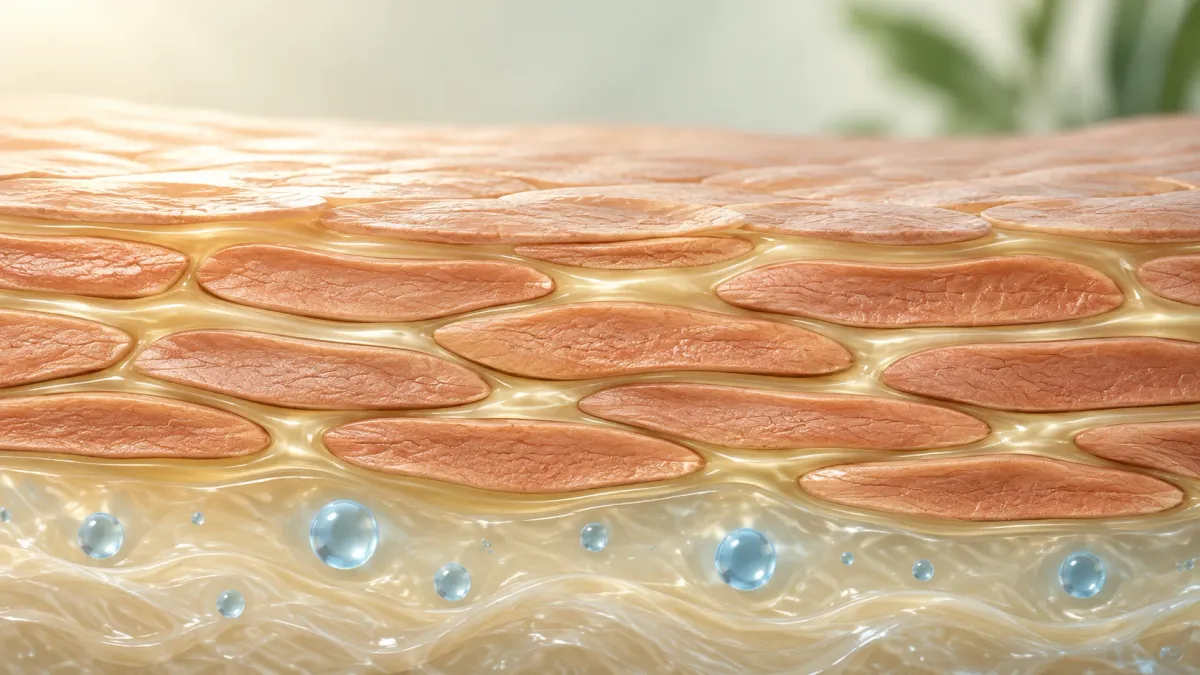
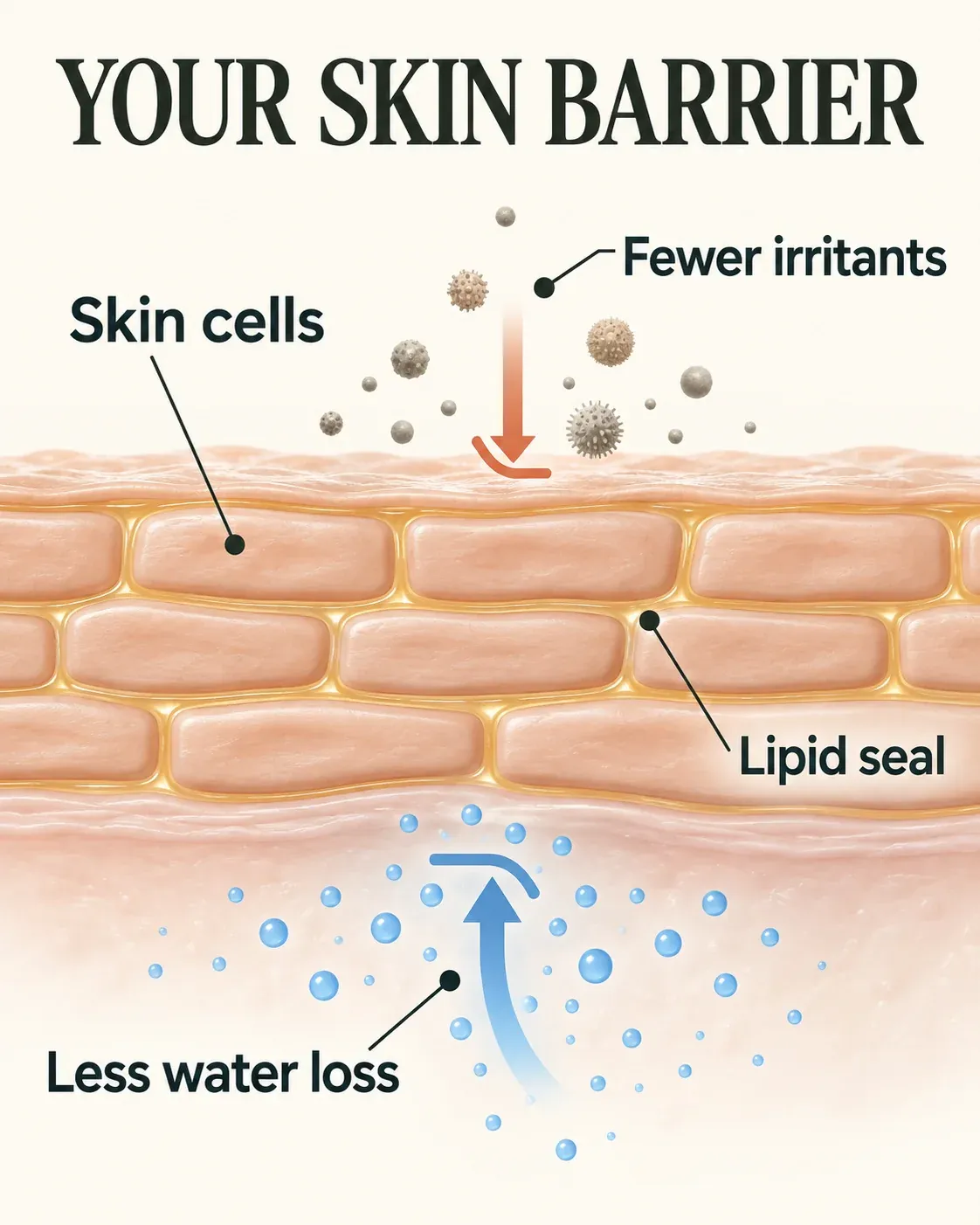
Your skin barrier is the protective system at the surface of your skin. Its outermost layer, the stratum corneum, combines flattened skin cells with fats between them to limit water loss and reduce the entry of irritants.
It is not a cream, a layer of dirt, or a seal that blocks everything. Gentle cleansing, a moisturizer you tolerate, and sun protection support it without requiring an elaborate routine.
New burning, flaking, or persistent itching deserves attention, but symptoms alone cannot diagnose barrier damage. Stop irritating optional products and seek medical advice for a persistent or worsening rash.
Quick Summary
- Think function, not perfection: comfortable skin matters more than a glossy finish.
- Water and oil differ: shiny skin can still feel tight or irritated.
- Fewer changes help: do not replace an irritating routine with five new repair products.
- A cream has limits: it cannot diagnose a rash, treat every skin condition, or replace sunscreen.
The skin barrier is easiest to understand through an everyday problem: a face can look oily while feeling uncomfortable after washing. Adding a stronger cleanser may address the shine while making the discomfort worse.
Our editorial approach starts with what changed, not with a shopping list. A new exfoliant, longer washing, or a fragranced cream is useful information; a social-media label such as “destroyed barrier” is not a diagnosis.
This guide explains the protective layer, separates ingredient jobs, and gives you a practical way to simplify decisions. If your main concern is a persistent rash, professional assessment matters more than finding the most elaborate repair routine.
What is the skin barrier actually made of?
The outer epidermis contains corneocytes: flattened, keratin-rich cells surrounded by organized lipids. Ceramides, cholesterol and fatty acids contribute to this structure; they are not simply surface oil from your pores.
The familiar brick-and-mortar analogy is useful, but incomplete. DermNet's skin barrier reference also describes chemical and immune defenses, surface acidity, and the water-holding substances within the outer layer.
| Part | Simple role | What this means for care |
|---|---|---|
| Corneocytes | Flattened protective cells | Do not scrub away every visible flake. |
| Intercellular lipids | Help regulate passage between cells | A moisturizer can support comfort without replacing your skin. |
| Natural moisturizing factors | Help hold water within the outer layer | Hydration is different from surface shine. |
| Surface environment | Acidity and microbes interact with defenses | Avoid DIY acid or alkaline experiments. |
Skin barrier function is more than keeping water in
Transepidermal water loss, or TEWL, means water moving through the skin and evaporating. Some water loss is normal; the goal is regulation, not making skin waterproof.
A home mirror cannot measure TEWL. Tightness after cleansing may tell you that the routine is uncomfortable, but it cannot reveal a precise lipid deficiency or prove that one particular serum is necessary.
Surface pH also matters, but “acidic” does not mean lemon juice belongs on your face. The skin pH guide explains why a finished formula is different from a kitchen experiment.
Likewise, protection from irritants is not complete protection from sunlight. A well-supported barrier still needs appropriate sun protection; a moisturizer without an SPF label should not be treated as sunscreen.
What can disrupt comfortable barrier function?
Repeated irritation may come from how a product is used, not only from its name. A cleanser used briefly can feel different from the same cleanser worked into the face with a brush or repeated several times.
Cleveland Clinic's dermatologist-led explanation highlights harsh soaps, over-exfoliation and overly aggressive cleansing. Underlying conditions can also affect barrier function, which is why persistent symptoms should not become a self-blame exercise.
- Mechanical load: scrubs, cleansing brushes, rough towels and picking add friction.
- Product load: several exfoliating or active products can make the routine harder to tolerate.
- Exposure: hot washing and dry surroundings can leave skin less comfortable.
- Medical context: recurring eczema-like or rosacea-like symptoms need appropriate assessment.
There is no exfoliation quota everyone must meet. If a routine already feels comfortable, a weekly peel is not a requirement; if products sting, adding a “gentler” acid still adds another variable.
Be especially cautious with advice to fix pH at home. Our baking soda skin-care guide explains the problems with treating an alkaline kitchen ingredient as a facial treatment.
Stress and picking can complicate the picture without identifying the cause of a rash. Use the stress and skin guide for context, not as a reason to dismiss new physical symptoms.
Signs to notice—and when not to self-diagnose
Dry patches, roughness, itching and new stinging are reasons to reassess your routine. They are not a reliable checklist for distinguishing irritant dermatitis, allergy, acne, rosacea or another condition.
The timing helps you explain the problem: note when it started, which areas are involved, and what changed. Include hair products, shaving, masks and laundry products rather than considering facial skincare alone.
For a closer look at symptom patterns, read our guide to possible signs of a damaged skin barrier. Use it to organize observations, not to replace an examination.
| Situation | Useful next step | Do not assume |
|---|---|---|
| Mild tightness after a new wash | Stop that product and simplify. | That stronger exfoliation will remove the problem. |
| Repeated burning or persistent rash | Arrange medical advice and record triggers. | That discomfort means a repair cream is working. |
| Oily areas plus dry patches | Adjust texture and amount by area. | That oil rules out dryness or irritation. |
| Rapidly spreading, painful or blistering rash | Seek prompt medical assessment. | That an online barrier routine is enough. |
The AAD's rash warning signs include fever, rapid spread, pain, blisters, and involvement of sensitive areas. Trouble breathing or swallowing, or swelling of the lips or eyes, may require emergency care.
Do not wait for a skincare trial to finish when these warning signs appear. For non-emergency but ongoing irritation, take your product list and photos to a clinician instead of continuing to rotate through new creams.
Build a gentle routine around what you tolerate
The following is a framework for reducing optional irritation, not a treatment plan for diagnosed disease. Keep prescribed treatment decisions with your prescriber, especially if you are managing acne, eczema or another ongoing condition.
1. Make cleansing a short, gentle step
Choose a mild cleanser that leaves your skin comfortable rather than squeaky. Use lukewarm water, gentle fingertips and a soft towel; prolonged rubbing does not make a routine more effective.
If your face is uncomfortable, examine each wash separately. The goal is to remove what needs removing without repeating the process simply because a routine video includes two cleansers.

2. Choose one moisturizer before adding serums
Start with a texture you can use consistently. The AAD's moisturizer selection guide distinguishes lighter gels and lotions from richer creams and ointments, with different needs across dry, oily and combination areas.
For example, a person with dry cheeks and an oily forehead does not need to apply the same heavy layer everywhere. Adjust the amount by area before concluding that an entire ingredient category is unsuitable.
Apply moisturizer after gentle washing, while skin is still slightly damp if comfortable. A separate hydrating toner is not automatically necessary when the moisturizer already meets your needs.
Our dry-skin moisturizer guide and barrier-supporting moisturizer comparison cover product choices separately. This explainer does not require buying a new repair kit.
3. Keep sun protection as its own job
The AAD recommends broad-spectrum SPF 30 or higher and water resistance. Use sunscreen alongside shade and protective clothing, following its application and reapplication directions.
If a sunscreen causes persistent burning, do not treat that reaction as proof of effectiveness. Seek a tolerated alternative with professional guidance when needed; meanwhile, use shade and clothing rather than deliberately exposing irritated skin.
For a separate concern such as breakouts, the acne-prone sunscreen comparison can help you compare textures without confusing sunscreen selection with barrier diagnosis.
Ingredient jobs: hydration is not the same as sealing
A moisturizer is a finished formula, not a collection of independent miracle ingredients. DermNet distinguishes humectants, emollients and occlusives; a single product can combine these functions.
| Role | Examples | Practical interpretation |
|---|---|---|
| Humectant | Glycerin, hyaluronic acid | Attracts and holds water; not automatically a complete routine. |
| Emollient | Various fats and oils | Softens the surface; texture and tolerance still matter. |
| Occlusive | Petrolatum, dimethicone | Reduces evaporative water loss; may feel heavier. |
| Barrier lipids | Ceramides, cholesterol, fatty acids | Useful formula components; a label alone does not prove superior results. |
Do not read “ceramides” as a synonym for every occlusive ingredient. Equally, a product without a highlighted ceramide claim is not automatically useless; the full formula and your experience of it matter.
There is no need to calculate a universal lipid ratio from a retail ingredient list. Ingredient names do not reveal every concentration, delivery feature or clinical result of a finished product.
“Natural,” “clean” and “hypoallergenic” are not personal guarantees. A short routine can still include an ingredient you react to, while a longer ingredient list is not itself evidence that a moisturizer is harsh.
- Keep it: a tolerated moisturizer that meets your comfort and budget needs.
- Question it: a new serum that duplicates what your moisturizer already does.
- Stop and reassess: a product followed by persistent burning, itching or a rash.
- Ask for help: repeated reactions that make basic care difficult.
How to judge progress without a fixed healing deadline
A product label promising fast repair does not tell you the cause of your symptoms. Improvement in feel, appearance and tolerance can happen at different rates, so a single deadline is a poor basis for deciding whether to intensify treatment.
Use consistent observations: does washing still sting, are flaky areas spreading, and is your current moisturizer comfortable? These notes support a conversation with a clinician; they are not a home test of complete barrier recovery.
Do not chase a glossy photograph as your finish line. Lighting, product finish and oil can change how skin looks without demonstrating that the underlying problem has resolved.
If your skin is worsening, seek advice sooner instead of extending a repair experiment. If symptoms remain persistent despite simplifying, reconsider the diagnosis with a professional rather than buying another product with the same claim.
Restart optional products cautiously
After symptoms settle, consider whether an optional active still serves a useful purpose. Reintroducing several products together recreates the same uncertainty that made the original problem hard to understand.
The AAD's home product-testing guidance recommends testing a small area for seven to ten days before broader use. Follow the product directions and stop if a reaction develops.
This small-area check is not the same as medical patch testing for allergy, and passing it cannot guarantee facial tolerance. Do not deliberately test an irritating product on actively inflamed skin.
Three everyday decisions that prevent overcomplication
Your routine was comfortable until you added a peel. The clearest first question is whether the new optional step is tolerable—not whether you need a second serum to counteract it.
Your cheeks are dry but your forehead is shiny. Choose amounts and textures by area, and note whether cleansing is uncomfortable. Do not use the forehead's shine as a reason to scrub your whole face harder.
You already own a comfortable cream. Before replacing it, identify the missing function. A trendy label is not a separate skin need, and a simple routine is easier to troubleshoot than a stack of similar products.
These are examples of decision-making, not diagnoses. If your situation involves ongoing medication, a procedure, broken skin or a recurring rash, the right next step may be individualized advice rather than another routine adjustment.
Frequently Asked Questions About the Skin Barrier
We used community discussions about moisturizer stinging and oily but uncomfortable skin to identify questions. Those discussions are question discovery, not evidence; the guidance above comes from dermatology sources.
Should I push through moisturizer burning?
No. Persistent burning is a reason to stop and reassess, not proof that a moisturizer is repairing your skin. If even basic care remains painful or a rash persists, ask a clinician to assess the cause.
Can oily skin still have barrier problems?
Yes, surface oil does not rule out dryness or irritation. A shiny forehead and flaky cheeks can coexist, but that pattern alone cannot identify a diagnosis; choose texture and amount by area.
Do I need a toner and serum to support my skin barrier?
Not automatically. A tolerated moisturizer may already combine water-binding and water-loss-reducing ingredients. Add another step only for a clear unmet need, not because every routine must contain the same number of products.
When can I restart exfoliants or other actives?
Wait until irritation has settled and review whether the product is necessary. Introduce one optional product at a time, following its directions; ask your prescriber about restarting or adjusting prescribed treatments.
Does a barrier cream replace sunscreen?
No. Unless a product is labeled as sunscreen, do not assume it provides meaningful UV protection. Choose broad-spectrum SPF 30 or higher, follow the label, and include shade and protective clothing.
The takeaway: support your skin, then reassess
Your barrier is a real biological system, not a marketing score to maximize. Understand its basic jobs, reduce unnecessary irritation, and use products that are comfortable enough to use consistently.
The useful next step is usually specific: change a harsh cleansing habit, simplify duplicate products, or seek assessment for persistent symptoms. A more expensive or complicated routine is not automatically a better answer.
This article is for informational purposes only and does not replace professional dermatological advice.