How to Treat Dark Spots on Darker Skin: A Safer 12-Week Plan
How to treat dark spots on darker skin: identify the cause, choose one low-irritation active, use tinted SPF, and know when professional care is safer.
In this guide

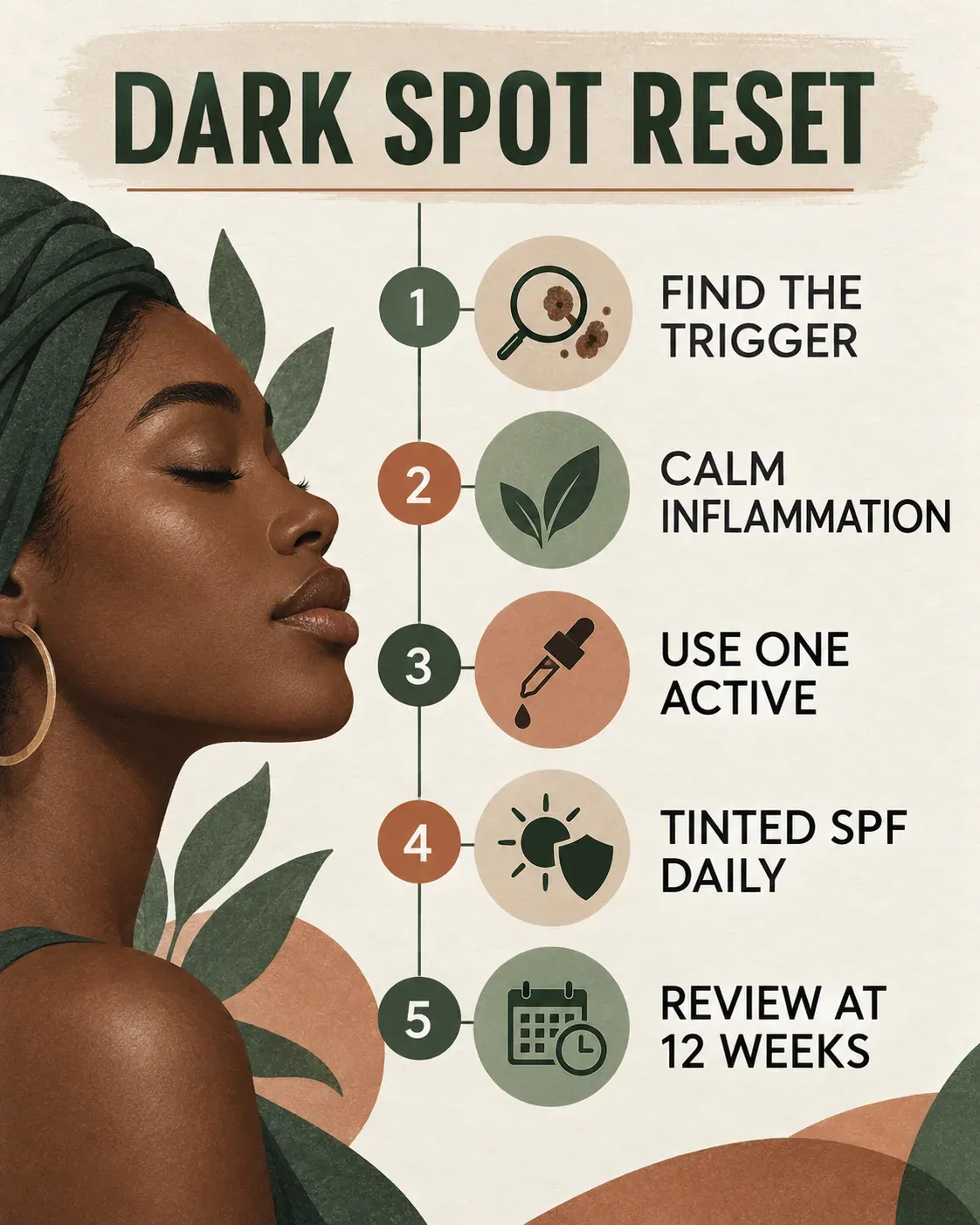
To treat dark spots on darker skin safely, first identify what caused the color change, then stop the acne, eczema, friction, hair removal, or product irritation that keeps creating new marks. Use one well-tolerated pigment active, moisturize, and wear broad-spectrum SPF 30 or higher every day.
A tinted sunscreen with iron oxides is especially useful when facial hyperpigmentation is the concern because visible light can contribute to darkening. Give a simple routine about twelve weeks before judging the active, but seek dermatology care sooner for melasma-like patches, changing spots, deep gray pigment, scars, or worsening irritation.
- Name the pattern: post-acne marks, melasma, vascular redness, scars, and changing lesions need different decisions.
- Stop the trigger: fading products cannot outrun active acne, eczema, picking, burns, or repeated friction.
- Choose one lead active: azelaic acid is a practical OTC start when acne and brown marks overlap.
- Protect daily: use broad-spectrum SPF 30+; consider a tint with iron oxides for visible-light coverage.
- Review, do not chase: compare photos at twelve weeks instead of stacking new acids every few days.
Identify the mark, compare low-irritation actives, or go directly to the twelve-week routine.
SkinOptimizer is an independent skincare publication, not a medical provider. We reviewed current dermatology guidance, a 2024 systematic review focused on skin of color, and U.S. product-safety information; we also removed the old article's lemon-juice masks, scrub advice, hydration promises, and casual laser recommendations.
Learning how to treat dark spots on darker skin starts with a distinction that most product lists skip: “dark spots” is a description, not a diagnosis. A flat brown mark after a pimple is often post-inflammatory hyperpigmentation, or PIH. A symmetrical patch on the cheeks may behave more like melasma, while a red-purple mark, a raised scar, and a changing mole are different problems.
This matters more when skin is richly pigmented because inflammation can create a stronger and more persistent pigment response. The goal is not to lighten your natural skin tone. It is to reduce excess pigment that appeared after inflammation or another trigger while protecting healthy tone and barrier function.
Before adding another treatment, review these skincare myths for darker skin tones to separate useful pigment-care advice from shortcuts about sunscreen, irritation, and procedures.
The old “attack the spot” approach often creates a loop. A strong peel, rough scrub, or concentrated DIY acid irritates the skin; inflammation rises; new pigment appears; and the reader adds another brightening product. A slower routine that prevents new marks can outperform a crowded routine that repeatedly restarts irritation.
This guide uses a cause-first twelve-week plan. It gives you a safe starting point, a way to measure progress, and clear reasons to stop self-treatment and involve a dermatologist.
First, Identify What the Dark Spot Could Be
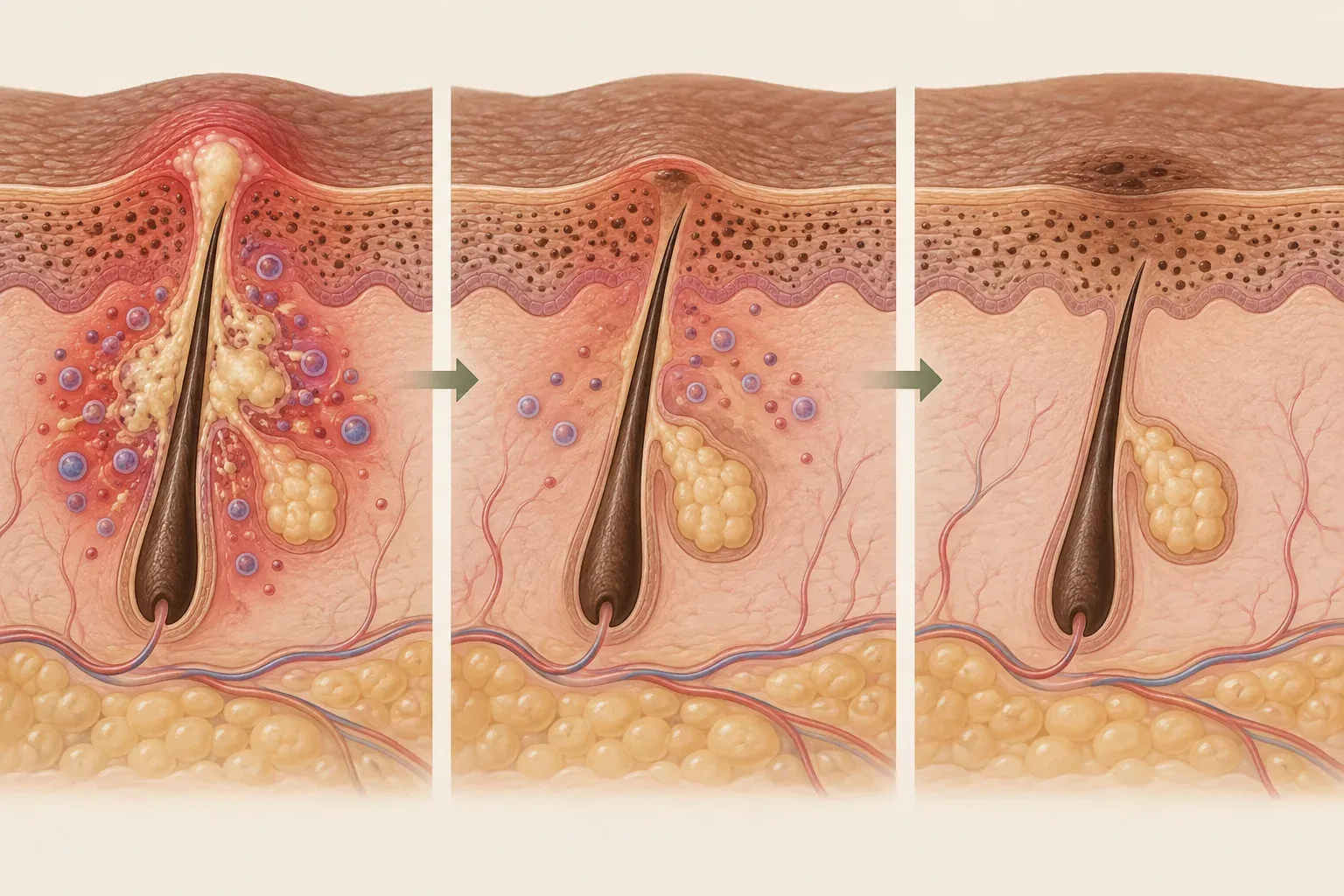
Post-inflammatory hyperpigmentation appears where inflammation or injury healed. Acne, eczema, psoriasis, burns, shaving bumps, insect bites, picking, harsh hair products, and cosmetic procedures can all leave extra pigment behind.
The American Academy of Dermatology's guide for darker skin tones emphasizes treating the cause first. When breakouts or irritation continue, new marks can form while older ones fade.
| Pattern | What it may represent | First decision |
|---|---|---|
| Flat brown or purple-brown mark exactly where a pimple or rash healed | Post-inflammatory hyperpigmentation is plausible | Control the original inflammation, then use one pigment active |
| Red, pink, or violaceous flat mark after acne | Post-inflammatory erythema or mixed vascular change | Do not assume every red mark needs a “brightener” |
| Broad, often symmetrical patches on cheeks, forehead, or upper lip | Melasma is possible | Seek diagnosis; visible light and hormonal factors can matter |
| Indented, raised, or firm change in texture | Scar rather than color alone | Use a scar-type plan instead of another serum |
| New or changing spot, irregular border, bleeding, pain, or multiple colors | Not a routine cosmetic self-treatment problem | Arrange prompt professional assessment |
Depth also changes the timeline. Brown pigment closer to the surface may respond sooner, while slate-gray or blue-gray color can suggest deeper pigment that topical products reach less effectively.
DermNet's PIH overview explains that epidermal and dermal pigment behave differently and that procedures can also aggravate pigment by injuring the epidermis. A gray cast, unclear diagnosis, or widespread pattern is a strong reason to avoid random home peeling.
Why Darker Skin Needs an Irritation-Control Strategy
Melanin is not the problem. The problem is an uneven increase or redistribution of pigment after a trigger. Richly pigmented skin can develop PIH after relatively small amounts of inflammation, and the contrast can remain visible long after the original bump has flattened.
That changes the risk calculation. A product that causes persistent stinging, peeling, or an eczema flare is not “working harder.” It may create exactly the inflammatory signal that the routine is supposed to stop.
If acne drives the marks, treat acne without picking or abrasive scrubbing. Our acne-prevention plan and post-acne redness guide help separate active lesions, vascular color, and leftover pigment.
Use a Simple Morning and Evening Base
A dark-spot routine needs a boring foundation. Gentle cleansing, moisturizer when needed, and daily sunscreen make the treatment easier to tolerate and easier to judge.
In the morning, cleanse gently or rinse if that suits your skin, apply the chosen treatment if its instructions allow daytime use, moisturize, then apply sunscreen. At night, remove sunscreen and makeup, cleanse without scrubbing, use the lead active on dry skin, and moisturize.
If your routine already contains acids, retinoids, benzoyl peroxide, and vitamin C, remove duplicates before adding a pigment treatment. The over-exfoliation guide explains why more turnover can become more inflammation.
Tinted Sunscreen Is Part of the Treatment Plan
Broad-spectrum sunscreen helps prevent UV from deepening existing marks and reduces one source of new pigment. For exposed facial hyperpigmentation, the AAD specifically recommends considering a tinted sunscreen with iron oxides because the tint can add protection from visible light.
Look for SPF 30 or higher, broad-spectrum protection, a tint that blends with your skin, and a texture you can apply in a full amount. “No white cast” matters because an elegant formula is more likely to be used consistently, but shade match does not replace the labeled SPF.
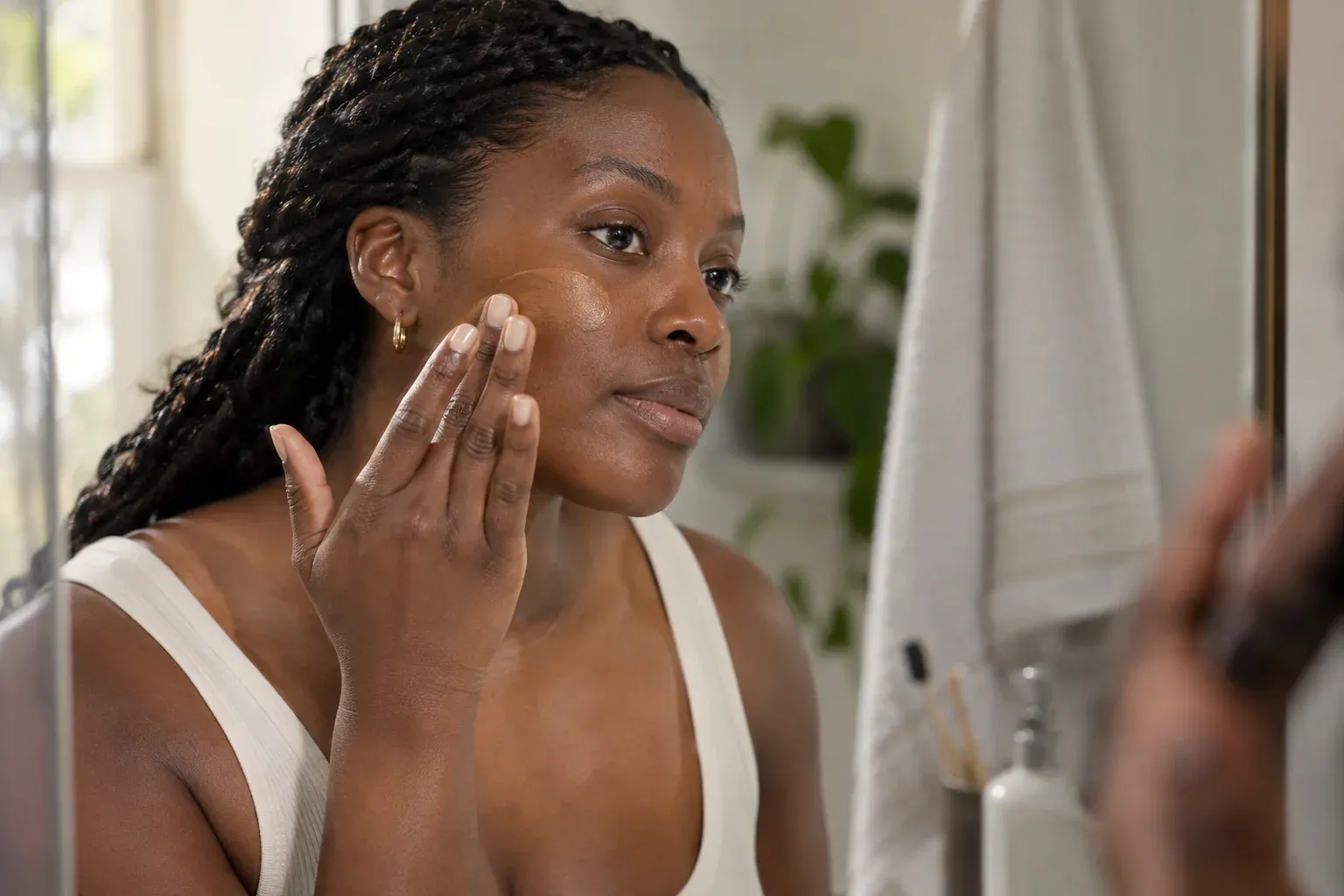
A hat and shade still help during long outdoor exposure. Our tinted sunscreen comparison focuses on shade range, finish, and skin-type fit rather than assuming one universal tint.
Choose One Lead Active by the Trigger
No OTC ingredient guarantees complete clearing. The best first choice is the one that fits the trigger, works with the rest of your routine, and can be used without repeated irritation.
| Lead option | Best fit | Main watch-out |
|---|---|---|
| Azelaic acid | Post-acne PIH when breakouts, redness, and pigment overlap | Can itch, sting, pill, or dry; start slowly |
| Topical retinoid | Acne plus recurring comedones and pigment, with clinician guidance when needed | Irritation and pregnancy precautions; introduce gradually |
| Vitamin C or niacinamide | Gentler support for uneven tone when stronger actives are not tolerated | Evidence and formula stability vary; high percentages are not automatically better |
| Kojic or glycolic acid | Selected superficial pigment in a simple, tolerant routine | Contact dermatitis or over-exfoliation can worsen PIH |
| Prescription hydroquinone or combination therapy | Diagnosed persistent pigment under medical supervision | Not a casual long-term OTC experiment in the United States |
A 2024 systematic review of PIH treatments in skin of color found that the evidence base remains uneven and complete resolution is uncommon across studied approaches. Retinoids were among the most studied topicals, while some laser studies reported worsening pigment.
Azelaic acid is a practical beginner option when acne and PIH overlap. It is also easier to isolate as the single new variable than a serum containing several acids, retinoids, and botanical brighteners.
Retinoids may support acne control and pigment turnover, but irritation can undermine the plan. Do not start a retinoid during pregnancy unless a qualified clinician specifically advises otherwise, and do not treat peeling as proof that pigment is leaving.
Vitamin C and niacinamide can support an even-looking tone, yet they are not mandatory layers. If a simple azelaic-acid routine is tolerable, adding both in the first week only makes it harder to know what caused a rash or pilling.
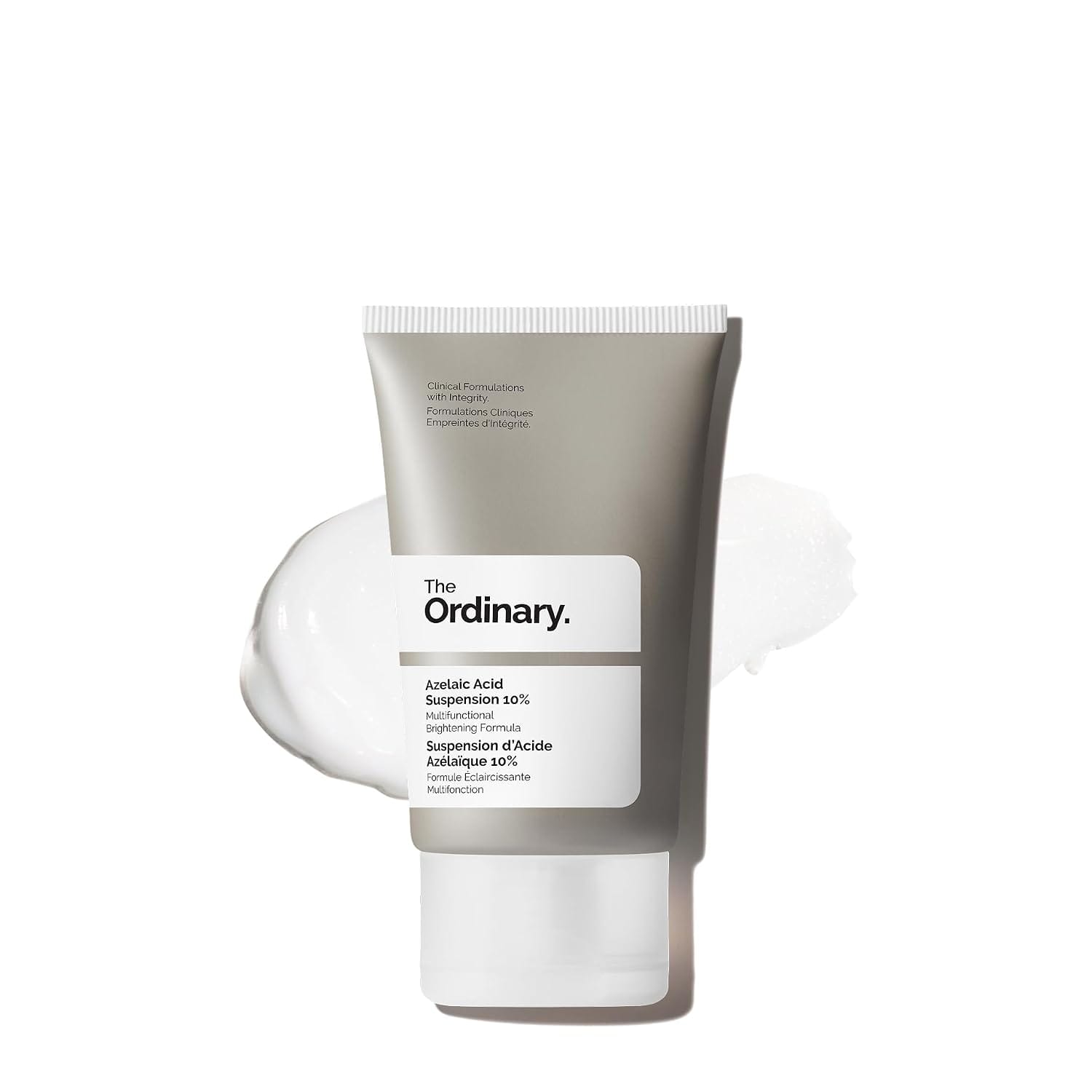
The Ordinary Azelaic Acid Suspension 10%
Buy it if: you want one verified OTC 10% azelaic-acid product to test for post-acne marks and uneven tone.
Skip it if: azelaic acid has caused persistent itching or irritation, or you need a prescription-strength plan for melasma or stubborn PIH.
The cream-suspension texture can pill under some moisturizers or sunscreen, so use a small amount and separate layers if needed. This is an exact-product listing, not a hands-on SkinOptimizer test or a promise that it will clear every pigment type.
Check current Amazon optionsAs an Amazon Associate, we earn from qualifying purchases.
For more formats and texture trade-offs, use the azelaic acid product guide. If kojic acid is already part of your plan, the kojic acid routine guide explains why patch testing and limited frequency matter.
A 12-Week Dark Spot Routine
Twelve weeks is a decision checkpoint, not a deadline for perfect skin. The AAD notes that a spot only a few shades darker than natural skin color may take six to twelve months to fade naturally after its cause stops, and deeper pigment can take years.
Take baseline photos in the same room, position, and lighting. Track the number of new inflamed lesions and whether old marks are becoming less distinct at the edges.
| Time | What to do | Decision checkpoint |
|---|---|---|
| Week 0 | Identify the likely trigger, remove scrubs and duplicate actives, photograph the pattern | Changing, raised, bleeding, painful, or uncertain lesions need professional assessment |
| Weeks 1–2 | Use the lead active two or three times weekly, moisturize, apply sunscreen daily | Reduce frequency or stop for persistent burning, swelling, rash, or new darkening |
| Weeks 3–6 | Increase only if comfortable; keep acne or eczema treatment consistent | Look for fewer new marks before expecting old pigment to disappear |
| Weeks 7–12 | Maintain the same core routine and compare standardized photos | Continue if improving and tolerable; seek help if unchanged, worse, or diagnostically unclear |
| After week 12 | Choose maintenance or clinician-led escalation | Do not respond to a plateau by stacking every active or booking a random laser |
If dryness develops, step back to every other night or less often. A lighter schedule used consistently is more useful than an aggressive schedule that repeatedly forces a barrier reset.
If acne keeps creating spots, make acne control the primary metric. If the bumps have stopped but color remains, the pigment phase can continue without adding more anti-acne medication.
What to Stop: DIY Lightening and the Irritation Spiral
Do not put lemon juice or household bleach on dark spots. Lemon juice has unpredictable acidity and can irritate or cause a phototoxic reaction, while liquid bleach can burn the skin.
Skip abrasive sugar, salt, coffee, and oatmeal scrubs on inflamed or recently healed skin. They do not selectively remove pigment, and friction can create more inflammation.
The FDA warns about skin-lightening products containing hydroquinone or mercury. OTC hydroquinone is not legally marketed in the United States, mercury is banned, and some imported or handmade-label products may hide harmful ingredients.
Prescription hydroquinone can still be used by a qualified clinician for selected conditions. That is different from buying an unverified cream online and applying it indefinitely.
Food and hydration support general health, but drinking a fixed number of glasses of water does not erase PIH. A balanced diet is worthwhile; it should not be sold as a spot treatment or used to blame the reader for pigment.
When Procedures or Dermatology Care Make More Sense
A dermatologist becomes the better next step when the diagnosis is uncertain, pigment is widespread or gray-blue, melasma is possible, acne is nodular or scarring, eczema is uncontrolled, or a well-used routine has not improved the pattern.
Procedures are not automatically faster or safer. Chemical peels, lasers, and IPL intentionally create controlled injury or heat, and darker skin can develop additional PIH when the device, depth, settings, preparation, or aftercare do not fit.
A board-certified dermatologist with substantial experience in skin of color can distinguish color from texture and choose whether prescription topicals, a superficial peel, a device, or no procedure is the safest option. If texture is the primary issue, our acne-scar treatment guide by scar type and skin tone is a better starting map.
Dark Spots on the Body Need the Same Cause-First Logic
PIH can appear on the back, chest, underarms, legs, neck, and bikini line. Friction, shaving, folliculitis, acne, eczema, and ingrown hairs can keep adding marks in those areas.
Do not automatically apply stronger face acids over a large body area. Start with the trigger, reduce friction, patch test, and consider a body-sized format only when the active is already tolerated.
For marks linked to rough exfoliation, read the safer exfoliation guide for darker skin. For broad facial and body routines, the hyperpigmentation routine guide shows how to sequence cleanser, treatment, moisturizer, and sunscreen without duplication.
The Bottom Line
The safest way to treat dark spots on darker skin is not to attack melanin. It is to stop the inflammation that created uneven pigment, protect against UV and visible light, and use one tolerable treatment long enough to generate a clear signal.
Azelaic acid is a reasonable OTC starting point when post-acne marks and breakouts overlap. It is not the answer to every patch, and melasma, deep pigment, scars, and changing lesions deserve a diagnosis before stronger products or procedures.
Community question note: We reviewed discussions about PIH versus PIE and overfilled routines, building a short hyperpigmentation routine, plateaus despite consistent actives, and realistic fading timelines. These threads identified recurring questions only; dermatology and regulatory sources support the answers below.
Frequently Asked Questions About How to Treat Dark Spots on Darker Skin
How can you tell PIH from PIE or melasma?
PIH usually appears as flat brown, dark brown, gray-brown, or purple-brown color where inflammation or injury healed. PIE is more red or pink and reflects vascular change, while melasma often forms broader, symmetrical patches.
Color alone cannot diagnose every lesion. Arrange professional assessment for a changing, raised, bleeding, painful, multi-colored, or otherwise uncertain spot.
How long do dark spots take to fade on darker skin?
A superficial spot only a few shades darker than the surrounding skin may take six to twelve months to fade naturally after the trigger stops. Deeper gray-brown pigment can take much longer.
A consistent routine may speed improvement, but twelve weeks is a useful first checkpoint rather than a promise of complete clearing.
Is azelaic acid safe for darker skin?
Azelaic acid is commonly used for acne and PIH and can suit darker skin tones. It can still sting, itch, or dry the skin, so start slowly, moisturize, and reduce frequency if irritation persists.
Prescription strengths and combinations should be discussed with a qualified clinician, especially when the diagnosis is melasma or the skin is already inflamed.
Can you use vitamin C and retinol together for dark spots?
They can exist in one routine, but starting both together makes irritation and troubleshooting harder. A safer beginner approach is one lead active at a time, with vitamin C in the morning or a retinoid at night only after tolerance is clear.
Avoid retinoids during pregnancy unless a qualified clinician specifically advises otherwise.
Is laser treatment safe for dark skin?
Some laser and light treatments can help selected pigment problems, but heat or injury can also worsen PIH in darker skin. The diagnosis, device, settings, preparation, aftercare, and clinician experience all matter.
Seek a board-certified dermatologist with substantial experience treating your skin tone before proceeding.
This article is for informational purposes only and does not replace professional dermatological advice.